
India cut oil imports from United States and Russia
India buys most of its crude oil from abroad, so where it buys from is a big strategic choice. In September, it bought no oil from the United States and sharply cut Russian oil after a new United States law threatened heavy tariffs on buyers of Russian oil. Read it to revise India’s oil import basket, energy security and oil price benchmarks.
- US oil, September
- Zero
- Russia’s share
- 33% (51% in July)
- Trigger
- New US sanctions law, 18 September
- Tariffs
- Waived on 16 October
India’s oil import shift: what happened?
Oil is not just fuel; it is foreign policy. One law signed in Washington changed where Indian refineries bought their crude within weeks.
- India’s oil imports from the United States fell to zero in September, Commerce Ministry data show.
- Russia’s share of India’s oil imports fell to 33%, from 44% in August and a record 51% in July.
- The trigger was the Lindsey O. Graham Sanctioning Russia and Iran Act of 2026, signed by President Donald Trump on 18 September.
- It allows United States tariffs of up to 100% on countries such as India and China that buy large amounts of Russian oil and gas. On 16 October, Mr. Trump waived these tariffs by an executive order.
- India turned to the United Arab Emirates, so its oil now comes mostly from just two countries.
Why does India’s oil basket matter?
India is the world’s third-largest oil consumer and imports most of its crude. This makes it exposed to price shocks and to politics in supplier countries.
After the Russia–Ukraine war began in 2022, Russia sold oil at a discount and became India’s top supplier. This saved India money but drew criticism from Western countries.
Depending heavily on one or two suppliers is risky. If supply from one is cut, prices and shortages can hit the economy quickly.
To cushion shocks, India keeps strategic petroleum reserves in underground rock caverns at Visakhapatnam, Mangaluru and Padur, run by Indian Strategic Petroleum Reserves Limited.
How did Russia’s share change?
| Month | Russia’s share of India’s oil imports | Note |
|---|---|---|
| July | 51% | Record high |
| August | 44% | Falling |
| September | 33% | After the new US law |
Which laws and Articles apply?
- Foreign trade is a Union subject (Union List), so the Centre decides oil import policy.
- Petroleum and Natural Gas Regulatory Board Act, 2006: regulates downstream oil and gas.
- Strategic petroleum reserves at Visakhapatnam, Mangaluru and Padur.
- India’s ‘strategic autonomy’: choosing partners in its own interest.
Why does India’s oil import shift matter?
| Angle | What to note |
|---|---|
| Energy security | Supply depends on just two countries now. |
| Foreign policy | Balancing ties with the United States and Russia. |
| Economy | Oil prices drive inflation and the current account deficit. |
| Sanctions | Shows how other countries’ laws hit Indian trade. |
What are the problems with India’s oil import shift?
- Heavy dependence on two suppliers raises the risk of shocks.
- Losing the Russian discount may raise India’s import bill.
- Sanctions laws abroad can change suddenly.
- Strategic reserves cover only a few days of India’s needs.
What should be done next on India’s oil import shift?
- Buy from more countries in Africa, Latin America and West Asia.
- Expand strategic petroleum reserves.
- Cut oil demand through electric vehicles, ethanol blending and public transport.
- Keep diplomacy open with all major suppliers.
What can Prelims ask on India’s oil import shift?
Prelims probability: Expect a question on oil benchmarks: Brent (North Sea) and West Texas Intermediate (United States) are grades of crude oil used to set prices.
- Brent (North Sea) and West Texas Intermediate (United States) are crude oil price benchmarks.
- Strategic petroleum reserves: Visakhapatnam, Mangaluru, Padur.
- Russia’s share fell from 51% (July) to 33% (September).
- No US oil imports in September.
- India is the world’s third-largest oil consumer.
How to write about India’s oil import shift in Mains
Practice question (15 marks, 250 words): India’s crude oil import basket is shaped as much by geopolitics as by price. Discuss in the light of recent changes in India’s oil imports.
- Intro: zero US oil, Russia down to 33% in September.
- Why: new US sanctions law and tariff threat.
- Risks: dependence on two suppliers, price shocks.
- Way forward: more suppliers, bigger reserves, less oil demand.
- Conclusion: energy security through diversity and strategic autonomy.
Ready lines for your answer
- Oil is not just fuel; it is foreign policy.
- Many suppliers mean fewer shocks.
Quotable data pointRussia's share of India's oil imports fell from 51% in July to 44% in August and 33% in September.
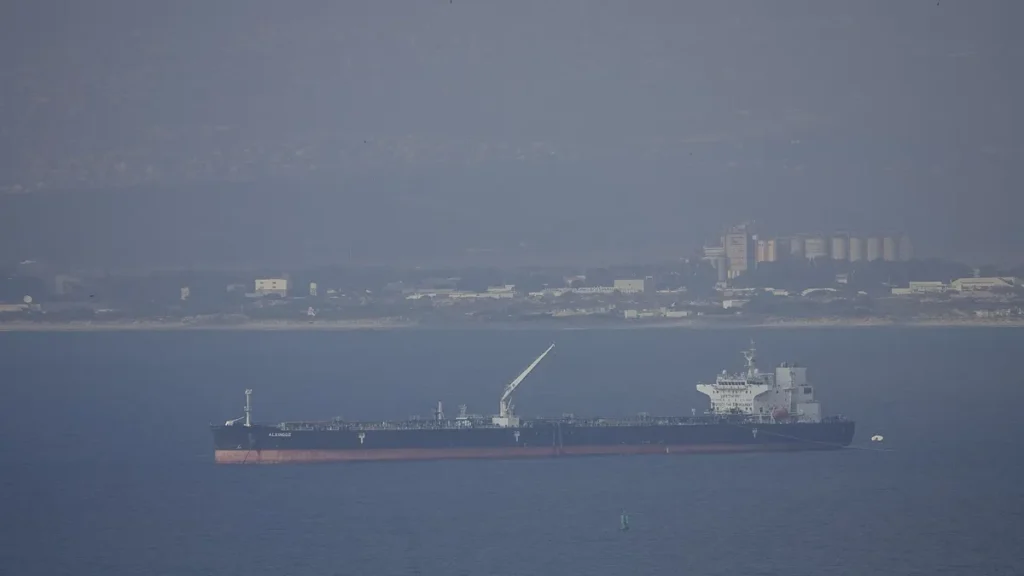
Photo: DmitTrix, CC BY 4.0, via Wikimedia Commons
Exam angle
Prelims: oil benchmarks, strategic reserves, import shares. · Mains GS-III and GS-II: energy security, sanctions, strategic autonomy.
Practice MCQs
Original practice questions (not PYQs).
'Brent' and 'West Texas Intermediate', often in the news, are:
Answer (a) & explanation
Brent (North Sea) and West Texas Intermediate (United States) are crude oil grades used to set world oil prices.
Consider the following statements:
1. India bought no crude oil from the United States in September.
2. The United Arab Emirates now supplies over a fourth of India's oil imports.
3. India's strategic petroleum reserves are at Visakhapatnam, Mangaluru and Padur.
How many of the above statements are correct?
Answer (c) & explanation
All three are correct. Russia's share fell to 33% in September, and Russia and the United Arab Emirates together supply 60%.
India's strategic petroleum reserves are located at:
Answer (a) & explanation
India's strategic crude oil reserves are in rock caverns at Visakhapatnam, Mangaluru and Padur.
Questions students ask about this
How much oil did India buy from the United States in September?
None. Imports from the United States fell to zero.
What was Russia's share of India's oil imports in September?
33%, down from 44% in August and a record 51% in July.
Which law triggered the change?
The Lindsey O. Graham Sanctioning Russia and Iran Act of 2026, signed on 18 September, which allows tariffs of up to 100% on big buyers of Russian oil.
Where are India's strategic petroleum reserves?
At Visakhapatnam, Mangaluru and Padur.