
New panel to make Indian banks world-class
Only two Indian banks are among the world’s 100 biggest. To change that, the government has set up a High Level Committee on Banking for Viksit Bharat to review the whole banking sector and suggest reforms to make banks globally competitive, inclusive and safe. Read it to revise banking reforms, the Capital Adequacy Ratio and Basel III.
- Head
- Suresh N. Patel, former CVC
- Report in
- Six months
- Announced in
- Union Budget 2026-27
- Indian banks in world top 100
- Two
The banking panel: what happened?
A growing economy needs big, strong banks to fund roads, factories and homes. India’s banks are healthier than a decade ago, but still small by world standards.
- The Ministry of Finance has set up a High Level Committee on Banking for Viksit Bharat, announced in the Union Budget 2026-27.
- It is headed by Suresh N. Patel, former Central Vigilance Commissioner.
- Members include Reserve Bank Deputy Governor Shirish Chandra Murmu, former Indian Bank chief Padmaja Chunduru and former Deputy Governor N.S. Vishwanathan.
- It will compare India’s banking practices and prudential norms (safety rules for banks) with global best practice.
- It will also look at laws for Regional Rural Banks and cooperative banks, and long-term capital for banks, Development Financial Institutions and non-banking financial companies. It has six months to report.
How have India’s banks been reformed before?
Banks were nationalised in 1969 and 1980 to spread banking to villages. By the 1990s, many were weak and inefficient.
The Narasimham Committees of 1991 and 1998 led to big reforms: lower reserve rules, entry of private banks and better accounting for bad loans.
After a rise in bad loans in the 2010s, the government recapitalised public sector banks, merged many of them and brought the Insolvency and Bankruptcy Code, 2016.
The Capital Adequacy Ratio is the share of a bank’s capital to its risky assets. The Reserve Bank sets it under the Basel III norms. Indian banks must keep a higher level than the global minimum.
What safety rules do banks follow?
| Rule | What it means | Who sets it |
|---|---|---|
| Capital Adequacy Ratio | Capital kept against risky loans | Reserve Bank of India |
| Basel III | Global rules for capital and liquidity | Basel Committee on Banking Supervision |
| NBFC rules | NBFCs cannot take demand deposits | Reserve Bank of India |
Which laws and Articles apply?
- Banking Regulation Act, 1949: the Reserve Bank regulates banks.
- Reserve Bank of India Act, 1934: sets up the Reserve Bank.
- Regional Rural Banks Act, 1976: governs Regional Rural Banks.
- Insolvency and Bankruptcy Code, 2016: time-bound resolution of bad loans.
Why does the banking panel matter?
| Angle | What to note |
|---|---|
| Viksit Bharat | A developed economy needs big, strong banks. |
| Safety | Global norms protect depositors. |
| Inclusion | Rural and cooperative banks reach small borrowers. |
| Long-term funds | Infrastructure needs long-term capital. |
What are the problems with the banking panel?
- Indian banks are small compared to global giants.
- Cooperative banks have had frauds and weak supervision.
- Long-term infrastructure lending is risky for banks.
- Bigger banks may lend less to small borrowers.
What should be done next on the banking panel?
- Bring Indian rules closer to global best practice.
- Strengthen supervision of cooperative banks.
- Build Development Financial Institutions for long-term lending.
- Use technology to reach more people at low cost.
What can Prelims ask on the banking panel?
Prelims probability: Expect a question on the Capital Adequacy Ratio: set by the Reserve Bank of India under Basel III norms, not by each bank.
- Capital Adequacy Ratio: set by the Reserve Bank under Basel III norms, not by each bank.
- NBFCs cannot accept demand deposits.
- Narasimham Committees: 1991 and 1998.
- High Level Committee on Banking for Viksit Bharat: headed by Suresh N. Patel; six months.
- Bank nationalisation: 1969 and 1980.
How to write about the banking panel in Mains
Practice question (15 marks, 250 words): India needs globally competitive banks to become a developed nation by 2047. Discuss the challenges and the reforms needed.
- Intro: new High Level Committee; only two Indian banks in world top 100.
- Past reforms: nationalisation, Narasimham, IBC, mergers.
- Challenges: size, cooperative banks, long-term funds.
- Reforms: global norms, DFIs, supervision, technology.
- Conclusion: strong, safe, inclusive banks for Viksit Bharat.
Ready lines for your answer
- A developed India needs world-class banks.
- Strong banks protect depositors and fund growth.
Quotable data pointOnly two Indian banks are among the world's 100 biggest; the panel has six months to report.
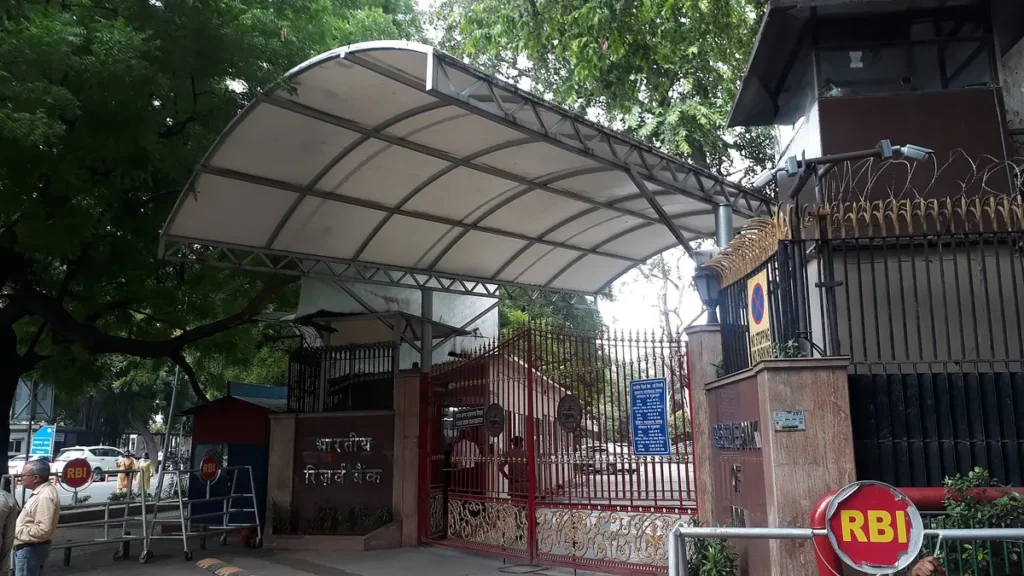
Photo: Pinakpani, CC BY-SA 4.0, via Wikimedia Commons
Exam angle
Prelims: CAR, Basel III, NBFC rules, Narasimham Committees. · Mains GS-III: banking reforms, financing growth.
Practice MCQs
Original practice questions (not PYQs).
Consider the following statements:
1. Non-banking financial companies cannot accept demand deposits.
2. The Capital Adequacy Ratio is decided by each bank on its own.
3. Basel III norms aim to make banks stronger against financial shocks.
How many of the above statements are correct?
Answer (b) & explanation
Statements 1 and 3 are correct. The Reserve Bank of India sets the Capital Adequacy Ratio, not each bank.
The new High Level Committee on Banking for Viksit Bharat is headed by:
Answer (a) & explanation
Former Central Vigilance Commissioner Suresh N. Patel heads it. The others are members.
Questions students ask about this
What is the High Level Committee on Banking for Viksit Bharat?
A panel set up by the Ministry of Finance to review the banking sector and suggest reforms to make banks globally competitive, inclusive and safe.
Who heads it?
Suresh N. Patel, former Central Vigilance Commissioner.
How long does it have?
Six months to report.
Who sets the Capital Adequacy Ratio for Indian banks?
The Reserve Bank of India, under Basel III norms.