
India hosts global clean energy summit
The Prime Minister opens the Bharat Renewable Energy Summit and Expo 2026 at Bharat Mandapam, New Delhi, on 2 November. The International Solar Alliance’s Assembly meets alongside. Read it to revise the ISA, India’s clean energy targets and green hydrogen.
- Dates
- 2–5 November 2026
- Venue
- Bharat Mandapam, New Delhi
- Countries
- Over 130
- Side meets
- 9th ISA Assembly; 4th green hydrogen conference
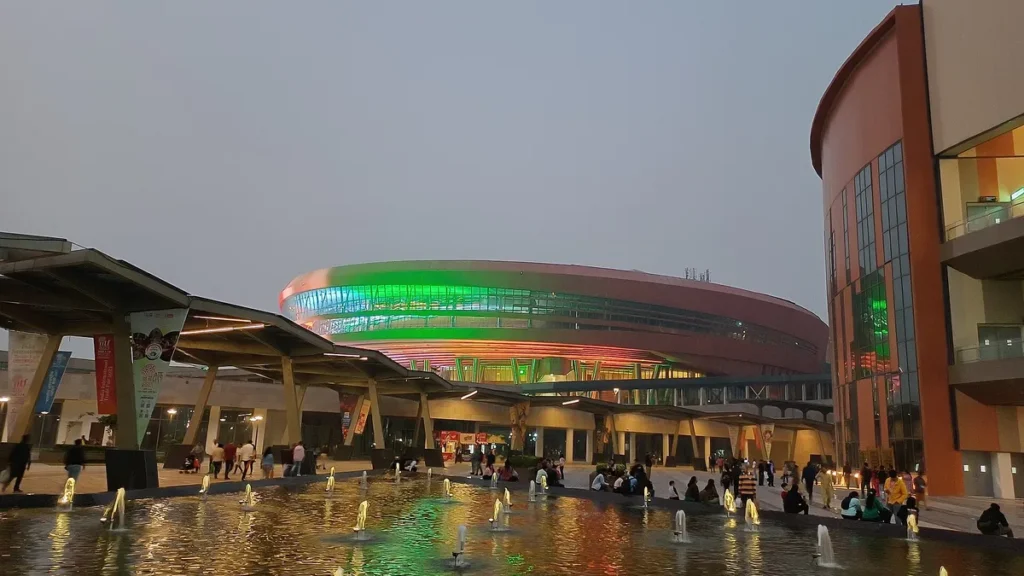
The clean energy summit: what is happening?
India wants to be a clean energy hub, not just a buyer. A big summit with 130 countries is a stage to show projects and win investment.
- The four-day event runs from 2 to 5 November at Bharat Mandapam, New Delhi.
- Over 130 countries, more than 40 Ministers and 400 exhibitors are taking part.
- Country partners include Australia, Denmark, the European Union, France, Germany, the Netherlands, Norway, Sweden and the United Kingdom.
- 13 States and Union Territories, including Uttar Pradesh, will show projects.
- Side meets: the 9th Assembly of the International Solar Alliance and the 4th International Conference on Green Hydrogen.
What is the International Solar Alliance?
The International Solar Alliance (ISA) was launched by India and France in 2015 at the Paris climate summit (COP21).
It is headquartered in Gurugram, Haryana, and became a treaty-based body in 2017. All UN members can now join.
Its Assembly is the top decision-making body, where member countries meet every year.
Its ‘One Sun One World One Grid’ idea aims to link solar power grids across countries. India also aims for 500 gigawatt of non-fossil power capacity by 2030.
Which laws and Articles apply?
- Paris Agreement, 2015: national climate targets.
- Energy Conservation Act, 2001 (amended 2022): carbon credit trading.
- National Green Hydrogen Mission, 2023.
- Electricity Act, 2003.
Why does the clean energy summit matter?
| Angle | What to note |
|---|---|
| Climate | Clean power cuts emissions. |
| Investment | Summit draws global funds. |
| Diplomacy | ISA gives India a global platform. |
| Energy security | Less dependence on imported fuel. |
What are the problems with the clean energy summit?
- Storage and grid capacity lag behind solar growth.
- Dependence on imported solar parts.
- Land and transmission delays.
- Green hydrogen is still costly.
What should be done next on the clean energy summit?
- Build battery storage and transmission lines.
- Boost local manufacturing of solar modules and cells.
- Use ISA to fund solar in poorer countries.
- Cut costs of green hydrogen through scale.
What can Prelims ask on the clean energy summit?
Prelims probability: Expect a question on the International Solar Alliance: launched in 2015 at Paris by India and France; headquartered at Gurugram.
- ISA: launched 2015 at Paris (COP21) by India and France.
- ISA headquarters: Gurugram, Haryana.
- OSOWOG: One Sun One World One Grid.
- Target: 500 GW non-fossil capacity by 2030.
- National Green Hydrogen Mission: 2023.
How to write about the clean energy summit in Mains
Practice question (GS-III, 15 marks, 250 words): How can the International Solar Alliance help India’s climate leadership and energy security?
- Intro: summit and 9th ISA Assembly.
- ISA role: finance, technology, OSOWOG.
- India’s targets: 500 GW, green hydrogen.
- Challenges: storage, imports, cost.
- Conclusion: solar diplomacy.
Ready lines for your answer
- The sun is a shared resource; so is the solution.
- Clean energy is energy security.
Quotable data pointOver 130 countries and 400 exhibitors at the summit.
Photo: DesiBoy101, CC BY 4.0, via Wikimedia Commons
Exam angle
Prelims: ISA, OSOWOG, 500 GW. · Mains GS-III: renewable energy and climate.
Practice MCQs
Original practice questions (not PYQs).
Consider the following statements: Which of the statements given above are correct?
Answer (a) & explanation
Statements 1 and 2 are correct. Since a 2020 amendment to its Framework Agreement, membership is open to all United Nations member countries.
India's target for installed non-fossil fuel power capacity by 2030 is:
Answer (d) & explanation
India aims for 500 gigawatt of non-fossil power capacity by 2030. The earlier target of 175 gigawatt of renewables was for 2022.
Questions students ask about this
Where is the summit held?
At Bharat Mandapam, New Delhi, from 2 to 5 November 2026.
Who launched the International Solar Alliance?
India and France, in 2015 at the Paris climate summit.
Where is the ISA headquartered?
Gurugram, Haryana.
Which ISA Assembly meets alongside?
The 9th Assembly.