
Monsoon Session not prorogued even after 83 days, a record
Parliament’s Monsoon Session ended its sittings on August 13, but it has still not been formally closed. That is 83 days, the longest such gap on record. Since the session is still alive, the House can be called back at short notice. Read it to revise prorogation, adjournment sine die and Article 85.
- Session began
- July 20
- Adjourned sine die
- August 13
- Gap
- 83 days, a record
- Old record
- 76 days, 1987
The unprorogued session: what happened?
Parliament has gone home, but the session has not officially ended. That small legal step decides how fast the House can be called back.
- The Monsoon Session began on July 20 and was adjourned sine die on August 13.
- 83 days later, it has not been prorogued, the longest such gap on record.
- The Opposition says the government may bring delimitation Bills and the women’s reservation law in a special sitting.
- The earlier record was 76 days in 1987, during the Bofors row; then 61 days in 1989.
What is prorogation?
Adjournment sine die means the House is adjourned without a fixed date to meet again. It is done by the presiding officer.
Prorogation ends the session itself. It is ordered by the President under Article 85(2)(a), on the advice of the government.
While a session is not prorogued, the Speaker can call the House back under Rule 15 of the Lok Sabha’s rules.
Adjournment vs adjournment sine die vs prorogation
| Point | Adjournment | Sine die | Prorogation |
|---|---|---|---|
| Done by | Presiding officer | Presiding officer | President |
| Ends | A sitting | Sittings of a session | The session |
| Pending notices | Stay | Stay | Lapse (except Bills) |
| Pending Bills | Stay | Stay | Stay |
Which laws and Articles apply?
- Article 85(1): gap between two sessions cannot exceed six months.
- Article 85(2): President can summon, prorogue and dissolve the Lok Sabha.
- Rule 15, Lok Sabha rules: Speaker can recall the House.
- Article 107: lapse of Bills happens on dissolution, not prorogation.
Why does prorogation matter?
| Angle | What to note |
|---|---|
| Polity | Core terms UPSC tests often. |
| Executive power | Government controls the session calendar. |
| Accountability | Fewer sittings means less scrutiny. |
| Women’s reservation | Law may be taken up in a special sitting. |
What are the problems with prorogation?
- Recall at short notice can surprise the Opposition.
- Fewer sitting days weaken debate.
- No fixed calendar of sessions in India.
- Session timing depends on the government’s choice.
What should be done next on prorogation?
- Adopt a fixed calendar for sessions.
- Give fair notice before any special sitting.
- Raise the minimum number of sitting days.
- Use committees more between sessions.
What can Prelims ask on prorogation?
Prelims probability: Expect a statement question on prorogation, adjournment sine die and the lapse of Bills, as UPSC asked in 2024.
- Prorogation: by the President.
- Adjournment sine die: by the presiding officer.
- Article 85: max six months between sessions.
- Bills do not lapse on prorogation.
- Pending Bills in the Lok Sabha lapse on its dissolution.
How to write about prorogation in Mains
Practice question (15 marks, 250 words): Explain the difference between adjournment sine die and prorogation. How does the government’s control over the session calendar affect parliamentary accountability?
- Intro: 83-day record.
- Definitions.
- Effects on Bills and notices.
- Accountability concerns.
- Conclusion: fixed calendar.
Ready lines for your answer
- A Parliament that rarely sits cannot check much.
- The calendar of Parliament should belong to Parliament.
Quotable data point83 days without prorogation after adjournment sine die, a record.
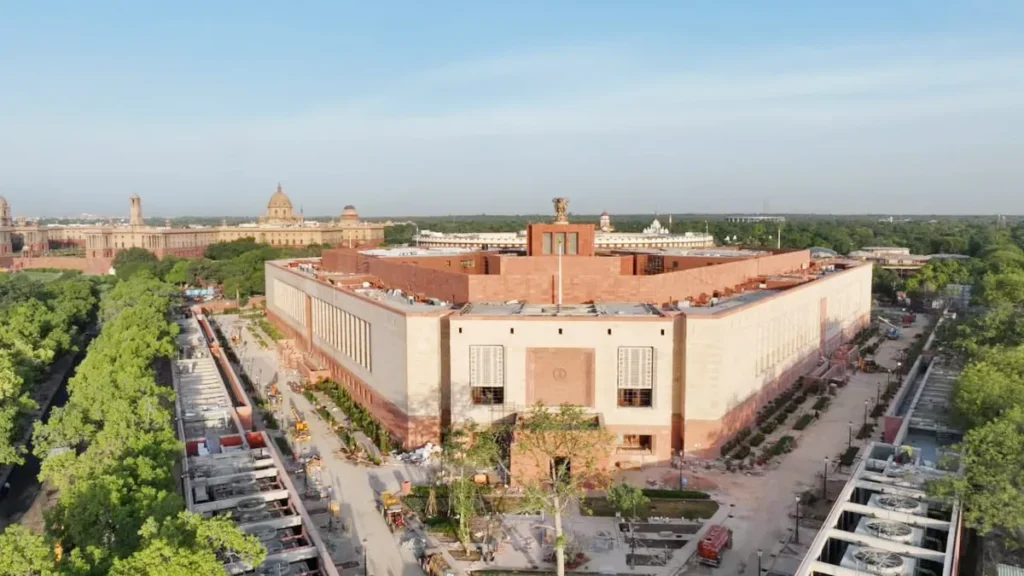
Photo: Ministry of Parliamentary Affairs, GODL-India, via Wikimedia Commons
Exam angle
Prelims: prorogation, sine die, Article 85. · Mains GS-II: Parliament's functioning.
Practice MCQs
Original practice questions (not PYQs).
Consider the following statements:
1. The President prorogues a session of Parliament on the advice of the Council of Ministers.
2. A Bill pending in the Lok Sabha lapses when the House is prorogued.
3. Under Article 85, six months must not pass between the last sitting of one session and the first sitting of the next.
How many of the above statements are correct?
Answer (b) & explanation
Statements 1 and 3 are correct. A pending Bill does not lapse on prorogation; Bills in the Lok Sabha lapse only when it is dissolved.
Questions students ask about this
Who prorogues Parliament?
The President, under Article 85(2)(a).
Do Bills lapse on prorogation?
No. Pending Bills do not lapse on prorogation.
What is the maximum gap between two sessions?
Six months, under Article 85.
What was the old record gap before prorogation?
76 days in 1987, during the Bofors row.