
Rajya Sabha (Council of States): Composition, Election, Special Powers and the Debate on its Role (UPSC Notes + PYQs)
UPSC has already asked about this. Read the story with these questions in mind.
- Prelims 2012Consider the following statements: Union Territories are not represented in the Rajya Sabha. …Solve it below ↓
- Prelims 2012Which of the following special powers have been conferred on the Rajya Sabha by the Constitution of India?Solve it below ↓
See all 5 PYQs
- Prelims 2013Consider the following statements: The Chairman and the Deputy Chairman of the Rajya Sabha are not the members of that House. …Solve it below ↓
- Prelims 2015Consider the following statements: The Rajya Sabha has no power either to reject or to amend a Money Bill. …Solve it below ↓
- Prelims 2013What will follow if a Money Bill is substantially amended by the Rajya Sabha?Solve it below ↓
Background: a council of States
The Rajya Sabha, or Council of States, is the upper House of Parliament. It first met in May 1952. The framers created it for three reasons: to give the States a voice at the Union level in a federal system, to provide a chamber of revision that can take a second, calmer look at legislation passed in haste, and to bring in experienced people who may not want to fight popular elections, including those nominated for their eminence in literature, science, art and social service. Unlike the Lok Sabha, it is a permanent body, with one-third of its members retiring every two years. Its members are elected indirectly by the elected members of State Legislative Assemblies, so its composition reflects the balance of power in the States rather than the latest national mood.
Why a second chamber
The Constituent Assembly wanted a House that represents States and slows down hasty laws. N. Gopalaswami Ayyangar said it would hold “dignified debates” and let experienced people serve who might not fight a popular election. Seats are allotted by population, so UP has 31 and several small States have one; it is not equal representation like the US Senate.
- 1Seats fixed for each State (Fourth Schedule)
- 2Elected MLAs of the State form the electorate
- 3Single transferable vote by open ballot
- 4Quota decides winners
- 5Six-year term; one-third retire every two years
Composition and election
- Present strength 245: 233 elected from States and UTs with legislatures, 12 nominated for literature, science, art and social service (Art. 80(3)).
- Elected by elected MLAs; since 2003, open ballot for party members and no domicile requirement. Both changes were upheld in Kuldip Nayar (2006).
- Term six years; minimum age 30.
- Vice-President is ex officio Chairman; the House elects a Deputy Chairman.
What it can do that the Lok Sabha cannot
- Art. 249: a resolution supported by two-thirds present and voting lets Parliament legislate on a State List subject in the national interest, for a year at a time.
- Art. 312: a similar resolution allows Parliament to create a new All India Service.
- Approves an Emergency proclamation or President’s Rule when the Lok Sabha is dissolved (Art. 352, 356).
- Removal of the Vice-President must begin in the Rajya Sabha (Art. 67(b)).
- Article 249Allow Parliament to legislate on a State List subject
- Article 312Create new All India Services
- EmergencyApprove proclamation if Lok Sabha dissolved
- Vice-PresidentCan initiate removal resolution
Where it is weaker
On a Money Bill it can only recommend changes within 14 days (Art. 109). It cannot vote on demands for grants, and the Council of Ministers is responsible only to the Lok Sabha. In a joint sitting (Art. 108), the Lok Sabha’s larger numbers usually win. Joint sittings have happened only three times: 1961, 1978 and 2002.
The current debate
Critics point to the Money Bill route used to bypass the House (Aadhaar Act 2016, upheld in Puttaswamy 2018, with a larger bench reference pending), to open ballot weakening State representation, and to nominations going to politicians rather than experts. Defenders note that the Rajya Sabha has blocked or reshaped Bills, such as the 1989 Panchayati Raj Bill (64th Amendment) that fell there. A House that revises rather than obstructs is the original design.
Rajya Sabha vs Lok Sabha
| Point | Lok Sabha | Rajya Sabha |
|---|---|---|
| Maximum strength | 550 elected (Article 81) | 250, including 12 nominated (Article 80) |
| Election | Direct, first-past-the-post | Indirect by MLAs, single transferable vote, open ballot |
| Term | Five years unless dissolved | Permanent; members serve six years |
| Minimum age | 25 years | 30 years |
| Presiding officer | Speaker, a member | Vice-President as ex officio Chairman, not a member |
| Money Bills | Introduced and passed; final say | Only recommendations within 14 days |
| No-confidence | Council of Ministers responsible | Cannot remove the government |
Seats and representation
Seats are allotted to States by the Fourth Schedule, broadly according to population, though smaller States get some weightage. Uttar Pradesh has the most seats (31), while several small States have one each. Union Territories with legislatures, Delhi and Puducherry, and Jammu and Kashmir elect members too. This differs from the US Senate, where every State has two senators regardless of size. Critics argue that India’s model weakens the federal character of the House. Another debate followed the 2003 changes to the Representation of the People Act, which removed the requirement that a candidate be a resident of the State he or she represents and introduced open ballot to curb cross-voting. The Supreme Court upheld both in Kuldip Nayar (2006), saying residence is not a constitutional requirement for federalism.
Rajya Sabha: UPSC angle
For UPSC CSE
Prelims: Art. 80, 249, 312, 109, retirement cycle, nominated categories, joint sitting. Mains GS-II: relevance of the second chamber, federal role, Money Bill controversy.
Rajya Sabha UPSC PYQs (Prelims)
Questions UPSC has actually asked, from the official papers. Pick an option to check yourself.
Consider the following statements :
– 1. Union Territories are not represented in the Rajya Sabha.
– 2. It is within the purview of the Chief Election Commissioner to adjudicate the election disputes.
– 3. According to the Constitution of India, the Parliament consists of the Lok Sabha and the Rajya Sabha only.
Which of the statements given above is/are correct?
Delhi and Puducherry (and now J&K) send members to the Rajya Sabha. Election disputes are decided by the High Courts (and the Supreme Court), not the Election Commission. Under Article 79, Parliament is the President and the two Houses. All three statements are wrong. Answer as per the official UPSC key · Battle IAS PYQ bankAnswer (d) & why
Which of the following special powers have been conferred on the Rajya Sabha by the Constitution of India?
The Rajya Sabha, as the House of the States, alone can pass a resolution by a two-thirds majority letting Parliament legislate on a State List subject (Art. 249) and create new All India Services (Art. 312). The other options are done by ordinary law of both Houses. Answer as per the official UPSC key · Battle IAS PYQ bankAnswer (b) & why
Consider the following statements :
– 1. The Chairman and the Deputy Chairman of the Rajya Sabha are not the members of that House.
– 2. While the nominated members of the two Houses of the Parliament have no voting right in the presidential election, they have the right to vote in the election of the Vice President.
Which of the statements given above is/are correct?
The Chairman (the Vice President) is not a member of the Rajya Sabha, but the Deputy Chairman is elected from among its members, so 1 is wrong. Nominated members cannot vote for the President but do vote for the Vice President. Answer as per the official UPSC key · Battle IAS PYQ bankAnswer (b) & why
Consider the following statements :
– 1. The Rajya Sabha has no power either to reject or to amend a Money Bill.
– 2. The Rajya Sabha cannot vote on the Demands for Grants.
– 3. The Rajya Sabha cannot discuss the Annual Financial Statement.
Which of the statements given above is/are correct?
On a Money Bill the Rajya Sabha can only recommend, within 14 days (Article 109). Demands for Grants are voted only in the Lok Sabha (Article 113). But the Budget is laid before both Houses (Article 112), and the Rajya Sabha debates it. Answer as per the official UPSC key · Battle IAS PYQ bankAnswer (b) & why
What will follow if a Money Bill is substantially amended by the Rajya Sabha?
The Rajya Sabha can only recommend changes to a Money Bill, within 14 days. The Lok Sabha is free to accept or reject them, and the Bill is then deemed passed by both Houses (Art. 109). There is no joint sitting on a Money Bill. Answer as per the official UPSC key · Battle IAS PYQ bankAnswer (a) & why
Mains PYQs on this topic
No UPSC Mains question from 2023-2026 is directly on this topic. Older papers (2013-2022) will be added as the Mains bank grows.
Quick quiz
Parliament can legislate on a State List subject in the national interest after a Rajya Sabha resolution under
Two-thirds of members present and voting.Answer (a)
How many members can the President nominate to the Rajya Sabha?
Article 80(1)(a).Answer (c)
A Money Bill must be returned by the Rajya Sabha within
Article 109.Answer (b)
FAQs
Can the Rajya Sabha be dissolved?
No. It is a permanent body; one-third of its members retire every second year.
Who presides over the Rajya Sabha?
The Vice-President, as ex officio Chairman.
Is voting in Rajya Sabha elections secret?
No. Since the 2003 amendment to the Representation of the People Act, party MLAs must show their ballot to the party’s authorised agent.
Can a Rajya Sabha member be Prime Minister?
Yes. Manmohan Singh was a Rajya Sabha member throughout his tenure.
How many members are nominated?
Twelve, by the President, from persons with special knowledge or practical experience in literature, science, art and social service.
What is the role of the Rajya Sabha on a Money Bill?
It must return the Bill within 14 days with or without recommendations, which the Lok Sabha may accept or reject.
Why is open ballot used?
To curb cross-voting and money power. Party MLAs must show their marked ballot to the party’s authorised agent.
Spotted an error? Tell us. We correct within 48 hours.
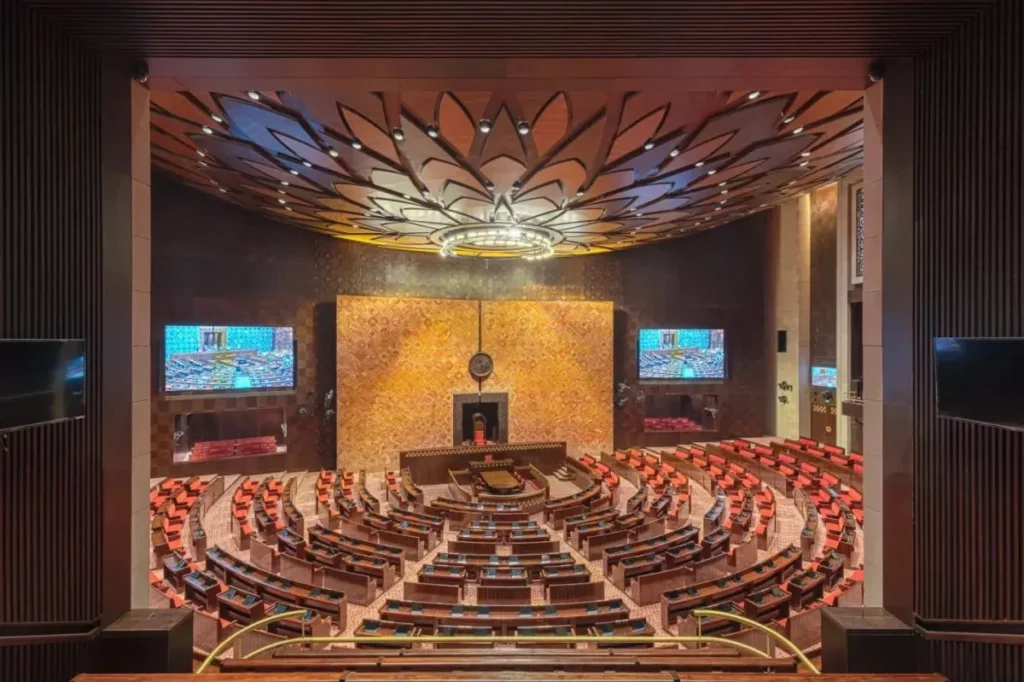
Image: Ministry of Parliamentary Affairs, Wikimedia Commons, GODL-India
How to use this in Mains
If asked: Is the Rajya Sabha still a true 'Council of States'? Discuss. (GS-II)
Quote: “Elected by elected MLAs; since 2003, open ballot for party members and no domicile requirement.”
Use it: Use as evidence that the link with States has weakened.
In the news
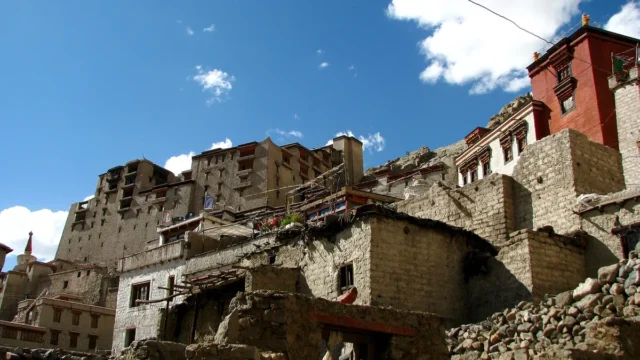
Ladakh draft framework: L-G to have final say on laws of proposed UT-level elected body
The Centre’s draft ‘Constitutional and Statutory Framework’ for Ladakh proposes a Union Territory-level elected body whose every regulation will take effect only after the Lieutenant Governor’s assent, The Hindu reported on 21 October 2026. A new constitutional provision would also give constitutional status to the hill councils. Leh and Kargil groups, who want Sixth Schedule safeguards, meet the Home Ministry this week.
21 Oct 2026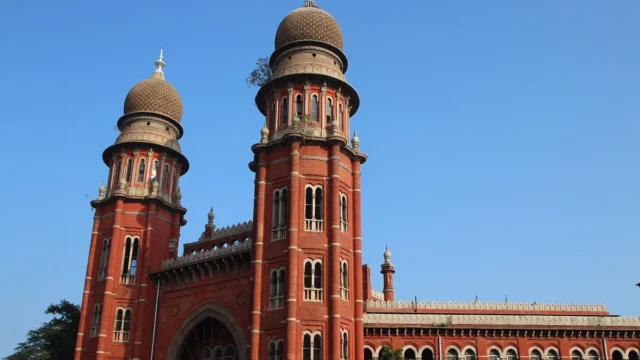
Conversion does not carry over a quota: Supreme Court on Tamil Nadu’s BC Muslim certificates
On 15 October 2026, in The Secretary to Government v. Sameer Ahamed N., the Supreme Court upheld the Madras High Court’s quashing of a 2024 Tamil Nadu order. That order let converts to Islam from Backward, Most Backward, Denotified and Scheduled Caste communities get Backward Class Muslim certificates and use the 3.5% BC Muslim quota. The Court said conversion to Islam does not by itself make a person a member of any of the seven notified BC Muslim communities.
21 Oct 2026
India to host 61st CIML meeting on legal metrology in New Delhi, 26–28 October
India will host the 61st meeting of the International Committee of Legal Metrology (CIML) for the first time, in New Delhi from 26 to 28 October 2026. The Department of Consumer Affairs is organising it with the International Organization of Legal Metrology (OIML), and more than 100 delegates are expected, PIB said on 19 October.
19 Oct 2026
NMC withdraws MSMER-2023: medical colleges lose the fixed penalty rulebook, annual disclosure stays
The National Medical Commission (NMC) has de-notified the Maintenance of Standards of Medical Education Regulations, 2023 (MSMER-2023) by a notification dated 14 October 2026, published in the Gazette on 16 October. Its fixed penalties, including seat cuts and fines of up to ₹5 lakh for false records, go with it. The Annual Disclosure Report stays.
19 Oct 2026