
Merchant charge needed to save UPI ecosystem, NPCI tells SC
The National Payments Corporation of India has told the Supreme Court that a zero merchant fee on all UPI payments is no longer sustainable. It wants a 0.4% charge on larger shop payments to cover costs, while small payments stay free. Read it to revise UPI, MDR and how India’s digital payments work.
- Proposed MDR
- 0.4% on larger shop payments
- Free still
- P2P and P2M under ₹2,000
- Aug 2026 volume
- About 24.51 billion transactions
- 2025-26 volume
- About 241.62 billion
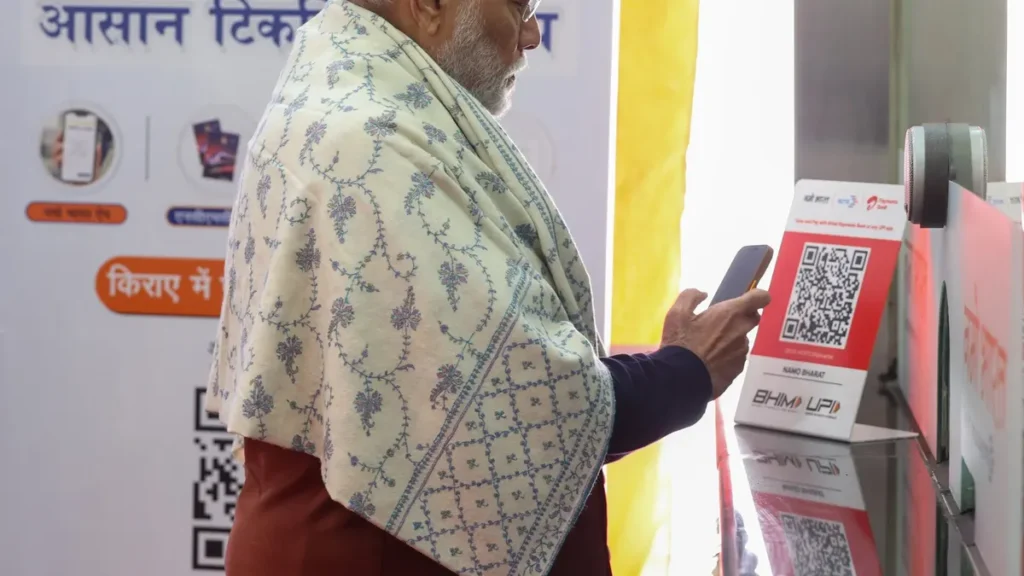
UPI merchant charge: what happened?
UPI moves nearly 80 crore payments a day. NPCI says keeping every shop payment free forever is burning public money.
- NPCI told the Supreme Court that a zero merchant fee on all UPI payments is no longer sustainable.
- It seeks a 0.4% Merchant Discount Rate on person-to-merchant payments above ₹2,000.
- Person-to-person transfers and shop payments under ₹2,000 stay free; the charge covers about 4% of merchant transactions.
- In August 2026, UPI handled about 24.51 billion transactions worth about ₹29.82 lakh crore — roughly 791 million a day.
- NPCI calls the MDR a cost-recovery charge, not a tax needing a new law.
What is UPI and what is MDR?
UPI (Unified Payments Interface) is India’s real-time payment system run by the National Payments Corporation of India. You pay with a phone app using a UPI ID or QR code.
A Merchant Discount Rate (MDR) is a small fee that a shop or business pays when a customer pays digitally. Banks and payment companies use it to cover costs.
For years, India kept MDR at zero on UPI to push digital payments. Volumes are now so large that NPCI says the system needs a small charge on bigger shop payments.
UPI scale
| Point | Figure |
|---|---|
| August 2026 transactions | About 24.51 billion |
| August 2026 value | About ₹29.82 lakh crore |
| Daily average (Aug 2026) | About 791 million |
| Proposed MDR | 0.4% on P2M above ₹2,000 |
Which laws and Articles apply?
- Payment and Settlement Systems Act, 2007: RBI regulates payment systems.
- NPCI: not-for-profit company that runs UPI, set up by banks with RBI guidance.
- Zero-MDR policy: government decision to keep small UPI merchant payments free.
- Article 265: no tax except by authority of law — NPCI argues MDR is not a tax.
Why does the UPI merchant charge matter?
| Angle | What to note |
|---|---|
| Digital India | UPI is the backbone of everyday payments. |
| Sustainability | Someone must pay for the rails. |
| Small shops | Keeping small payments free protects kiranas. |
| Public money | Zero MDR for all was hitting the exchequer. |
What are the problems with the UPI merchant charge?
- Any charge may slow growth of digital payments.
- Small shops may push customers back to cash.
- Banks and fintechs may pass costs on.
- Users may confuse MDR with a government tax.
What should be done next on the UPI merchant charge?
- Keep small payments free forever.
- Publish clear cost data for the charge.
- Review the ₹2,000 threshold after a year.
- Protect users from hidden add-on fees.
What can Prelims ask on the UPI merchant charge?
Prelims probability: High: UPI scale numbers plus MDR versus zero-MDR policy are ready-made Prelims and Economy Mains material.
- UPI is run by NPCI.
- MDR: fee on merchant digital payments.
- Proposed: 0.4% on P2M above ₹2,000.
- P2P stays free.
- August 2026: about 24.51 billion UPI transactions.
How to write about the UPI merchant charge in Mains
Practice question (15 marks, 250 words): Zero-MDR helped UPI grow, but may not be sustainable. Examine the case for a limited merchant charge.
- Intro: NPCI’s plea.
- Why zero MDR was chosen.
- Scale of UPI today.
- Case for and against a limited MDR.
- Conclusion: free for small, fair for large.
Ready lines for your answer
- A free rail is good; a broken rail helps no one.
- Keep small shops free; ask bigger merchants to share the cost.
Quotable data pointAbout 791 million UPI transactions a day in August 2026.
Photo: Government of India, GODL-India, via Wikimedia Commons
Exam angle
Prelims: UPI, NPCI, MDR. · Mains GS-III: digital economy and payments.
Practice MCQs
Original practice questions (not PYQs).
Consider the following statements:
1. Merchant Discount Rate is a charge linked to accepting card or similar digital payments from customers.
2. NPCI says the new UPI merchant charge applies to all person-to-person transfers.
3. UPI is operated on the rails of the National Payments Corporation of India.
How many of the above statements are correct?
Answer (c) & explanation
Statements 1 and 3 are correct. Person-to-person UPI stays free; the MDR discussed is for larger person-to-merchant payments.
Which body told the Supreme Court that a zero MDR on all UPI merchant payments is unsustainable?
Answer (d) & explanation
NPCI filed the affidavit defending the merchant charge as cost recovery for the UPI ecosystem.
Which of the following best describes Merchant Discount Rate?
Answer (b) & explanation
UPSC Prelims 2018 defined MDR as the charge to a merchant for accepting payments through the bank's debit cards; the same idea applies to digital acceptance fees.
Questions students ask about this
What charge does NPCI want?
A 0.4% Merchant Discount Rate on person-to-merchant UPI payments above ₹2,000.
Will small payments stay free?
Yes. Person-to-person and shop payments under ₹2,000 stay free.
Who runs UPI?
The National Payments Corporation of India (NPCI).
How big is UPI now?
In August 2026 alone, about 24.51 billion transactions worth about ₹29.82 lakh crore.