
Buddha’s relics draw 31,000 at Tawang Monastery
Holy relics of Shakyamuni Buddha from the National Museum are touring Arunachal Pradesh. In seven days at Tawang Monastery, 31,000 devotees saw them. On 8 November the Indian Air Force flew the relics to Bomdila. Read it to revise Mahayana Buddhism, Piprahwa and Himalayan monasteries.
- Venue
- Tawang Monastery (Gaden Namgyal Lhatse)
- Visitors in 7 days
- 31,000
- Next stop
- Bomdila (till 13 Nov), then Namsai (14–20 Nov)
- Return to Delhi
- 21 November
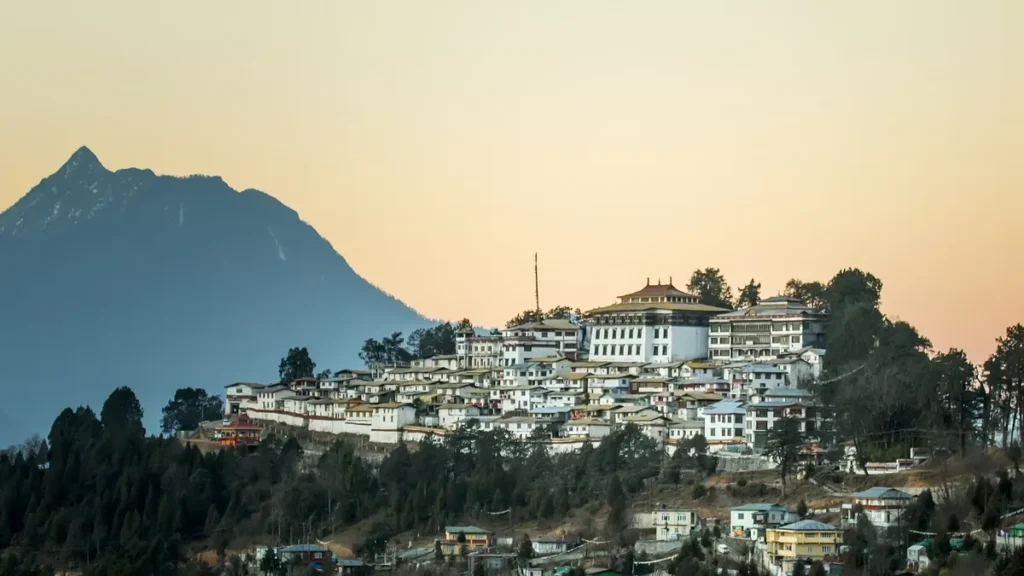
Buddha relics at Tawang: what happened?
A border State’s largest monastery just hosted one of Buddhism’s most sacred journeys.
- Holy relics of Shakyamuni Buddha, kept at the National Museum in New Delhi, are touring Arunachal Pradesh, organised by the Ministry of Culture, the State government and the International Buddhist Confederation.
- The relics reached Tawang on 31 October; in seven days 31,000 devotees and visitors saw them at Gaden Namgyal Lhatse, the Tawang Monastery.
- Two exhibitions opened there, one on the discovery of the Piprahwa relics in 1898; an international conference on the spread of Buddhism in the Himalayan region was held on 2 November.
- On 8 November the Indian Air Force flew the relics to Bomdila, where they stay till 13 November; they then go to the Golden Pagoda at Namsai (14 to 20 November) and return to Delhi on 21 November.
What should you know about Tawang and Piprahwa?
Shakyamuni means ‘sage of the Shakyas’; Tathagata is another name of the Buddha. Nayaputta refers to Mahavira, not the Buddha.
Mahayana features include treating the Buddha as a god, image worship and the Bodhisattva path.
Tawang Monastery was founded in 1680–81 by Merak Lama Lodre Gyatso; it follows the Gelug school and is India’s largest monastery.
Piprahwa, in Siddharthnagar, Uttar Pradesh, is where relic caskets were found in 1898; it is linked with ancient Kapilavastu.
Where the relics go
| Stop | Dates |
|---|---|
| Tawang Monastery | 31 Oct – 8 Nov (31,000 visitors) |
| Bomdila | Till 13 November |
| Golden Pagoda, Namsai | 14–20 November |
| National Museum, Delhi | Return 21 November |
Which themes apply?
- Ministry of Culture and International Buddhist Confederation as organisers.
- Buddhism as living heritage in the Himalayan borderlands.
- Piprahwa (UP) as a key archaeological link to the Buddha’s clan.
- Soft power: cultural diplomacy with Buddhist communities.
Why does the Buddha relic tour matter?
| Angle | What to note |
|---|---|
| Culture | Living Mahayana practice at Tawang. |
| Geography | Bomdila pass and border-State heritage. |
| UP link | Piprahwa relics discovered in 1898. |
| Prelims | Shakyamuni, Gelug, Piprahwa, Bomdila. |
What are the problems with the Buddha relic tour?
- Border logistics make relic tours costly and complex.
- Crowds need careful conservation of fragile relics.
- Local benefits must reach monasteries and towns, not only visitors.
- Communal and strategic sensitivities in border areas need care.
What should be done next on the Buddha relic tour?
- Document and share Piprahwa research more widely.
- Support monastery conservation and local livelihoods.
- Use such tours for cultural education in schools.
- Keep security and crowd management tight.
What can Prelims ask on the Buddha relic tour?
Prelims probability: Medium. Past-question trend: names of the Buddha (2024), Mahayana (2019) and Himalayan monasteries (2014); Bomdila pass in Uttar Pradesh paper 2025. Freshness: a national relic tour in a border State. Static link: Piprahwa (Uttar Pradesh), Gelug school. Testable fact: relics go Tawang, Bomdila, then Namsai’s Golden Pagoda.
- Tawang Monastery: founded 1680–81, Gelug school.
- Piprahwa: Siddharthnagar, UP; relics found 1898.
- Bomdila: West Kameng, Arunachal Pradesh.
- Nayaputta = Mahavira, not the Buddha.
- 31,000 visitors in seven days at Tawang.
How to write about the Buddha relic tour in Mains
Practice question (15 marks, 250 words): Himalayan monasteries are both spiritual centres and strategic cultural assets. Discuss with reference to the Buddha relic exposition in Arunachal Pradesh.
- Intro: 31,000 at Tawang.
- Mahayana, Gelug, Tawang history.
- Piprahwa and the tour route.
- Soft power and border heritage.
- Conclusion: faith, culture and geography.
Ready lines for your answer
- A relic tour is also a map of living Buddhism.
- Piprahwa ties Uttar Pradesh to the Buddha's story.
Quotable data point31,000 at Tawang; Bomdila then Namsai; Piprahwa 1898.
Photo: Vikramjit Kakati, CC BY-SA 4.0, via Wikimedia Commons
Exam angle
Prelims: Buddha names, Mahayana, Piprahwa. · Mains GS-I: culture.
Practice MCQs
Original practice questions (not PYQs).
Which of the following is NOT an epithet of Gautama Buddha?
Answer (c) & explanation
Nayaputta refers to Mahavira; Shakyamuni and Tathagata are names of the Buddha.
Consider the following statements:
1. Tawang Monastery belongs to the Gelug school of Tibetan Buddhism.
2. Piprahwa, where relic caskets were found in 1898, is in Uttar Pradesh.
3. Bomdila is a pass located in Sikkim.
How many of the above statements are correct?
Answer (b) & explanation
Statements 1 and 2 are correct. Bomdila is in West Kameng district of Arunachal Pradesh.
Questions students ask about this
How many people saw the relics at Tawang?
About 31,000 in seven days.
Which school does Tawang Monastery follow?
The Gelug school of Tibetan Buddhism.
Where is Piprahwa?
In Siddharthnagar district of Uttar Pradesh; relic caskets were found there in 1898.
Where do the relics go after Bomdila?
To the Golden Pagoda at Namsai (14–20 November), then back to Delhi on 21 November.
Is Nayaputta a name of the Buddha?
No. Nayaputta refers to Mahavira.