
Anti-terror agency takes over Meerut radicalisation case
The National Investigation Agency (NIA) has taken over two terror conspiracy cases, one from Uttar Pradesh and one from Punjab, both involving young Indians being radicalised and recruited through social media. The Uttar Pradesh case, filed by the State’s Anti-Terrorism Squad in April 2026, found Pakistan-based handlers pushing youth towards attacks; one accused was allegedly offered money and a passport to Dubai to throw grenades. Read it to revise the NIA, anti-terror laws and how online radicalisation works.
- Agency
- National Investigation Agency
- Cases taken over
- One from Uttar Pradesh, one from Punjab
- State case filed
- By the Anti-Terrorism Squad, April 2026
- Method
- Recruitment through social media
Meerut radicalisation case: what happened?
Recruitment for terror no longer needs a secret camp. Sometimes it starts with a friendly message on a phone — which is why this case matters.
- The National Investigation Agency has taken over two terror conspiracy cases, one from Uttar Pradesh and one from Punjab. Both involve young Indians being radicalised and recruited through social media.
- The Uttar Pradesh case was filed by the Anti-Terrorism Squad in April 2026. It found that Pakistan-based handlers were using social media to push Indian youth towards attacks.
- The accused include Tushar Chauhan of Meerut and Sameer of Delhi, arrested with arms and ammunition, and alleged Pakistani spy agents.
- One accused was allegedly told to throw grenades at the homes of some leaders, for ₹50,000 in advance, ₹2.5 lakh later and a passport to Dubai.
- In Punjab, a petrol bomb attack on a party office in Sangrur in July was allegedly linked to the Khalistan Liberation Army through a handler abroad.
What is the NIA and what is radicalisation?
The NIA was set up under the National Investigation Agency Act, 2008, after the 26/11 Mumbai attacks. It probes terror and other serious offences across States. The Centre can hand it a case under the Act, and it can work anywhere in India; a 2019 amendment let it probe certain offences against Indians abroad.
Radicalisation means slowly pushing a person towards extreme views and violence. Online, handlers find lonely or angry young people, flatter them, feed them hate and then offer money for small tasks that grow into attacks.
Most such cases are booked under the Unlawful Activities (Prevention) Act, 1967, India’s main anti-terror law. Section 69A of the Information Technology Act lets the government block online content that threatens security.
Two cases, one pattern
| Point | State case | Punjab case |
|---|---|---|
| Who filed first | Anti-Terrorism Squad, April 2026 | State police |
| Alleged link | Pakistan-based handlers | Khalistan Liberation Army handler abroad |
| Method | Social media recruitment | Handler abroad directing attack |
Which laws apply?
- National Investigation Agency Act, 2008 (amended 2019).
- Unlawful Activities (Prevention) Act, 1967: main anti-terror law.
- Information Technology Act, 2000, Section 69A: blocking of online content.
- Police and public order are State subjects, but the NIA can take over scheduled offences.
Why does the NIA’s Meerut case matter?
| Angle | What to note |
|---|---|
| Internal security | Shows how terror recruitment has moved online. |
| Federalism | Centre-State roles in probing terror cases. |
| Technology | Social media’s role in radicalisation. |
| Prelims | NIA Act 2008, UAPA 1967, Section 69A of the IT Act. |
What are the problems with the NIA’s Meerut case?
- Encrypted apps make online recruitment hard to track.
- Young people with no record are hard to spot early.
- Cross-border handlers are beyond Indian reach.
- Long trials under anti-terror laws raise rights concerns.
What should be done next on the NIA’s Meerut case?
- Build early warning and counselling to pull youth back before they act.
- Work with platforms to take down terror content fast.
- Train State police in cyber investigation.
- Speed up trials while protecting fair-trial rights.
What can Prelims ask on the NIA’s Meerut case?
Prelims probability: Low. No direct Prelims question on the agency was found, but internal security laws come up in Mains every year. Testable facts: the 2008 Act, the 1967 anti-terror law, Section 69A of the Information Technology Act.
- NIA set up under the NIA Act, 2008, after 26/11.
- 2019 amendment: NIA can probe certain offences against Indians abroad.
- Unlawful Activities (Prevention) Act, 1967: main anti-terror law.
- Section 69A, IT Act: power to block online content.
- State’s Anti-Terrorism Squad filed the case in April 2026.
How to write about the NIA’s Meerut case in Mains
Practice question (15 marks, 250 words): Online radicalisation is a growing threat to India’s internal security. Discuss its nature and the measures needed to counter it.
- Intro: NIA takes over cases of social media recruitment.
- How online radicalisation works: handlers, hate, money for tasks.
- Legal tools: NIA Act, UAPA, Section 69A.
- Challenges: encryption, cross-border handlers, rights.
- Way forward: early warning, platform cooperation, cyber policing, de-radicalisation.
Ready lines for your answer
- Today’s recruiter does not knock on the door; he sends a friend request.
- De-radicalisation is cheaper than counter-terrorism.
Quotable data pointNIA takes over State and Punjab terror cases; State case filed by the Anti-Terrorism Squad in April 2026.
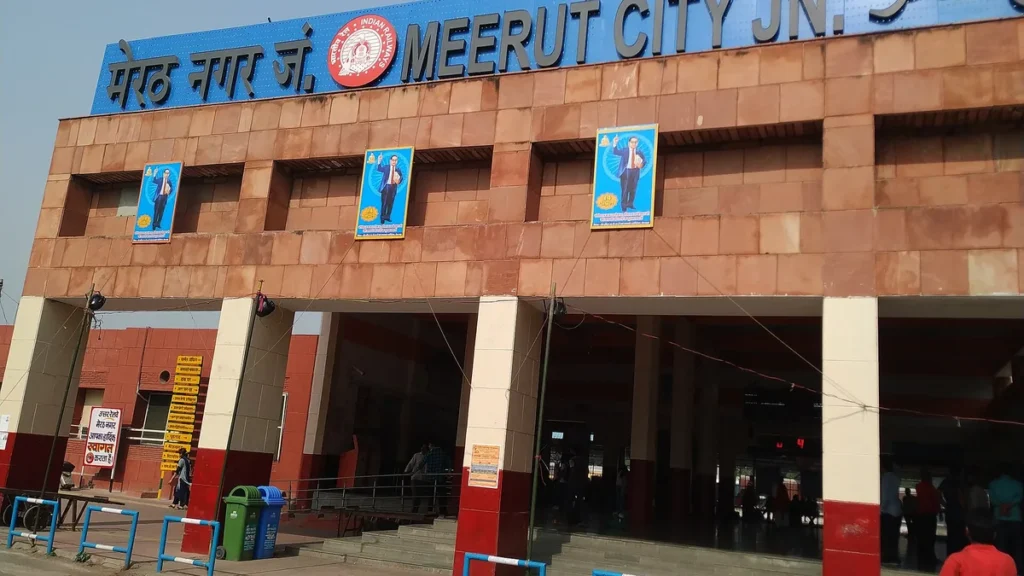
Photo: Ravi Dwivedi, CC BY-SA 4.0, via Wikimedia Commons
Exam angle
Prelims: NIA Act 2008, UAPA 1967, Section 69A IT Act. · Mains GS-III: terrorism and online radicalisation.
Practice MCQs
Original practice questions (not PYQs).
The National Investigation Agency was set up under a law passed in:
Answer (d) & explanation
The National Investigation Agency Act was passed in 2008, after the Mumbai terror attacks.
Consider the following statements:
1. Police and public order are subjects in the State List.
2. Article 355 makes it the duty of the Union to protect every State against internal disturbance.
3. Section 69A of the Information Technology Act, 2000 allows the government to block online content.
How many of the above statements are correct?
Answer (c) & explanation
All three are correct.
Questions students ask about this
Why did the NIA take over the case?
The NIA handles terror cases with links across States or abroad. Both cases involve handlers outside India and recruitment through social media.
What is online radicalisation?
Slowly pushing a person, often young, towards extreme views and violence through messages, videos and chats on the internet.
Which law is used against terror?
Mainly the Unlawful Activities (Prevention) Act, 1967, along with the NIA Act, 2008.
Can the government block terror content online?
Yes. Section 69A of the Information Technology Act lets it order blocking of content that threatens security or public order.
Is policing not a State subject?
Yes, police and public order are State subjects. But the NIA Act lets the Centre’s agency probe listed serious offences such as terrorism.