
Battery cell tender gets 22 bids; incentive payouts lag
The Ministry of Heavy Industries has received 22 bids to set up 10 gigawatt-hours of large battery cell factories for grid-scale storage, under the ₹18,100-crore production-linked incentive scheme for advanced chemistry cells approved in May 2021. Separately, a NITI Aayog review of all 14 production-linked incentive schemes found that only 18.51% of the ₹1.91 lakh crore outlay had been paid by March 2026, though they brought ₹2.40 lakh crore of investment and 8.49 lakh jobs. Read it to revise industrial policy, batteries and how incentive schemes work.
- Bids received
- 22, for 10 GWh of grid-scale cells
- Scheme size
- ₹18,100 crore; 50 GWh goal (May 2021)
- PLI outlay paid
- 18.51% of ₹1.91 lakh crore by March 2026
- Results so far
- ₹2.40 lakh crore investment, 8.49 lakh jobs
Battery cell tender: what happened?
Solar power is cheap at noon but useless at night — unless you can store it. That is why India wants giant battery cell factories at home.
- The Ministry of Heavy Industries received 22 bids to set up 10 gigawatt-hours (GWh) of large battery cell factories. Reliance Industries, Amara Raja, Exide and Vikram Solar are among the bidders.
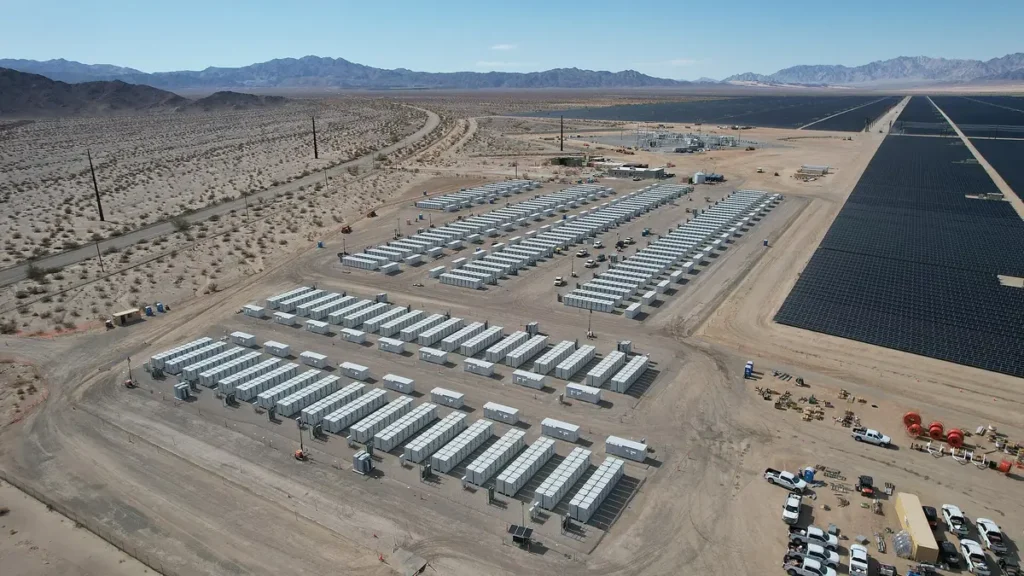
- This capacity is for grid-scale storage — big batteries that store power for the electricity grid.
- It is part of a 50 GWh goal under the ₹18,100-crore production-linked incentive (PLI) scheme for advanced chemistry cells, approved in May 2021.
- A NITI Aayog review of all 14 PLI schemes found only 18.51% of the ₹1.91 lakh crore outlay paid by March 2026.
- The schemes have still brought ₹2.40 lakh crore of investment and 8.49 lakh jobs.
What is a PLI scheme and an advanced chemistry cell?
A production-linked incentive pays a company a reward linked to how much extra it actually makes and sells in India. No production, no payment. India launched 14 such schemes from 2020 for sectors like phones, medicines, solar modules and batteries.
An advanced chemistry cell is a modern battery cell, such as lithium-ion, that stores electricity. It is the heart of electric vehicles and grid batteries. India imports most cells today, mainly from China.
Gigawatt-hour measures storage: 1 GWh can supply one gigawatt of power for one hour. Grid batteries help balance solar and wind, which rise and fall with sun and wind.
Battery scheme and PLI review
| Item | Figure |
|---|---|
| ACC scheme outlay | ₹18,100 crore |
| Cell capacity goal | 50 GWh |
| Latest tender | 10 GWh, 22 bids |
| PLI outlay paid (14 schemes) | 18.51% of ₹1.91 lakh crore |
| Investment and jobs | ₹2.40 lakh crore; 8.49 lakh jobs |
Which schemes and bodies apply?
- PLI scheme for Advanced Chemistry Cell battery storage, approved May 2021, run by the Ministry of Heavy Industries.
- 14 PLI schemes across sectors, launched from 2020 under Aatmanirbhar Bharat.
- NITI Aayog: the government’s policy think-tank, which reviewed the schemes.
- National Electricity Plan and energy storage push to back up renewable power.
Why does the battery cell scheme matter?
| Angle | What to note |
|---|---|
| Economy | Shows how well India’s incentive-led manufacturing push is working. |
| Energy | Batteries are key to using more solar and wind. |
| Strategy | Cuts dependence on imported cells. |
| Prelims | ₹18,100 crore, 50 GWh, 18.51% paid, NITI Aayog. |
What are the problems with the battery cell scheme?
- Low payouts show many firms have not met production targets.
- Cell making needs minerals like lithium that India mostly imports.
- Technology and skilled workers are still limited.
- Delays in earlier ACC awards slowed the 50 GWh goal.
What should be done next on the battery cell scheme?
- Speed up checks and payouts for firms that meet targets.
- Secure critical minerals through mining and foreign partnerships.
- Build battery recycling to recover lithium and cobalt.
- Link storage demand to renewable tenders so factories have buyers.
What can Prelims ask on the battery cell scheme?
Prelims probability: Medium. NITI Aayog was asked in 2015, and batteries and storage are recent favourites. Fresh: the first review of all 14 incentive schemes. Testable facts: ₹18,100 crore, 50 gigawatt-hours of cells, 18.51% paid out.
- PLI ACC scheme: ₹18,100 crore, 50 GWh, approved May 2021.
- Latest tender: 10 GWh for grid-scale storage; 22 bids.
- NITI Aayog review: 18.51% of ₹1.91 lakh crore paid by March 2026.
- 14 PLI schemes brought ₹2.40 lakh crore investment and 8.49 lakh jobs.
- Gigawatt-hour: unit of stored energy.
How to write about the battery cell scheme in Mains
Practice question (15 marks, 250 words): Production-linked incentive schemes have drawn investment but slow payouts raise questions about their design. Evaluate with reference to the advanced chemistry cell scheme.
- Intro: 22 bids for 10 GWh; NITI review shows 18.51% paid.
- What PLI is and why batteries matter for clean power.
- Gains: ₹2.40 lakh crore investment, 8.49 lakh jobs.
- Problems: missed targets, minerals, technology, delays.
- Way forward: faster payouts, mineral security, recycling, assured demand.
Ready lines for your answer
- Solar power is half a solution without storage.
- An incentive that is not paid is a promise, not a policy.
Quotable data point22 bids for 10 GWh under ₹18,100-crore ACC PLI (50 GWh goal); only 18.51% of ₹1.91 lakh crore PLI outlay paid by March 2026.
Photo: blmcalifornia, Public domain, via Wikimedia Commons
Exam angle
Prelims: PLI ACC ₹18,100 crore, 50 GWh, NITI Aayog review. · Mains GS-III: industrial policy and energy storage.
Practice MCQs
Original practice questions (not PYQs).
The production-linked incentive scheme for advanced chemistry cell batteries aims at a total manufacturing capacity of:
Answer (c) & explanation
The National Programme on Advanced Chemistry Cell Battery Storage, approved in May 2021 with ₹18,100 crore, aims at 50 gigawatt-hours. The latest tender is for 10 gigawatt-hours of it.
Consider the following statements:
1. NITI Aayog replaced the Planning Commission.
2. By March 2026, more than half of the total outlay of the 14 production-linked incentive schemes had been paid out.
3. The 10 gigawatt-hour capacity in the latest battery tender is meant for grid-scale storage.
How many of the above statements are correct?
Answer (b) & explanation
Statements 1 and 3 are correct. Only 18.51% of the outlay had been paid out by March 2026.
Questions students ask about this
What does production-linked incentive mean?
The government pays a reward only on the extra goods a company actually makes and sells. It is a reward for output, not a free grant.
Why does India need battery cell factories?
To store solar and wind power and run electric vehicles, without depending on imported cells, mostly from China.
What does 10 gigawatt-hours mean?
It is the amount of energy the batteries can store. One gigawatt-hour can supply one gigawatt of power for one hour.
Why is only 18.51% of PLI money paid?
Payments come only when firms meet production targets. Many are behind schedule, so less money has been released.
Who reviewed the PLI schemes?
NITI Aayog, the government’s policy think-tank, which looked at all 14 schemes.