
Bulldozer as Uttar Pradesh ‘brand’ sparks row
At the start of work on a tractor plant near Jewar on Thursday, Chief Minister Yogi Adityanath said the bulldozer has become a ‘brand’ of Uttar Pradesh. He said the rule of law has replaced mafia rule, and that action against criminals, including with bulldozers, has drawn investors. He invited firms to make bulldozers and tractors in the State. The Congress and the Samajwadi Party said the bulldozer is a symbol of injustice and alleged it is used mainly against the poor, Dalits, minorities and political rivals. The row revives the debate on demolishing the homes of people accused of crimes, which the Supreme Court restricted in November 2024. Read it to revise the rule of law, the 2024 demolition guidelines, and Articles 21 and 300A.
- What was said
- The Chief Minister called the bulldozer a ‘brand’ of the State
- Where
- At the start of work on a tractor plant near Jewar
- Opposition view
- Congress and Samajwadi Party called it a symbol of injustice
- Court limit
- Supreme Court restricted such demolitions in November 2024
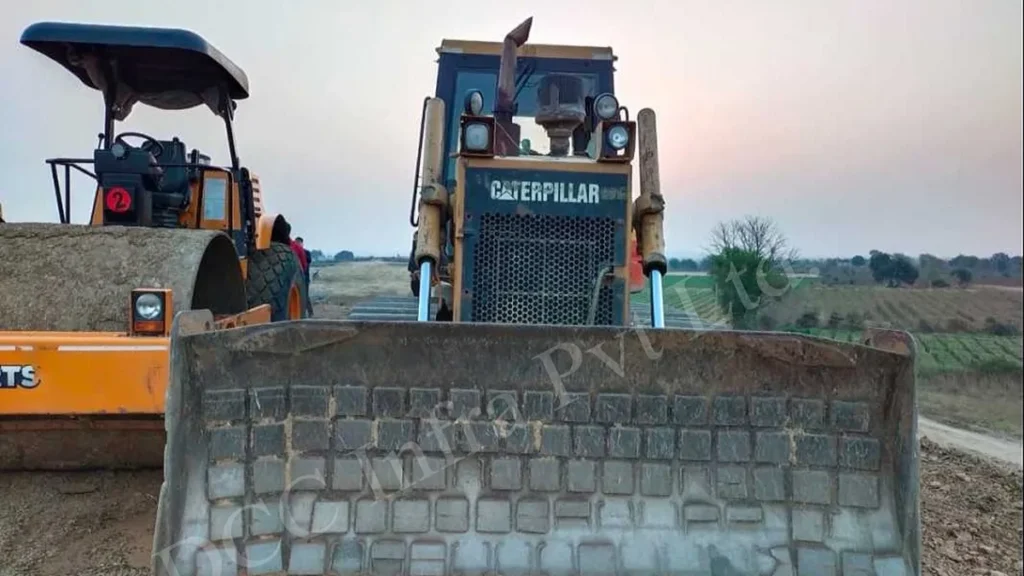
A remark on the bulldozer as a ‘brand’: what happened?
A bulldozer is a machine that clears land. In this debate it has become a symbol — of firmness to some, of injustice to others — and the Supreme Court has already set limits on how it may be used.
- At the start of work on a tractor plant near Jewar on Thursday, Chief Minister Yogi Adityanath said the bulldozer has become a ‘brand’ of Uttar Pradesh.
- He said the rule of law has replaced mafia rule, and that action against criminals, including with bulldozers, has drawn investors. He invited firms to make bulldozers and tractors in the State.
- The Congress and the Samajwadi Party said the bulldozer is a symbol of injustice. They alleged it is used mainly against the poor, Dalits, minorities and political rivals.
- The row revives the debate on demolishing the homes of people accused of crimes, which the Supreme Court restricted in November 2024.
What did the Supreme Court say about demolitions?
In November 2024 the Supreme Court held that a house cannot be demolished only because a person is accused, or even convicted, of a crime. Demolition cannot be used as extra punishment outside the procedure set by law.
The Court laid down steps that authorities must follow, including adequate notice (the judgment is widely cited for 15 days’ notice), a personal hearing for the owner, a reasoned final order, and video recording of the demolition. These are safeguards, not a licence to demolish at will.
Article 21 protects life and personal liberty. Article 300A says no person shall be deprived of property save by authority of law. Together they require due process before a home is pulled down.
Safeguards in the 2024 judgment
| Safeguard | Why it matters |
|---|---|
| Prior notice | The owner must get time to reply; 15 days is the figure commonly cited |
| Personal hearing | The owner must be heard before action |
| Reasoned order | The authority must record why demolition is lawful |
| Video recording | Creates an official record of what was done |
Which laws and Articles apply?
- Article 21: protection of life and personal liberty, including due process.
- Article 300A: no deprivation of property except by authority of law.
- Supreme Court guidelines of November 2024 on demolitions.
- Municipal and land laws may allow removal of illegal structures, but not as a shortcut to punish an accused person.
Why does the bulldozer row matter?
| Angle | What to note |
|---|---|
| Polity | A live test of the rule of law versus executive spectacle. |
| Rights | Articles 21 and 300A protect home and property from arbitrary action. |
| Society | Opposition alleges bias against the poor and minorities; the government denies this. |
| Prelims | Article 300A, Article 21, 15 days’ notice, hearing, reasoned order, video recording. |
What are the problems with the bulldozer row?
- A ‘brand’ built on demolitions can conflict with the Supreme Court’s limits.
- If homes of the accused are pulled down without the 2024 steps, the action is open to challenge.
- Allegations of selective use, if true, would violate equality before the law.
- Investor messaging should not be allowed to blur the line between due process and punishment.
What should be done next on the bulldozer row?
- Every demolition must follow the Supreme Court’s notice, hearing, reasoned-order and recording steps.
- Illegal structures can still be removed, but not as a stand-in for a criminal trial.
- The State should publish data on whose properties are acted against, to answer or rebut the charge of bias.
- Political speech should not undercut compliance with the 2024 judgment.
What can Prelims ask on the bulldozer row?
Prelims probability: Medium. Rule of law was asked in 2018 and due process of law in 2023. Fresh: the debate returns. Testable facts: Article 300A, Article 21, 15 days’ notice under the 2024 judgment.
- Article 21: life and personal liberty.
- Article 300A: property cannot be taken except by authority of law.
- Supreme Court, November 2024: a house cannot be demolished merely because a person is accused or convicted.
- Safeguards: notice (15 days commonly cited), personal hearing, reasoned order, video recording.
- Rule of law: the State itself is bound by law.
How to write about the bulldozer row in Mains
Practice question (15 marks, 250 words): A row has followed a remark that the bulldozer has become a brand of a State. Discuss this in the light of the rule of law and the Supreme Court’s November 2024 guidelines on demolitions.
- Intro: the Jewar remark and the political response.
- Rule of law and Articles 21 and 300A.
- The 2024 judgment: no demolition as extra punishment; notice, hearing, reasoned order, video.
- Issues: selective use, due process, executive spectacle.
- Way forward: comply with the judgment; remove illegal structures only by law.
Ready lines for your answer
- A machine can clear an illegal wall; it cannot replace a trial.
- The rule of law binds the official who orders the bulldozer, not only the person whose house is at risk.
Quotable data pointCM remark at Jewar tractor plant; SC November 2024 guidelines: notice, hearing, reasoned order, video; Articles 21 and 300A.
Photo: dayacharan, CC BY-SA 4.0, via Wikimedia Commons
Exam angle
Prelims: Articles 21 and 300A, 2024 demolition safeguards. · Mains GS-II: rule of law and executive action.
Practice MCQs
Original practice questions (not PYQs).
Consider the following statements:
1. The right to property is a Fundamental Right under Article 31.
2. Article 300A says no person shall be deprived of property save by authority of law.
3. In November 2024, the Supreme Court required 15 days' notice before demolition of a structure.
How many of the above statements are correct?
Answer (b) & explanation
Statements 2 and 3 are correct. Article 31 was repealed by the 44th Amendment in 1978; property is now a constitutional right under Article 300A.
Which of the following is NOT one of the steps laid down by the Supreme Court in November 2024 for demolitions?
Answer (c) & explanation
The Court held that a house cannot be demolished just because a person is accused or convicted of a crime.
Questions students ask about this
What did the Chief Minister say?
That the bulldozer has become a ‘brand’ of Uttar Pradesh, that the rule of law has replaced mafia rule, and that action against criminals has drawn investors.
What did the opposition say?
The Congress and the Samajwadi Party called the bulldozer a symbol of injustice and alleged it is used mainly against the poor, Dalits, minorities and political rivals.
What did the Supreme Court say in November 2024?
That a house cannot be demolished just because a person is accused or convicted of a crime, and that set procedures must be followed.
Which safeguards did the Court stress?
Prior notice (15 days is commonly cited), a personal hearing, a reasoned final order, and video recording of the demolition.
Which Articles are most relevant?
Article 21 (life and personal liberty) and Article 300A (property only by authority of law).