
UPSC Mains 2013 GS Paper 1 Q20: model answer
(a) Bring out the causes for the formation of heat islands in the urban habitat of the world. (100 words) (b) What do you understand by the phenomenon of 'temperature inversion' in meteorology? How does it affect weather and the habitants of the place? (100 words)
What the question wants
(a) Explain why cities become warmer than their surroundings. (b) Define temperature inversion and explain its effects on weather and people.
How to structure it
(a) Bring out the causes: a crisp list with reasons.
- What a heat island is
- Causes
- One-line remedy
(b) What do you understand ... How does it affect: two parts.
- Meaning and conditions
- Effects on weather
- Effects on inhabitants
How to think it through
(a) Walk barefoot on a road and then on grass at 2 pm. Your feet already know the answer. Concrete stores heat and releases it at night; grass cools by evaporation. (b) Normally the air gets cooler as you climb, about 6.5°C per km. An inversion flips that: a warm lid sits over cold air. Think of Delhi in December, with smoke trapped under a lid. That is your example.
Model answer
(a)
An urban heat island is a city area several degrees warmer than the surrounding countryside, most marked at night. Studies have found Delhi's core up to 8–10°C hotter than its green fringes on summer nights.
Causes
- Concrete, asphalt and dark roofs absorb sunlight and release it slowly (low albedo).
- Loss of vegetation and water bodies reduces evaporative cooling.
- Waste heat from vehicles, industries and air-conditioners.
- Tall buildings trap radiation and block winds (urban canyons).
- Pollution and smog trap outgoing heat.
- Less wind ventilation as cities sprawl.
Green roofs, cool reflective surfaces, urban forests and heat action plans such as Ahmedabad's (2013) reduce the effect.
(b)
Normally temperature falls with height at about 6.5°C per kilometre. In a temperature inversion a layer of warmer air lies above cooler air near the ground.
Conditions
Long winter nights, clear skies, calm air, snow cover and valleys where cold air drains down.
Effects on weather
- Very stable air; no convection, so no thunderstorms or rain.
- Fog, frost and smog form in the cold layer.
Effects on inhabitants
- Pollution is trapped: Delhi's winter smog and the London smog of 1952.
- Fog delays flights and trains, and frost damages crops.
- Respiratory illness rises among children and the elderly.
- Hill dwellers settle on warmer upper slopes ('thermal belt'), as in coffee and tea estates.
Draw: (a) Temperature profile rising from rural to downtown and dipping over parks. (b) Height–temperature graph with the line bending right in the inversion layer.
Keywords, cases and data to drop in
(a) Albedo, urban canyon, anthropogenic heat, cool roofs, Ahmedabad Heat Action Plan. (b) Normal lapse rate, stable air, radiation inversion, valley inversion, smog, thermal belt.
Where most answers lose marks
- (a) Blaming only global warming. Heat islands are local and exist even without it. (b) Forgetting the second part of the question: people.
Related Mains PYQs
- Describe the characteristics and types of primary rocks. UPSC 2022 · GS-I
- Discuss the meaning of colour-coded weather warnings for cyclone prone areas given by India Meteorological Department. UPSC 2022 · GS-I
- What are the forces that influence ocean currents? Describe their role in fishing industry of the world. UPSC 2022 · GS-I
- The troposphere is a very significant atmospheric layer that determines weather processes. How? UPSC 2022 · GS-I
Fresh examples from current affairs
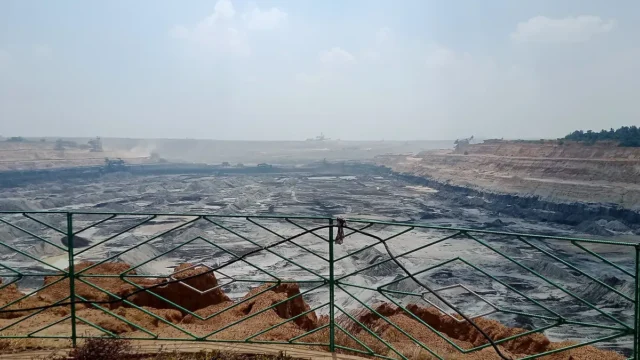
Neyveli, Tiruchirappalli and Atacama: Indian scientists identify Martian analogue sites
Scientists at the University of Kerala, using a laser Raman spectrometer funded under DST-FIST, have identified two minerals that make some places on Earth useful ‘Martian analogue’ sites, DST said on 16 October 2026. Melanterite was found in the lignite of Neyveli, Tamil Nadu. Gypsum was found in the Atacama Desert of Chile and in the Tiruchirappalli Badlands. Both are hydrous sulphates that record how water and rock interacted.
UPSC angle: Prelims: minerals, Raman effect, Atacama. · Mains GS-III: space science and research capacity.
16 Oct 2026
Ancient Gondwana wildfires recorded in Indian coal
BSIP (DST) researchers reported molecular evidence of massive wildfires in Gondwana forests nearly 250 million years ago. Using palynofacies analysis with Raman and FTIR spectroscopy on Godavari Valley Coalfield sediments, they separated high- and low-intensity fire-derived microcharcoal from other opaque particles. The study is in Geological Journal (Wiley).
UPSC angle: Prelims: Gondwana vs Tertiary coal.
25 May 2026
Aravalli Hills: Centre explains move to a uniform definition
The definition decides which hills can be mined. That is why environmental groups are watching closely.
UPSC angle: Prelims: Aravallis. · Mains: Mining vs ecology.
21 Dec 2025Learn the concept
Question text as printed in the official UPSC Civil Services (Main) question paper. The model answer is original Battle IAS work; use it to learn structure, not to memorise.
Want every PYQ in one place? See the Battle IAS PYQ Book.