
UPSC Mains 2013 GS Paper 3 Q1: model answer
With a consideration towards the strategy of inclusive growth, the new Companies Bill, 2013 has indirectly made CSR a mandatory obligation. Discuss the challenges expected in its implementation in right earnest. Also discuss other provisions in the Bill and their implications.
What the question wants
Discuss the challenges in implementing mandatory CSR under the Companies Act 2013, and the Act's other main provisions and their implications.
How to structure it
Two discusses: CSR challenges, then other provisions.
- What Section 135 requires
- Implementation challenges
- Other provisions
- Implications
- Later changes
How to think it through
India is the first country to make CSR spending compulsory by law. Start there. The challenges are practical: where money goes, who checks it, whether it becomes a tax. Then show you know the rest of the Act was a governance overhaul, not just CSR.
Model answer
India became the first country to make corporate social responsibility a legal duty when Section 135 of the Companies Act, 2013 came into force in April 2014.
What the law requires
Companies with a net worth of ₹500 crore, turnover of ₹1,000 crore or net profit of ₹5 crore must spend 2% of average net profit of the previous three years on activities listed in Schedule VII, through a board CSR committee.
Challenges in implementation
- Geographic skew: spending clusters near company headquarters in Maharashtra, Karnataka and Gujarat, not in the poorest districts.
- Tick-box spending: money routed to company foundations or big causes without local need assessment.
- Weak monitoring of outcomes; audits check spending, not results.
- Capacity: few credible NGOs in backward areas.
- 'Tax by another name': firms may cut voluntary philanthropy and treat CSR as a compliance cost.
Other provisions and their implications
- Independent directors on listed boards and at least one woman director: better oversight and diversity.
- Auditor rotation and limits on non-audit services: fewer conflicts.
- One Person Company: easier entry for small entrepreneurs.
- Class action suits and a statutory SFIO: stronger shareholder protection.
Since then
The 2019 amendment made unspent CSR money go to an unspent account or a Schedule VII fund; penalties replaced jail in 2021.
Annual CSR spending is now close to ₹30,000 crore. It works best as a partner of the state, not a substitute for it.
Draw: A funnel: thresholds at the top, 2% in the middle, Schedule VII areas at the bottom.
Keywords, cases and data to drop in
Section 135, Schedule VII, 2% rule, CSR committee, Unspent CSR Account, 2019 and 2021 amendments, SFIO, class action, One Person Company, woman director.
Where most answers lose marks
- Writing only about CSR. The question has a second part on the Bill's other provisions.
Related Mains PYQs
- Examine the view that financial inclusion is an integral part of social and economic inclusion in a country like India. Also throw… UPSC 2026 · GS-III
- How are startups in India promoting entrepreneurship, innovation and employment? Discuss the global and domestic challenges in their working and suggest suitable… UPSC 2026 · GS-III
- Distinguish between the Human Development Index (HDI) and the Inequality-adjusted Human Development Index (IHDI) with special reference to India. Why is the… UPSC 2025 · GS-III
- Examine the pattern and trend of public expenditure on social services in the post-reforms period in India. To what extent this has… UPSC 2024 · GS-III
Fresh examples from current affairs
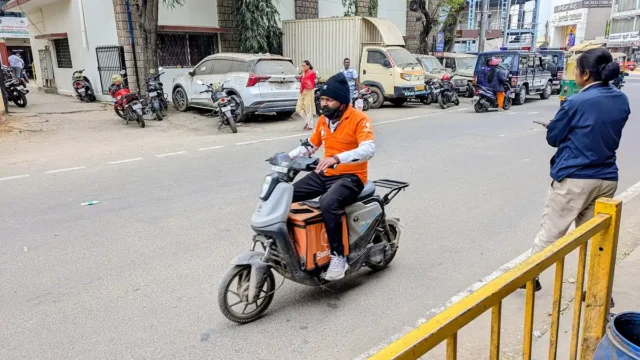
PLFS changes from January 2027: new stratum for platform workers and unpaid work questions
The National Statistics Office announced on 23 October 2026 changes to the Periodic Labour Force Survey from January 2027. A new sampling stratum will capture digital platform (gig) workers, who were under-counted, fresh samples will be drawn from an updated frame, and new questions will measure unpaid household, care and volunteer work. The public has 15 days to comment on the concept note.
UPSC angle: Prelims: PLFS, NSO, LFPR/WPR/UR, Code on Social Security 2020. · Mains GS-III: employment, gig economy, data quality.
23 Oct 2026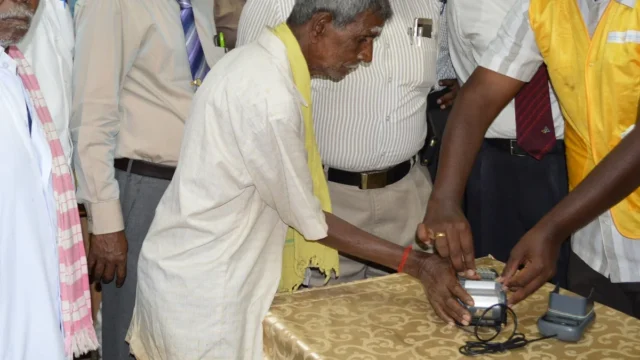
Financial inclusion saturation campaign in 2.70 lakh panchayats and ULBs from 21 October
The Department of Financial Services will run a nationwide campaign from 21 October to 31 December 2026 to saturate financial inclusion schemes in 2.70 lakh gram panchayats and urban local bodies. Bank camps will enrol people in PMJJBY, PMSBY and APY, open Jan Dhan accounts, finish re-KYC and nominations, and spread awareness on digital frauds and unclaimed deposits.
UPSC angle: Prelims: scheme parameters of PMJJBY, PMSBY, APY, PMJDY. · Mains GS-III: inclusive growth and financial inclusion.
20 Oct 2026
PLFS September 2026: unemployment steady at 5%; urban women’s participation highest since October 2025
The Periodic Labour Force Survey (PLFS) Monthly Bulletin for September 2026, released by MoSPI on 15 October 2026, put the unemployment rate (UR) for people aged 15 and above at 5.0%, the same as in August and 0.2 points lower than a year earlier. The labour force participation rate (LFPR) was 55.5%. Urban female LFPR rose to 25.9%, its highest since October 2025, while rural female UR fell to 3.9%, the lowest of 2026.
UPSC angle: Prelims: LFPR, WPR, UR, CWS vs UPS. · Mains GS-III: jobs, inclusive growth and women’s work.
15 Oct 2026
EPFO Amnesty Scheme 2026: deadline 28 December for PF Trust regularisation
EPFO is reminding establishments that the Amnesty Scheme, 2026 for retrospective regularisation of Provident Fund Trust exemption status closes on 28 December 2026. It covers trusts recognised under the Income Tax Act but without a formal exemption order under the EPF Act or the Code on Social Security.
UPSC angle: Prelims: Amnesty dates and legal sections. · Mains GS-III: social security and labour compliance.
13 Oct 2026Learn the concept
Question text as printed in the official UPSC Civil Services (Main) question paper. The model answer is original Battle IAS work; use it to learn structure, not to memorise.
Want every PYQ in one place? See the Battle IAS PYQ Book.