
UPSC Mains 2016 GS Paper 3 Q2: model answer
Women empowerment in India needs gender budgeting. What are the requirements and status of gender budgeting in the Indian context?
What the question wants
State what gender budgeting requires and assess its status in India, linked to women's empowerment.
How to structure it
Requirements, then status.
- Meaning
- Requirements
- Status in India
- Gaps
- Way forward
How to think it through
Gender budgeting analyses every rupee for its effect on women and men. India has had a Gender Budget Statement since 2005–06. Part A covers 100% women schemes, Part B 30–99% and, since 2024–25, Part C below 30%. The 2025–26 allocation was ₹4.49 lakh crore (8.86% of the Budget); 2026–27 shows ₹5.01 lakh crore (9.37%). Gaps: Part B inflated by large schemes, no outcome audit, uneven state adoption.
Model answer
Since 2005–06 the Union Budget has carried a Gender Budget Statement. In 2026–27 it shows ₹5.01 lakh crore (9.37% of spending) for women, up from ₹4.49 lakh crore in 2025–26. A budget is never gender-neutral. A bus route, a toilet or a credit scheme affects women and men differently, and gender budgeting asks the budget to count that difference.
Requirements
- Gender-disaggregated data for every scheme and every beneficiary.
- Gender budget cells in every ministry (mandated in 2007).
- Analysis at each stage: planning, allocation, spending and outcome audit.
- Outcome indicators, not only money spent: women's workforce participation, maternal deaths, asset ownership.
- Participation of women's groups and panchayats in deciding priorities.
Status in India
- Part A: schemes 100% for women, such as PM Matru Vandana Yojana and Mission Shakti.
- Part B: schemes with 30–99% for women, such as MGNREGA and PMAY-G.
- States: Kerala, Odisha and Karnataka publish gender budgets; many states do not.
Gaps
- Part B inflation: large schemes are counted with assumed shares, not measured ones.
- No outcome audit: money is tracked, results are not.
- Small share: under one-tenth of spending, though women are about half the population.
- Low female labour force participation shows the gap between allocation and empowerment.
Way forward
Bring gender budgeting under the outcome budget, audit it through the CAG, and train panchayats in gender-responsive planning.
Empowerment begins when women are counted in the budget, not merely mentioned in it.
Draw: A pie chart: Part A, Part B, and the rest of the Budget.
Keywords, cases and data to drop in
Gender Budget Statement (2005–06), Part A and Part B, gender budget cells, Mission Shakti, disaggregated data, outcome budget, FLFPR, gender audit.
Where most answers lose marks
- Writing a general essay on women's empowerment and forgetting the budget mechanism.
Related Mains PYQs
- Distinguish between Capital Budget and Revenue Budget. Explain the components of both these Budgets. UPSC 2021 · GS-III
- Explain the rationale behind the Goods and Services Tax (Compensation to States) Act of 2017. How has COVID-19 impacted the GST compensation… UPSC 2020 · GS-III
- Enumerate the indirect taxes which have been subsumed in the Goods and Services Tax (GST) in India. Also, comment on the revenue… UPSC 2019 · GS-III
- The public expenditure management is a challenge to the Government of India in the context of budget making during the post-liberalization period.… UPSC 2019 · GS-III
Fresh examples from current affairs
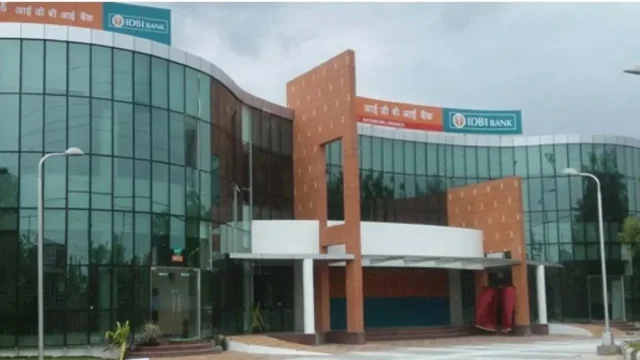
IDBI Bank strategic sale: Fairfax arm wins 60.72% stake for ₹52,878 crore
On 14 October 2026 the Cabinet Committee on Economic Affairs approved 10955230 Canada Inc., a Fairfax Financial Holdings entity, as strategic buyer of 60.72% of IDBI Bank for about Rs. 52,878 crore. The Government sells 30.48% and LIC 30.24%. The winning bid of Rs. 81 a share beat the Rs. 75.99 benchmark.
UPSC angle: Prelims: stake split, residual holdings, PCA dates, valuation methods. · Mains GS-III: disinvestment, bank privatisation, FDI in financial services.
14 Oct 2026
NLMC’s first end-to-end e-auction of RINL land: ₹366.33 crore on Day 1
On 13 October 2026 the National Land Monetization Corporation held Day 1 of its first end-to-end e-auction of surplus RINL land in Visakhapatnam. Buyers took 150 plots for ₹366.33 crore against a ₹312.48 crore reserve. Phase 2, covering 216 plots, is set for 30 October 2026.
UPSC angle: Prelims: NLMC, RINL, auction figures. · Mains GS-III: asset monetisation and CPSE reform.
13 Oct 2026
MoSPI drafts first guideline for States to estimate GSDP by the expenditure approach (base 2022-23)
The National Statistics Office has released a draft guideline for States and UTs to estimate Gross State Domestic Product from the expenditure side, with base year 2022-23. Today some States compile government consumption and capital formation, but none estimates private consumption. Comments are invited till 28 October 2026.
UPSC angle: Prelims: GDP measurement concepts. · Mains GS-III: national income accounting.
9 Oct 2026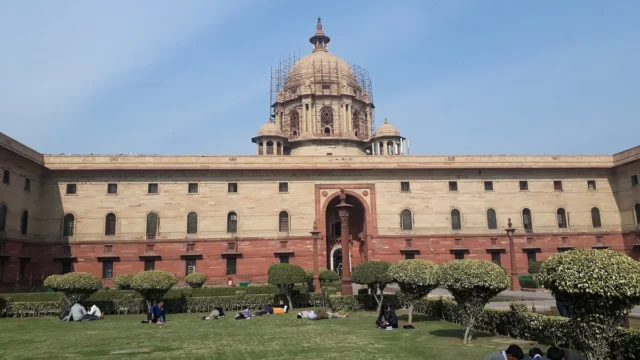
57th GST Council: arrest provisions to go, prosecution threshold raised to ₹5 crore
The 57th GST Council meeting on 8 October 2026 focused on process reform rather than rates. It recommended removing arrest powers under GST, raising the prosecution threshold from ₹1 crore to ₹5 crore, cutting the general penalty from ₹25,000 to ₹10,000, no notices below ₹10,000 tax, wider input tax credit and refunds, and limits on interception of goods in transit.
UPSC angle: Prelims: GST Council structure, Article 279A. · Mains GS-III: indirect tax reform; GS-II: fiscal federalism.
8 Oct 2026Learn the concept
Question text as printed in the official UPSC Civil Services (Main) question paper. The model answer is original Battle IAS work; use it to learn structure, not to memorise.
Want every PYQ in one place? See the Battle IAS PYQ Book.