
UPSC Mains 2017 GS Paper 3 Q13: model answer
What are the salient features of 'inclusive growth'? Has India been experiencing such a growth process? Analyse and suggest measures for inclusive growth.
What the question wants
State the salient features of inclusive growth, analyse whether India has achieved it, and suggest measures.
How to structure it
Three parts: features, analysis, measures.
- Meaning
- Features
- Evidence for inclusion
- Evidence against
- Measures
- Conclusion
How to think it through
The Eleventh Plan (2007–12) was titled 'Faster and More Inclusive Growth'. Inclusion has four tests: broad-based growth, jobs, access to services and reduced inequality. India has done well on poverty and access, less well on jobs, women and inequality. Use NITI's MPI and PLFS.
Model answer
The Eleventh Five Year Plan (2007–12) made 'faster and more inclusive growth' India's official goal. Inclusive growth means growth that is broad-based across sectors and regions, creates productive jobs and gives everyone fair access to opportunities.
Salient features
- Broad-based: agriculture, industry and services all grow.
- Employment-intensive: jobs, not just output.
- Equal opportunity: access to education, health, credit and markets.
- Poverty reduction and a social safety net.
- Regional balance and attention to SCs, STs, women and minorities.
- Sustainability for future generations.
Has India experienced it?
Gains:
- NITI Aayog estimates that 24.82 crore people left multidimensional poverty between 2013–14 and 2022–23.
- Over 50 crore Jan Dhan accounts; near-universal electrification, LPG and toilets.
- Direct Benefit Transfer and digital public infrastructure reach the poor faster and with fewer leakages.
Gaps:
- Jobs: about 46% of workers still in agriculture; over 90% informal.
- Women: female labour force participation is still low despite recent gains.
- Inequality: India's HDI falls about 31% when adjusted for inequality (HDR 2025).
- Regions: Bihar's per capita income is a fraction of Goa's or Telangana's.
- Nutrition: 35.5% of children under five are stunted (NFHS-5).
Measures
- Labour-intensive manufacturing and MSME credit.
- Higher public spending on health and education, as NEP 2020 and the National Health Policy 2017 propose.
- Women's work: childcare, safe transport, equal pay.
- Agricultural productivity and rural non-farm jobs.
- The Aspirational Districts approach for lagging regions.
- Progressive taxation and better-targeted subsidies.
- Land titling and credit for small farmers and tenants.
Conclusion
India has made growth wider than before, but not yet deep enough. Jobs and human capital are the next frontier, and the 2047 goal of a developed India depends on both.
Draw: A table with four rows (poverty, access, jobs, inequality) and two columns: 'progress' and 'gap'.
Keywords, cases and data to drop in
Eleventh Plan, broad-based growth, NITI MPI (24.82 crore), Jan Dhan, DBT, IHDI, NFHS-5, Aspirational Districts Programme 2018, female LFPR.
Where most answers lose marks
- Listing government schemes as proof of inclusion. Use outcome data.
Related Mains PYQs
- Examine the view that financial inclusion is an integral part of social and economic inclusion in a country like India. Also throw… UPSC 2026 · GS-III
- How are startups in India promoting entrepreneurship, innovation and employment? Discuss the global and domestic challenges in their working and suggest suitable… UPSC 2026 · GS-III
- Distinguish between the Human Development Index (HDI) and the Inequality-adjusted Human Development Index (IHDI) with special reference to India. Why is the… UPSC 2025 · GS-III
- Examine the pattern and trend of public expenditure on social services in the post-reforms period in India. To what extent this has… UPSC 2024 · GS-III
Fresh examples from current affairs
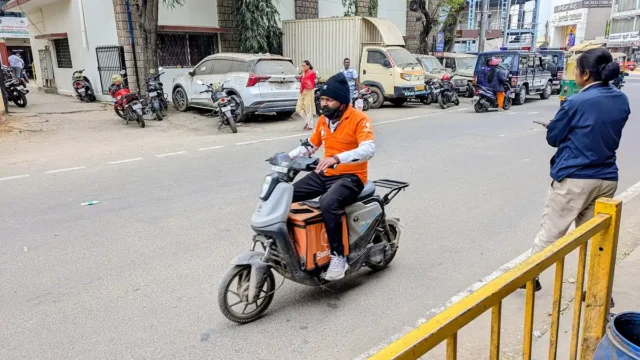
PLFS changes from January 2027: new stratum for platform workers and unpaid work questions
The National Statistics Office announced on 23 October 2026 changes to the Periodic Labour Force Survey from January 2027. A new sampling stratum will capture digital platform (gig) workers, who were under-counted, fresh samples will be drawn from an updated frame, and new questions will measure unpaid household, care and volunteer work. The public has 15 days to comment on the concept note.
UPSC angle: Prelims: PLFS, NSO, LFPR/WPR/UR, Code on Social Security 2020. · Mains GS-III: employment, gig economy, data quality.
23 Oct 2026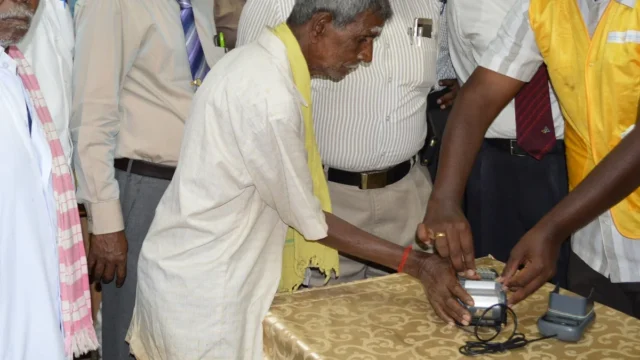
Financial inclusion saturation campaign in 2.70 lakh panchayats and ULBs from 21 October
The Department of Financial Services will run a nationwide campaign from 21 October to 31 December 2026 to saturate financial inclusion schemes in 2.70 lakh gram panchayats and urban local bodies. Bank camps will enrol people in PMJJBY, PMSBY and APY, open Jan Dhan accounts, finish re-KYC and nominations, and spread awareness on digital frauds and unclaimed deposits.
UPSC angle: Prelims: scheme parameters of PMJJBY, PMSBY, APY, PMJDY. · Mains GS-III: inclusive growth and financial inclusion.
20 Oct 2026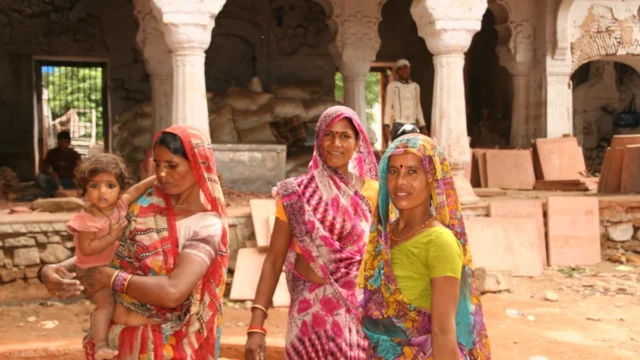
PLFS September 2026: unemployment steady at 5%; urban women’s participation highest since October 2025
The Periodic Labour Force Survey (PLFS) Monthly Bulletin for September 2026, released by MoSPI on 15 October 2026, put the unemployment rate (UR) for people aged 15 and above at 5.0%, the same as in August and 0.2 points lower than a year earlier. The labour force participation rate (LFPR) was 55.5%. Urban female LFPR rose to 25.9%, its highest since October 2025, while rural female UR fell to 3.9%, the lowest of 2026.
UPSC angle: Prelims: LFPR, WPR, UR, CWS vs UPS. · Mains GS-III: jobs, inclusive growth and women’s work.
15 Oct 2026
EPFO Amnesty Scheme 2026: deadline 28 December for PF Trust regularisation
EPFO is reminding establishments that the Amnesty Scheme, 2026 for retrospective regularisation of Provident Fund Trust exemption status closes on 28 December 2026. It covers trusts recognised under the Income Tax Act but without a formal exemption order under the EPF Act or the Code on Social Security.
UPSC angle: Prelims: Amnesty dates and legal sections. · Mains GS-III: social security and labour compliance.
13 Oct 2026Learn the concept
Question text as printed in the official UPSC Civil Services (Main) question paper. The model answer is original Battle IAS work; use it to learn structure, not to memorise.
Want every PYQ in one place? See the Battle IAS PYQ Book.