
UPSC Mains 2026 GS3 Q19: model answer
Separatist movements have been one of the major factors contributing to militancy and instability in Jammu & Kashmir (J & K). Bring out actions taken by the Government to bring J & K into national mainstream. Discuss pre and post abrogation status of Articles 370 and 35A. Also bring out positive impacts of abrogation of both articles in mainstreaming the state.
What the question wants
Government actions; a clear before/after of Articles 370 and 35A; positive impacts. Keep a balanced, factual tone.
How to structure it
Intro: separatism and militancy since 1989. Body: actions; pre/post status (table); positive impacts with evidence. Conclusion: statehood and trust.
- 1Actions
- 2Pre/post status (table)
- 3Positive impacts with evidence
Model answer
Since 1989, cross-border-backed separatists fed militancy in J&K, and the State's special status was used to argue its integration was incomplete.
| Item | Before Aug 2019 | After |
|---|---|---|
| Application of laws | Concurrence of state needed | Whole Constitution applies |
| Separate constitution and flag | Yes | No |
| Permanent residents (35A) | State-defined; others barred from jobs and land | Domicile law |
| Women marrying outside | Lost some rights | Equal rights |
| Status | State | UT (statehood promised) |
Actions to mainstream J&K
- Security: LoC counter-infiltration grids, NIA action on terror funding, UAPA bans on separatist and Jamaat-linked outfits.
- August 2019: Article 370 made inoperative; two Union Territories created.
- Democracy: DDC polls (2020), high-turnout Assembly polls (2024).
- Development: new industrial policy, two AIIMS, the Chenab bridge rail link, tourism.
Before and after
- Article 370: central laws earlier needed State concurrence, and the State had its own constitution. Now the full Constitution, RTI and FRA apply. The Supreme Court upheld this in December 2023.
- Article 35A: let the State reserve property and jobs for 'permanent residents', excluding West Pakistan refugees, Valmiki families and women marrying outside. A domicile law now covers them.
Positive impacts
- Stone-pelting and strike calls nearly gone; fewer terror incidents.
- Record tourism and investment proposals.
- Three-tier panchayati raj; ST seats in the Assembly; Pahari reservation.
- Equal rights for groups earlier shut out.
Targeted killings, the Pahalgam attack (April 2025) and the statehood demand remain. Restoring statehood, as assured, will complete mainstreaming.
Keywords, cases and data to drop in
Article 370 Article 35A C.O. 272 and 273 (2019) J&K Reorganisation Act 2019 In re Article 370 (SC, Dec 2023) domicile law 2020 DDC elections 2020 Assembly elections 2024 UAPA bans Chenab bridge
Where most answers lose marks
- Writing a political opinion piece instead of the facts asked for.
- Mixing up 35A (permanent residents) with 370 (application of Constitution).
- Listing impacts with no evidence; also ignoring that challenges remain.
Fresh examples from current affairs
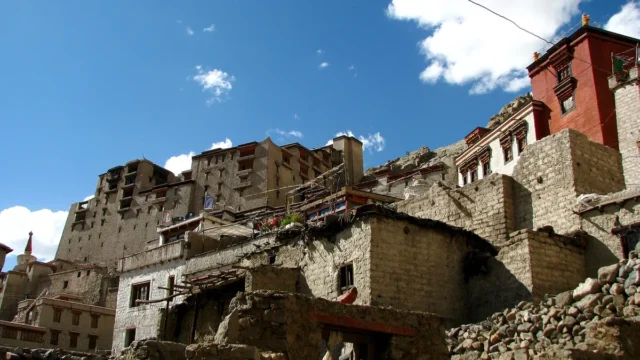
Ladakh draft framework: L-G to have final say on laws of proposed UT-level elected body
The Centre’s draft ‘Constitutional and Statutory Framework’ for Ladakh proposes a Union Territory-level elected body whose every regulation will take effect only after the Lieutenant Governor’s assent, The Hindu reported on 21 October 2026. A new constitutional provision would also give constitutional status to the hill councils. Leh and Kargil groups, who want Sixth Schedule safeguards, meet the Home Ministry this week.
UPSC angle: Prelims: Articles 239, 240, 244, 371; Sixth Schedule States. · Mains GS-II: autonomy vs central control in UTs.
21 Oct 2026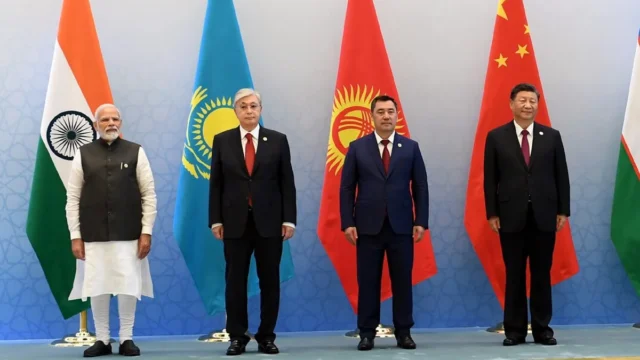
SCO Heads of Government meet in Dushanbe: Rajnath calls for dismantling the terror ecosystem
Defence Minister Rajnath Singh represented India at the 25th meeting of the SCO Council of Heads of Government in Dushanbe, Tajikistan, on 20 October 2026. With Pakistan’s Deputy Prime Minister in the room, he said there can be no justification and no double standards on terrorism. The meeting adopted the SCO budget for 2027 and a 2026–30 action plan for trade and economic cooperation.
UPSC angle: Prelims: SCO bodies and locations, new centres, INSTC. · Mains GS-II: SCO’s value for India; GS-III: terror financing.
21 Oct 2026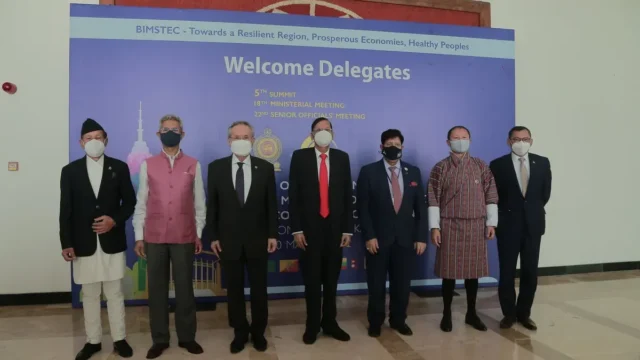
First BIMSTEC Home Ministers Meeting adopts Delhi Declaration on security
India hosted the first BIMSTEC Home Ministers Meeting in New Delhi on 13 October 2026. The seven member States adopted the Delhi Declaration, condemning terrorism including cross-border terrorism, and called for full use of the BIMSTEC anti-terror and mutual legal assistance conventions. A Disaster Management Centre is planned in Jamnagar, Gujarat.
UPSC angle: Prelims: members, HMM, conventions and dates, Jamnagar centre. · Mains GS-II: regional groupings; India's neighbourhood and security cooperation.
13 Oct 2026
National framework to strengthen ITDAs/ITDPs released
On 15 August 2026 the Ministry of Tribal Affairs and NITI Aayog released the National Framework and the Operational Guidelines for Strengthening of ITDAs and ITDPs. They come from a nationwide consultation and score each agency on 15 parameters. Each ITDA will prepare its own Performance Improvement Roadmap, with quarterly monitoring by States.
UPSC angle: Prelims: Tribal Sub-Plan.
15 Aug 2026Learn the concept
Question text as printed in the official UPSC question paper: https://www.upsc.gov.in/sites/default/files/QP-CSM-26-010926-GENERAL-STUDIES-PAPER-III.pdf The model answer is original Battle IAS work; use it to learn structure, not to memorise.