
UPSC Mains 2019 GS Paper 1 Q15: model answer
How can the mountain ecosystem be restored from the negative impact of development initiatives and tourism?
What the question wants
Suggest how mountain ecosystems can be restored after damage from development projects and tourism.
How to structure it
How can ... be restored: brief damage, then restoration measures grouped by type.
- Why mountains matter
- Damage
- Ecological restoration
- Planning and regulation
- Tourism reform
- Community and finance
How to think it through
The question is 'how', so most words go into solutions. Damage gets a short paragraph. Good answers group solutions into ecological, planning, tourism and community buckets so the examiner sees structure, not a shopping list.
Model answer
Mountains cover about a quarter of Earth's land and supply fresh water to half of humanity; the UN made 2022 the International Year of Sustainable Mountain Development.
The damage
- Development: roads cut with blasting, tunnels, dams and transmission lines destabilise slopes (Char Dham road, Joshimath).
- Tourism: crowds, hotels on riverbanks, waste on trails (Everest, Rohtang, Kedarnath).
- Results: landslides, loss of forests and springs, polluted rivers, habitat fragmentation and loss of traditional livelihoods.
Ecological restoration
- Afforestation with native species (oak, deodar) instead of pine monocultures.
- Spring-shed revival: Sikkim's Dhara Vikas recharged dying springs.
- Slope stabilisation using bio-engineering (grasses, vetiver, coir mats).
- Restore wetlands and alpine meadows; control invasive species like lantana.
- Treat glacial lakes at risk of GLOF.
Planning and regulation
- Carrying capacity studies for towns (as ordered for Himalayan towns by the Supreme Court in 2023).
- Eco-sensitive zones and strict EIA for roads and dams.
- Hazard-zonation and building codes.
- Smaller hydro projects; no projects in paraglacial zones, as the Chopra committee advised after the 2013 Kedarnath floods.
- Roads built with cut-and-fill balance, proper drainage and muck disposal sites.
Tourism reform
- Caps and permits (Sikkim's Tsomgo lake, Bhutan's sustainable development fee).
- Eco-tourism and homestays; spread visitors across seasons and places.
- 'Carry in, carry out' waste rules, plastic bans.
Community and finance
- Van panchayats in Uttarakhand and Joint Forest Management.
- Payment for ecosystem services to hill communities.
- The National Mission for Sustaining the Himalayan Ecosystem and the Green Credit Programme.
- Traditional knowledge: terrace farming, kuhls in Himachal.
Conclusion
Restoration is slow and costly, so the cheapest restoration is not to damage in the first place. Mountains need development designed for slopes, not imported from the plains.
Draw: A mountain slope with labelled restoration steps: native trees, spring recharge, check dams, terraced paths.
Keywords, cases and data to drop in
IYSMD 2022, Dhara Vikas, bio-engineering, carrying capacity, van panchayats, payment for ecosystem services, NMSHE.
Where most answers lose marks
- Spending most words on damage instead of restoration.
Related Mains PYQs
- Describe the characteristics and types of primary rocks. UPSC 2022 · GS-I
- Discuss the meaning of colour-coded weather warnings for cyclone prone areas given by India Meteorological Department. UPSC 2022 · GS-I
- What are the forces that influence ocean currents? Describe their role in fishing industry of the world. UPSC 2022 · GS-I
- The troposphere is a very significant atmospheric layer that determines weather processes. How? UPSC 2022 · GS-I
Fresh examples from current affairs
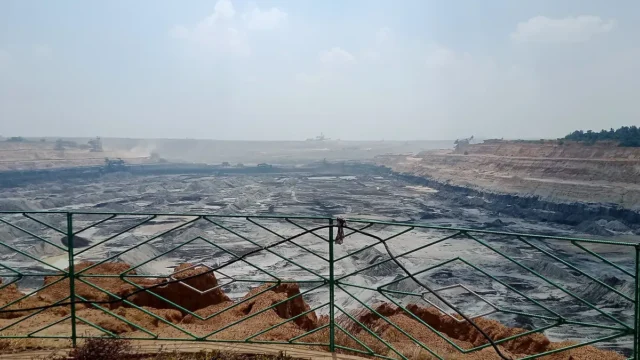
Neyveli, Tiruchirappalli and Atacama: Indian scientists identify Martian analogue sites
Scientists at the University of Kerala, using a laser Raman spectrometer funded under DST-FIST, have identified two minerals that make some places on Earth useful ‘Martian analogue’ sites, DST said on 16 October 2026. Melanterite was found in the lignite of Neyveli, Tamil Nadu. Gypsum was found in the Atacama Desert of Chile and in the Tiruchirappalli Badlands. Both are hydrous sulphates that record how water and rock interacted.
UPSC angle: Prelims: minerals, Raman effect, Atacama. · Mains GS-III: space science and research capacity.
16 Oct 2026
Ancient Gondwana wildfires recorded in Indian coal
BSIP (DST) researchers reported molecular evidence of massive wildfires in Gondwana forests nearly 250 million years ago. Using palynofacies analysis with Raman and FTIR spectroscopy on Godavari Valley Coalfield sediments, they separated high- and low-intensity fire-derived microcharcoal from other opaque particles. The study is in Geological Journal (Wiley).
UPSC angle: Prelims: Gondwana vs Tertiary coal.
25 May 2026
Aravalli Hills: Centre explains move to a uniform definition
The definition decides which hills can be mined. That is why environmental groups are watching closely.
UPSC angle: Prelims: Aravallis. · Mains: Mining vs ecology.
21 Dec 2025Learn the concept
Question text as printed in the official UPSC Civil Services (Main) question paper. The model answer is original Battle IAS work; use it to learn structure, not to memorise.
Want every PYQ in one place? See the Battle IAS PYQ Book.