
UPSC Mains 2020 GS Paper 1 Q15: model answer
Account for the huge flooding of million cities in India including the smart ones like Hyderabad and Pune. Suggest lasting remedial measures.
What the question wants
Explain why India's million-plus cities, including smart cities like Hyderabad and Pune, flood so badly, and suggest lasting remedies.
How to structure it
Account for ... Suggest: causes with city examples, then durable solutions.
- The 2020 floods
- Natural causes
- Human causes
- Governance gaps
- Lasting remedies
How to think it through
'Smart' in the question is a jab. UPSC is asking why a city with sensors and apps still drowns. The answer: drains and lakes, not dashboards. Good answers here use the word 'lasting' seriously: no sandbags, only structural and institutional fixes.
Model answer
On 13–14 October 2020, Hyderabad received about 190 mm of rain in a day; over 30 people died and colonies built on lake beds stayed under water for a week. Pune had flooded a year earlier when the Ambil Odha stream overflowed.
Natural causes
- Extreme rainfall events are rising: a warmer atmosphere holds more moisture, so short, intense bursts are more common.
- Topography: cities in bowls (Hyderabad's Deccan rocks), on coasts (Mumbai, Chennai) or by rivers (Patna, Guwahati).
- High tides blocking outflow in coastal cities.
Human causes
- Lakes lost to building: Hyderabad's 'city of lakes' lost many of its tanks; the old cascade that moved water from one tank to the next is broken.
- Nalas narrowed or built over: Pune's streams and Mumbai's Mithi river.
- Impervious cover: concrete and asphalt raise run-off sharply.
- Old drains sized for 20–40 mm an hour and choked by solid waste.
- Sprawl into floodplains and low-lying areas through unauthorised layouts.
Governance gaps
- Many agencies, no single owner of drainage.
- Master plans ignore watersheds; smart city projects focused on IT rather than drains.
- Weak early warning and poor dam release coordination.
Lasting remedies
- Map and protect lakes, nalas and floodplains as no-build zones; restore tank cascades.
- Redesign drainage for higher rainfall intensity using watershed-based plans.
- Sponge city measures: rain gardens, permeable surfaces, rooftop harvesting.
- Early warning: Doppler radars, real-time flood models (Mumbai's IFLOWS).
- Urban flood cells under one authority; implement NDMA's urban flood guidelines.
- Housing for the poor away from flood zones.
- Use the 15th Finance Commission's urban flood mitigation funds.
Conclusion
Cities flood where they have forgotten their water. Lasting safety comes from restoring the city's natural drainage, not from bigger pumps alone.
Draw: Before–after sketch: lake cascade versus built-up lake beds.
Keywords, cases and data to drop in
Hyderabad 2020, Pune 2019, tank cascades, nala encroachment, sponge city, IFLOWS, NDMA urban flood guidelines.
Where most answers lose marks
- Short-term relief measures presented as 'lasting' remedies.
Related Mains PYQs
- Describe the characteristics and types of primary rocks. UPSC 2022 · GS-I
- Discuss the meaning of colour-coded weather warnings for cyclone prone areas given by India Meteorological Department. UPSC 2022 · GS-I
- What are the forces that influence ocean currents? Describe their role in fishing industry of the world. UPSC 2022 · GS-I
- The troposphere is a very significant atmospheric layer that determines weather processes. How? UPSC 2022 · GS-I
Fresh examples from current affairs
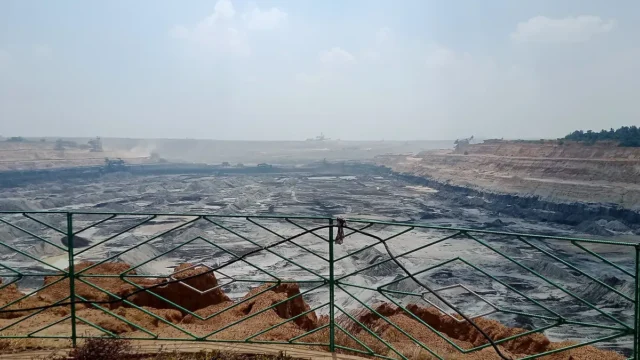
Neyveli, Tiruchirappalli and Atacama: Indian scientists identify Martian analogue sites
Scientists at the University of Kerala, using a laser Raman spectrometer funded under DST-FIST, have identified two minerals that make some places on Earth useful ‘Martian analogue’ sites, DST said on 16 October 2026. Melanterite was found in the lignite of Neyveli, Tamil Nadu. Gypsum was found in the Atacama Desert of Chile and in the Tiruchirappalli Badlands. Both are hydrous sulphates that record how water and rock interacted.
UPSC angle: Prelims: minerals, Raman effect, Atacama. · Mains GS-III: space science and research capacity.
16 Oct 2026
Ancient Gondwana wildfires recorded in Indian coal
BSIP (DST) researchers reported molecular evidence of massive wildfires in Gondwana forests nearly 250 million years ago. Using palynofacies analysis with Raman and FTIR spectroscopy on Godavari Valley Coalfield sediments, they separated high- and low-intensity fire-derived microcharcoal from other opaque particles. The study is in Geological Journal (Wiley).
UPSC angle: Prelims: Gondwana vs Tertiary coal.
25 May 2026
Aravalli Hills: Centre explains move to a uniform definition
The definition decides which hills can be mined. That is why environmental groups are watching closely.
UPSC angle: Prelims: Aravallis. · Mains: Mining vs ecology.
21 Dec 2025Learn the concept
Question text as printed in the official UPSC Civil Services (Main) question paper. The model answer is original Battle IAS work; use it to learn structure, not to memorise.
Want every PYQ in one place? See the Battle IAS PYQ Book.