
UPSC Mains 2020 GS Paper 2 Q15: model answer
Which steps are required for constitutionalization of a Commission? Do you think imparting constitutionality to the National Commission for Women would ensure greater gender justice and empowerment in India? Give reasons.
What the question wants
Explain how a commission is made constitutional and judge whether constitutional status for the NCW would advance gender justice.
How to structure it
Which steps ... Do you think ... Give reasons: procedure, then a reasoned view.
- Steps
- The NCBC precedent
- What status would add
- What it would not
- View
How to think it through
The NCBC route (102nd Amendment, 2018) is the model. The honest answer is that status helps, but powers, funds and appointments matter more. Status without powers is a new nameplate on the same door.
Model answer
In 2018 the 102nd Amendment turned the National Commission for Backward Classes from a statutory body into a constitutional one under Article 338B. The same route is open for the NCW.
Steps to constitutionalise a commission
- A Constitution Amendment Bill inserting a new Article that sets out composition, functions and powers.
- Passage under Article 368(2): a majority of total membership and two-thirds of those present and voting in each House. State ratification is not needed unless federal provisions are touched.
- Presidential assent, then repeal or amendment of the parent statute (the NCW Act, 1990) and new rules on appointments and service.
What constitutional status would add
- Permanence: it cannot be abolished or diluted by an ordinary law.
- A mandatory duty on government to consult it on policy affecting women, as Article 338B(9) does for the NCBC.
- Reports placed before Parliament with an action-taken memorandum.
- Moral authority before ministries, police and States, and a stronger claim on State commissions to coordinate with it.
- Protection from being merged or restructured when governments change their priorities.
What it would not change by itself
- Enforcement: NCSC and NCBC are constitutional yet still recommend, not enforce.
- Funding and staff would still come through the ministry.
- Appointments remain in executive hands unless the amendment creates a selection committee.
- Gender justice depends on police, courts and social change, which no commission can replace.
My view
Constitutional status would help if it came with three things: a transparent selection panel, binding timelines for government responses and its own budget line. Without these, it would be a symbolic upgrade.
Women do not lack forums; they lack forums that can make things happen. Status should serve that purpose.
Draw: A ladder from statutory body to constitutional body, with the missing rungs: powers, budget, selection.
Keywords, cases and data to drop in
Article 368(2), 102nd Amendment 2018, Article 338B, NCW Act 1990, mandatory consultation, action-taken report, selection committee, recommendatory powers.
Where most answers lose marks
- Assuming constitutional status equals binding powers. NCSC's experience shows otherwise.
Related Mains PYQs
- Analyse the advantages and limitations of the generalist structure of the Indian Civil Services in contemporary governance. UPSC 2026 · GS-II
- To what extent do pressure groups, social movements and corporate lobbies deepen pluralistic democracy in India by representing excluded interests? Analyse whether… UPSC 2026 · GS-II
- “Transparency and accountability in governance are not about controlling corruption but about creating the trust of stakeholders in the policy process by… UPSC 2026 · GS-II
- Can the constitutional mandate of rights-based welfare be effectively realised in the context of non-integrated governance and minimal public investment? Examine. UPSC 2026 · GS-II
Fresh examples from current affairs

DPDP Act and hospitals: why clinical staff need training before the data law bites
The Digital Personal Data Protection Rules come fully into force in May 2027, and hospitals that mishandle patient data face penalties of up to ₹250 crore. Training doctors and nurses matters more than buying software. For you, this connects Article 21 privacy, the DPDP framework and Ayushman Bharat Digital Mission.
UPSC angle: Prelims: DPDP Act terms, Data Protection Board, Puttaswamy, ABDM. · Mains GS-II: health governance, privacy and digital public infrastructure.
26 Oct 2026
Census 2027: can private teachers be made enumerators? The Census Rules amendment and Article 23
Census 2027 needs over 30 lakh enumerators, the people who go door to door counting everyone. This month the Centre amended the Census Rules, 1990 to name teachers of private schools and staff of banks and companies as possible enumerators. But two High Courts had already stopped governments from forcing private-school teachers into Census duty. For you, it raises a classic exam question: can a rule make private citizens do public work, and what do the Census Act and Article 23 allow?
UPSC angle: Prelims: Entry 69 Union List, Census Act 1948, Article 23, Committee on Subordinate Legislation. · Mains GS-II: delegated legislation; federal administration of the Census.
25 Oct 2026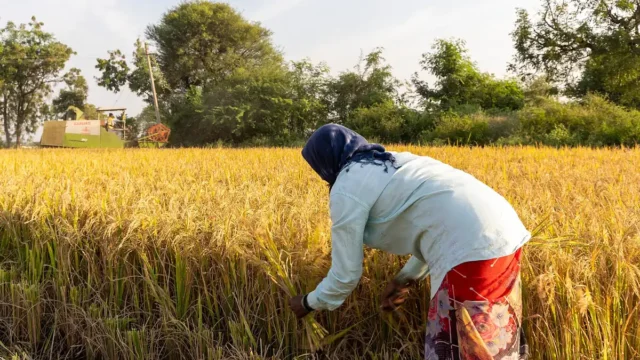
11 crore Farmer IDs created five months early under the Digital Agriculture Mission and Agri Stack
The Centre is building a digital register of farmers, so that each farmer has one verified identity for all schemes. Under the Digital Agriculture Mission, 11 crore Farmer IDs were created by the night of 23 October, five months before the March 2027 deadline. With this ID, farmers need not submit the same papers again and again for loans, crop insurance or relief. For you, this links Agri Stack, the Kisan Credit Card, PMFBY and land-record reform.
UPSC angle: Prelims: Digital Agriculture Mission, Agri Stack, KCC, PMFBY, DILRMP. · Mains GS-III: technology in agriculture; DBT.
25 Oct 2026
Vehicle data sold for ₹5: Centre orders CERT-In audit of VAHAN, SARATHI and e-Challan portals
The Ministry of Road Transport and Highways has asked CERT-In, India’s cyber-security agency, for a forensic audit of its VAHAN, SARATHI, e-Challan and pollution-certificate portals. A security firm found that owners’ names, addresses and phone numbers were being sold through apps and a Telegram channel for as little as ₹5. On the same day, a separate leak of film certification records was reported. For you, this connects cyber security, the right to privacy and the Digital Personal Data Protection Act, 2023.
UPSC angle: Prelims: CERT-In, Section 70B IT Act, VAHAN/SARATHI, Puttaswamy, DPDP Act 2023, GDPR. · Mains GS-III: cyber security and data protection.
25 Oct 2026Learn the concept
Question text as printed in the official UPSC Civil Services (Main) question paper. The model answer is original Battle IAS work; use it to learn structure, not to memorise.
Want every PYQ in one place? See the Battle IAS PYQ Book.