
UPSC Mains 2023 GS3 Q15: model answer
The adoption of electric vehicles is rapidly growing worldwide. How do electric vehicles contribute to reducing carbon emissions and what are the key benefits they offer compared to traditional combustion engine vehicles?
What the question wants
How EVs reduce emissions (with caveats) and their benefits over ICE vehicles.
How to structure it
Intro: transport is a major CO2 source; global EV sales surge (14 million in 2023, IEA). Body: (1) Emission reduction: no tailpipe emissions, higher efficiency, cleaner as the grid greens, lifecycle analysis; (2) Benefits vs ICE: efficiency, lower running and maintenance cost, urban air quality, noise, oil import reduction, energy security, regenerative braking, grid storage; (3) Caveats: coal-heavy grid, battery mining, recycling, charging; (4) India: FAME, PLI for ACC batteries, PM E-DRIVE. Conclusion: EVs plus green grid.
- 1(1) Emission reduction: no tailpipe emissions, higher efficiency, cleaner as the grid greens, lifecycle analysis
- 2(2) Benefits vs ICE: efficiency, lower running and maintenance cost, urban air quality, noise, oil import reduction, energy security, regenerative braking, grid storage
- 3(3) Caveats: coal-heavy grid, battery mining, recycling, charging
- 4(4) India: FAME, PLI for ACC batteries, PM E-DRIVE
Model answer
Transport produces nearly a quarter of global energy-related CO2. Electric vehicle (EV) sales reached about 14 million in 2023, nearly one in five new cars sold worldwide (IEA).
How EVs reduce carbon emissions
- No tailpipe emissions: they burn no fuel while driving.
- Higher efficiency: electric motors convert most of their energy to motion, compared with a much smaller share for petrol and diesel engines.
- Cleaner grid, cleaner EV: as solar and wind grow, each EV's emissions fall over its life.
- Regenerative braking recovers energy.
- Lifecycle studies show EVs emit less than combustion vehicles in most countries, even counting battery production.
Key benefits over combustion vehicles
- Cleaner city air: no particulate or NOx emissions from exhausts, important in Delhi and other polluted cities.
- Lower running costs: electricity is cheaper per km than fuel.
- Less maintenance: fewer moving parts, no oil changes.
- Energy security: India imports over 85% of its crude oil; EVs cut this bill.
- Quieter roads.
- Grid support: batteries can store renewable power.
- Industrial opportunity: new manufacturing in batteries and electronics.
Caveats
- In coal-heavy grids the gains shrink.
- Mining of lithium, cobalt and nickel has environmental and human costs.
- Battery recycling and charging infrastructure lag.
India's push: FAME schemes, PLI for advanced chemistry cell batteries, PM E-DRIVE (2024) and lower GST on EVs, with a focus on two- and three-wheelers and buses.
EVs deliver their full climate benefit only when paired with a green grid and a circular battery economy.
Keywords, cases and data to drop in
tailpipe emissions lifecycle emissions energy security FAME ACC PLI
Where most answers lose marks
- Claiming EVs have zero emissions overall.
- No caveats.
Fresh examples from current affairs
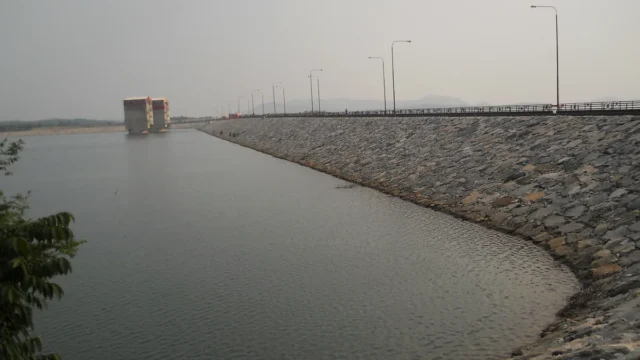
Pumped storage hydropower: India’s roadmap for 100 GW of ‘water batteries’ by 2035-36
A PIB backgrounder of 19 October 2026 explains how pumped storage projects (PSPs) will store solar and wind power for India’s grid. India runs 7.43 GW of pumped storage today, is building 15.87 GW more and has an assessed potential of 345.38 GW. A roadmap aims to add about 100 GW between 2025-26 and 2035-36.
UPSC angle: Prelims: PSP types, CEA, ISTS waiver, IRENA ranking. · Mains GS-III: storage and the clean energy transition.
19 Oct 2026
Oil companies bar sugar-based ethanol for 2026-27; maize incentive cut to ₹2.79 a litre
The oil marketing companies have kept sugar out of India’s ethanol programme for the coming year. The tender issued on 16 October 2026 seeks about 11 billion litres of ethanol for the 2026-27 supply year, but asks for none made from sugarcane juice, sugar syrup or B-heavy molasses, because the Government wants sugar diversion for ethanol cut to zero. Grain must now carry the load, and even the maize incentive has been cut. Read this as a live example of the food-versus-fuel trade-off.
UPSC angle: Prelims: E20, NPB 2018, molasses grades, feedstocks. · Mains GS-III: energy security vs food security; farm incomes.
18 Oct 2026
Pre-COP31 in Fiji: India seeks “flexibility, pragmatism and mutual respect” and scaled-up climate finance
At the Pre-COP31 meeting in Nadi, Fiji, India's Environment Minister asked for flexibility, pragmatism and mutual respect so that COP31 gives an ambitious and balanced result. India said higher ambition must come with climate finance, technology and capacity building, and that each country's path must be respected. COP31 is in Antalya, Türkiye, in November.
UPSC angle: Prelims: COP venues, Paris articles. · Mains GS-III: climate change; GS-II: international agreements.
8 Oct 2026
Metal-free porous catalyst could cut cost of zinc–air batteries and fuel cells
Scientists from S.N. Bose Centre Kolkata, INST Mohali and SRM University Amaravati made a metal-free porous organic catalyst, TTT-DHTD, for the oxygen reduction reaction in zinc-air batteries. It reached about 96% of commercial platinum's performance and stayed stable for 120 hours. Replacing platinum could cut the cost of zinc-air batteries and fuel cells.
UPSC angle: Prelims: battery chemistries. · Mains GS-III: energy storage, indigenous research.
7 Oct 2026Learn the concept
Question text as printed in the official UPSC question paper: https://www.upsc.gov.in/sites/default/files/QP-CSM-23-GENERAL-STUDIES-PAPER-III-180923.pdf The model answer is original Battle IAS work; use it to learn structure, not to memorise.