
UPSC Mains 2024 GS2 Q7: model answer
Poverty and malnutrition create a vicious cycle, adversely affecting human capital formation. What steps can be taken to break the cycle?
What the question wants
Explain the cycle, its effect on human capital, and steps to break it.
How to structure it
Intro: Poor families cannot afford enough nutritious food. Body: (1) Scale; (2) Effect on human capital; (3) Steps to break the cycle (food security, mother and child, school meals). Conclusion: Nutrition is not charity; it is investment in the country's future workforce.
- 1(1) Scale
- 2(2) Effect on human capital
- 3(3) Steps to break the cycle (food security, mother and child, school meals)
Model answer
Poor families cannot afford enough nutritious food; malnourished children grow into weaker, less productive adults who stay poor. The cycle often begins in the womb.
Scale: NFHS-5 (2019–21) found 35.5% of children under five stunted, 19.3% wasted and 57% of women anaemic.
Effect on human capital: poor brain development, lower learning, more illness, lower adult earnings. The first 1,000 days are critical.
Steps to break the cycle
- Food security: free grains to about 81 crore people under PMGKAY; fortified rice in PDS.
- Mother and child: POSHAN Abhiyaan (2018), PM Matru Vandana Yojana, take-home rations through Anganwadis.
- School meals: PM POSHAN, with eggs or milk where possible.
- Health: deworming, immunisation, Anaemia Mukt Bharat.
- WASH: clean water and toilets reduce diarrhoea.
- Income: MGNREGA, SHG livelihoods.
- Women's education: the strongest predictor of child nutrition.
Nutrition is not charity; it is investment in the country's future workforce.
Keywords, cases and data to drop in
vicious cycle stunting first 1000 days POSHAN Abhiyaan PMGKAY fortification
Where most answers lose marks
- Only describing the problem.
Fresh examples from current affairs
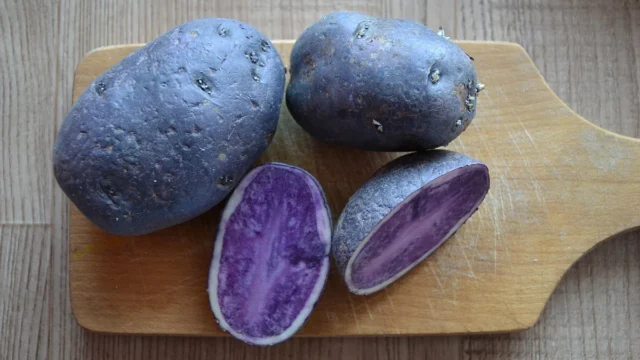
Kufri Jamunia: ICAR-CPRI’s purple potato to fight hidden hunger
A PIB backgrounder of 18 October 2026 puts the spotlight on Kufri Jamunia, a purple-fleshed potato bred by ICAR’s Central Potato Research Institute and released in 2024. It has nearly twice the Vitamin C of a common potato and several times more zinc and iron, along with antioxidants called anthocyanins. The idea is clever: instead of asking people to change what they eat, make the food they already eat more nutritious. That is biofortification.
UPSC angle: Prelims: Kufri Jamunia, CPRI, anthocyanins, biofortification vs fortification. · Mains GS-III: nutrition security; GS-II: hunger.
18 Oct 2026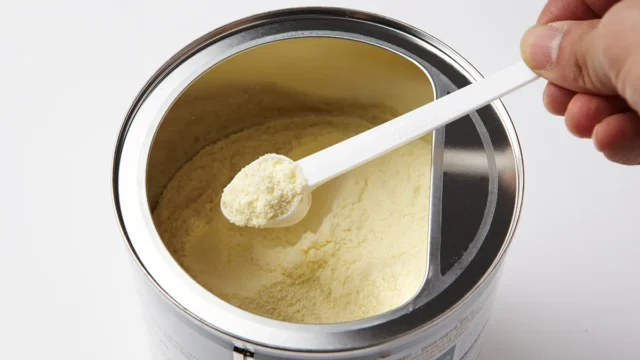
FSSAI draft: no added sucrose or fructose in foods for infants up to six months
On 17 October 2026 FSSAI explained a draft rule that would stop companies from adding sucrose (table sugar) or fructose (fruit sugar) to any product meant for babies up to six months old. The draft amends the Foods for Infant Nutrition Regulations, 2020, was published in the Gazette on 16 October, and is open for public comments for 60 days. The idea is simple: in the first six months a baby needs the right nutrients, not an early taste for sugar.
UPSC angle: Prelims: FSSAI, FSS Act 2006, infant nutrition regulations, IMS Act 1992. · Mains GS-II: child nutrition, preventive health and food regulation.
17 Oct 2026
PM SVANidhi completes six years; 75.5 lakh street vendors helped
PM Street Vendor's AtmaNirbhar Nidhi (PM SVANidhi), MoHUA's micro-credit scheme launched in June 2020, completed six years in May 2026. Over 75.5 lakh street vendors have benefited. More than 1.12 crore collateral-free loans have been sanctioned and over ₹17,800 crore disbursed. Average beneficiary incomes rose about 20% a year.
UPSC angle: Prelims: SVANidhi, Street Vendors Act.
31 May 2026
NFHS-6 released: stunting falls to 29.3%, institutional deliveries 90.6%
The Ministry of Health and Family Welfare released NFHS-6 on 29 May 2026. Conducted in 2023-24 by MoHFW with IIPS Mumbai as nodal agency, it covered nearly 6.79 lakh households across 715 districts. Child stunting fell from 35.5% (NFHS-5) to 29.3%. Institutional deliveries rose from 88.6% to 90.6%, and antenatal care coverage reached 95.9%.
UPSC angle: Prelims: NFHS indicators.
29 May 2026Learn the concept
Question text as printed in the official UPSC question paper: https://www.upsc.gov.in/sites/default/files/QP_CSM_2024_GenStud_II_03102024.pdf The model answer is original Battle IAS work; use it to learn structure, not to memorise.