
UPSC Mains 2024 GS4 Q8: model answer
Raman is a senior IPS officer and has recently been posted as D.G. of a state. Among the various issues and problems/challenges which needed his immediate attention, the issue relating to recruitment of unemployed youth by an unknown terrorist group, was a matter of grave concern.
It was noted that unemployment was relatively high in the state. The problem of unemployment amongst graduates and those with higher education was much more grave. Thus they were vulnerable and soft targets.
In the review meeting taken by him with senior officers of DIG Range and above, it came to light that a new terrorist group has emerged at the global level. It has launched a massive drive to recruit young unemployed people. Special focus was to pick young people from a particular community. The said organisation seemed to have the clear objective of utilising/using them for carrying out militant activities. It was also gathered that the said (new) group is desperately trying to spread its tentacles in his state.
A definite/reliable intelligence tip was received by the State CID and Cyber Cell that a large number of such unemployed youth have already been contacted by the terrorist outfit/group through social media and local communal organisations and other contacts. The need of the hour was to act swiftly and to check these elements/designs before they assume serious proportions.
Discrete inquiries made by the police, through the Cyber Cell, revealed that good numbers of unemployed youth are very active on Facebook, Instagram and Twitter. On an average, many of them were spending 6—8 hours each day, using electronic devices/internet, etc. It also came to light that such unemployed youth were showing sympathy and endorsing the messages received from certain persons, allegedly the contact persons of that global terrorist group. Their social media accounts revealed their strong affinity to such groups inasmuch as many of them started forwarding anti-national tweets on their WhatsApp and Facebook, etc. It seemed that they succumbed to their ploy and started propagating secessionist ideology. Their posts were hyper-critical of the government’s initiatives, policies and subscribing to extreme beliefs and promoting extremism.
(a) What are the options available to Raman to tackle the above situation?
(b) What measures would you suggest for strengthening the existing set-up to ensure that such groups do not succeed in penetrating and vitiating the atmosphere in the state?
(c) In the above scenario, what action plan would you advise for enhancing the intelligence gathering mechanism of the police force?
What the question wants
DGP's options against online terror recruitment, strengthening the set-up and improving intelligence.
How to structure it
Intro: threat of online radicalisation of jobless youth. Body: (a) options: crackdown, counter-radicalisation, mixed approach; (b) set-up measures: cyber cell, deradicalisation, jobs, community; (c) intelligence plan: OSINT, HUMINT, coordination with central agencies. Conclusion: firm but fair, no profiling of a community.
- 1(a) options: crackdown, counter-radicalisation, mixed approach
- 2(b) set-up measures: cyber cell, deradicalisation, jobs, community
- 3(c) intelligence plan: OSINT, HUMINT, coordination with central agencies
Model answer
A global terror group is targeting unemployed, educated youth through social media. The response must be swift but must not alienate a whole community.
(a) Options
- Mass arrests of all who forward such posts: quick, but unjust and may push youth further into extremism.
- Only counselling: humane, but ignores hard-core recruiters.
- Two-track approach: legal action against recruiters and handlers under UAPA; counselling and deradicalisation for misled youth. This is best.
(b) Strengthening the set-up
- Upgrade the Cyber Cell with social media monitoring and takedown requests under Section 69A of the IT Act.
- Deradicalisation programmes with families, teachers and religious leaders.
- Link youth to jobs and skilling with the State government: PMKVY, apprenticeships, sports.
- Community policing and trust-building with the targeted community; avoid profiling.
- Counter-narratives online with credible voices.
(c) Intelligence plan
- Open-source intelligence and data analytics to map networks.
- Human intelligence through beat officers and community contacts.
- Financial tracking of funding channels.
- Real-time sharing with IB, NIA and the Multi-Agency Centre.
- Training officers in digital forensics; legal oversight to protect privacy.
Firmness with recruiters and compassion for the misled will defeat the group's design.
Keywords, cases and data to drop in
two-track approach deradicalisation OSINT Multi-Agency Centre community policing
Where most answers lose marks
- Targeting an entire community.
- Ignoring unemployment as a root cause.
Fresh examples from current affairs
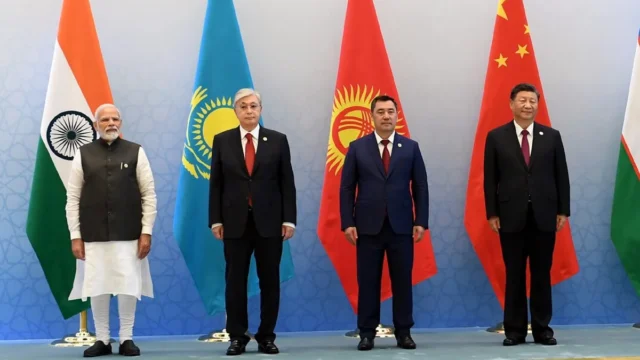
SCO Heads of Government meet in Dushanbe: Rajnath calls for dismantling the terror ecosystem
Defence Minister Rajnath Singh represented India at the 25th meeting of the SCO Council of Heads of Government in Dushanbe, Tajikistan, on 20 October 2026. With Pakistan’s Deputy Prime Minister in the room, he said there can be no justification and no double standards on terrorism. The meeting adopted the SCO budget for 2027 and a 2026–30 action plan for trade and economic cooperation.
UPSC angle: Prelims: SCO bodies and locations, new centres, INSTC. · Mains GS-II: SCO’s value for India; GS-III: terror financing.
21 Oct 2026
Open-weight AI models: why Big Tech gives them away and what it means for India
In October 2026 alone, Reflection AI, Meta, NVIDIA and Mistral released or announced open-weight AI models. The Hindu explained on 20 October why firms spend heavily and then let anyone download the weights: to win developers, set standards and earn from cloud, chips and services. For India, open weights offer a base to build Indian-language AI, but they also bring safety risks.
UPSC angle: Prelims: weights, open-weight vs open-source, IndiaAI, AI4Bharat. · Mains GS-III: AI sovereignty, safety and regulation.
21 Oct 2026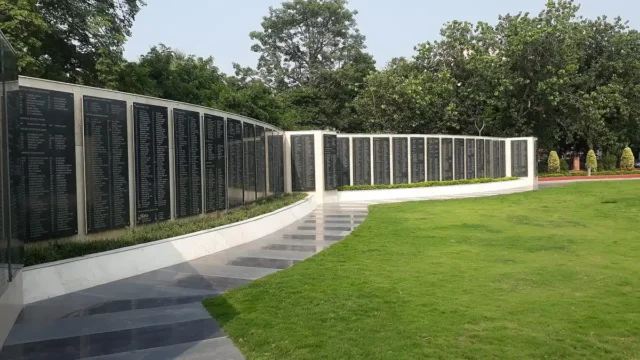
Police Commemoration Day 2026: Shah pays tribute, sets drug-free India target of 2029
On Police Commemoration Day, 21 October 2026, Union Home Minister Amit Shah paid tribute at the National Police Memorial in New Delhi to police personnel who died on duty. He recalled that India was declared free of Naxalism on 31 March 2026, asked all forces to work for a ‘Nasha Mukt Bharat’ by 31 December 2029, and flagged off a nationwide ‘Fight Against Drugs’ motorcycle rally.
UPSC angle: Prelims: Hot Springs, National Police Memorial, State List entries, NDPS Act. · Mains GS-III: police reforms and narcotics.
21 Oct 2026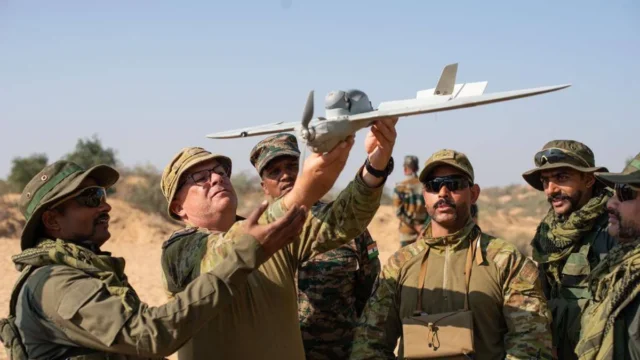
AUSTRAHIND 2026: fifth India–Australia Army exercise begins in Thiruvananthapuram
The fifth edition of the India–Australia joint military exercise AUSTRAHIND began on 19 October 2026 at the Foreign Training Node, Thiruvananthapuram, and runs till 1 November. About 120 soldiers from each army will train for sub-conventional operations in island and coastal terrain under a UN Chapter VII mandate. For the first time, New Zealand has sent observers.
UPSC angle: Prelims: exercise names, venues, partner countries, UN Chapter VII. · Mains GS-III: defence diplomacy in the Indo-Pacific.
20 Oct 2026Learn the concept
Question text as printed in the official UPSC question paper: https://www.upsc.gov.in/sites/default/files/QP_CSM_2024_GenStud_IV_03102024.pdf The model answer is original Battle IAS work; use it to learn structure, not to memorise.