
UPSC Mains 2025 GS1 Q11: model answer
Mahatma Jotirao Phule’s writings and efforts of social reforms touched issues of almost all subaltern classes. Discuss.
What the question wants
Show the range of groups Phule addressed (lower castes, Dalits, women, widows, peasants, workers) through his writings and institutions.
How to structure it
Intro: Phule (1827–1890). Body: group-by-group, with works and actions. Conclusion: legacy for Ambedkar and later movements.
- 1Group-by-group, with works and actions
Model answer
Jotirao Phule (1827–1890) of Pune was among the first to argue that caste and gender were tools of domination, not divine order. His concern went beyond any one community.
Lower castes and Dalits
- Gulamgiri (1873) compared caste servitude with American slavery and dedicated the book to the anti-slavery movement.
- Opened his family well to untouchables; founded the Satyashodhak Samaj (1873) for rational religion and ceremonies without Brahmin priests.
Women
- With Savitribai Phule opened a girls' school in Pune (1848), and later schools for Dalit girls.
- Supported widow remarriage; started a home for widows and their children to prevent infanticide (1863).
Peasants
- Shetkaryacha Asud (The Cultivator's Whipcord, 1881) exposed exploitation by moneylenders, priests and the colonial revenue system.
Workers: he supported mill-workers' organisation through associates like N.M. Lokhande.
Education as liberation: he urged the Hunter Commission (1882) to fund primary education for the masses.
Limits: his reach was mainly in Maharashtra, and his writing was polemical. Yet Ambedkar called him one of his three gurus. His idea that knowledge, not birth, should decide a person's worth still guides social justice politics.
Keywords, cases and data to drop in
Gulamgiri 1873 Satyashodhak Samaj 1873 girls' school 1848 Shetkaryacha Asud 1881 Hunter Commission 1882 Savitribai Phule Ambedkar's guru
Where most answers lose marks
- Writing only about caste and ignoring women and peasants.
- No works or dates.
- Confusing Satyashodhak Samaj with Prarthana Samaj.
Fresh examples from current affairs
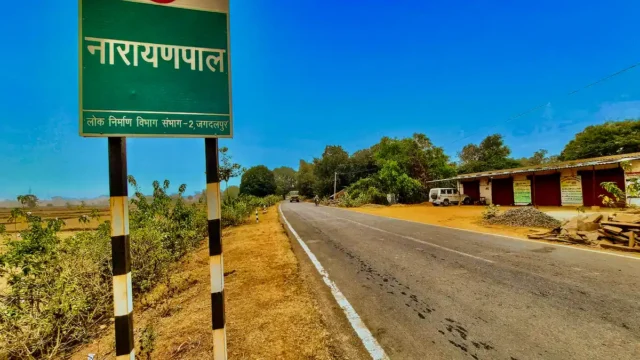
Forest Rights Act: second regional review conference for eight eastern and central States
On 9 October 2026 the Tribal Affairs Ministry held the second regional review of the Forest Rights Act, 2006 in Kolkata with eight States. Nationally, over 54 lakh claims have been filed, about 25 lakh titles given, about 11 lakh are pending and over 18 lakh rejected. The focus is quick disposal, record updating, CFR rights and PVTG habitat rights.
UPSC angle: Prelims: FRA provisions, PVTG habitat rights. · Mains GS-II: welfare of STs; GS-III: forest governance.
10 Oct 2026
‘She-Mart’ cooperative outlets launched in Keralam to link women SHGs to markets
On 26 September 2026 the Union Minister of Cooperation launched She-Mart at Kollam, Keralam. Announced in the Budget, She-Mart links women Self-Help Groups and rural women entrepreneurs directly to buyers. More than 300 She-Mart stores are planned across Kerala, Tamil Nadu and Karnataka, selling local and Bharat Brand products.
UPSC angle: Mains: Can cooperatives solve the market-access problem of women SHGs?
26 Sep 2026
FRA digital platform: all SIH finalists brought in
Most FRA disputes come from missing or poor records. Digitisation helps only if claimants can see and track their files.
UPSC angle: Prelims: FRA 2006.
6 Jan 2026
Constitution published in Santhali for the first time
Reading the Constitution in one's own language is part of legal literacy. Tribal languages have had little official material so far.
UPSC angle: Prelims: Eighth Schedule, Ol Chiki.
25 Dec 2025Learn the concept
Question text as printed in the official UPSC question paper: https://www.upsc.gov.in/sites/default/files/GENERAL-STUDIES-PAPER%20I-QP-CSM-25-010925.pdf The model answer is original Battle IAS work; use it to learn structure, not to memorise.