
UPSC Mains 2025 GS2 Q9: model answer
India-Africa digital partnership is achieving mutual respect, co-development and long-term institutional partnerships. Elaborate.
What the question wants
Show with examples how the digital partnership reflects respect, co-development and institutions.
How to structure it
Intro: India's development partnership model. Body: (1) Mutual respect; (2) Co-development; (3) Long-term institutions; (4) Gaps. Conclusion: Sharing DPI as a public good gives India a distinct, trust-based role in Africa's digital growth.
- 1(1) Mutual respect
- 2(2) Co-development
- 3(3) Long-term institutions
- 4(4) Gaps
Model answer
India's partnership with Africa follows the Kampala principles (2018) of demand-driven, non-prescriptive cooperation. Digital ties are its newest strand.
Mutual respect
- India pushed the African Union's permanent membership of the G20 at the New Delhi summit, 2023.
- Projects respond to African requests, without conditions attached.
Co-development
- Digital public infrastructure: NPCI International is helping Namibia build a UPI-like system; UPI and RuPay launched in Mauritius in 2024.
- India offers open-source platforms such as MOSIP (identity) used by several African countries.
- Skilling through ITEC and IT centres in many countries.
Long-term institutions
- Pan-African e-Network (2009) and its successor e-VidyaBharati and e-ArogyaBharati (2019) for tele-education and tele-medicine.
- India-Africa Forum Summits; IIT Madras campus in Zanzibar (2023).
Gaps: slow project delivery, China's larger finance, cyber-security capacity.
Sharing DPI as a public good gives India a distinct, trust-based role in Africa's digital growth.
Keywords, cases and data to drop in
Kampala principles DPI UPI Namibia e-VBAB AU in G20 IIT Madras Zanzibar
Where most answers lose marks
- Listing trade figures only.
Same theme in Prelims
Consider the following statements with respect to the AI Impact Summit, 2026 held in New Delhi :
- 1. The Summit’s intellectual framework was based on three foundational Sutras : People, Planning, and Progress.
- 2. The Preamble of the Summit stresses Democratising AI Resources, which acknowledges the Charter for Democratic Diffusion of AI as a binding framework to support locally relevant innovation and strengthen resilient AI ecosystems while respecting national laws.
- 3. The New Delhi Declaration on AI Impact was structured around seven Chakras (Pillars), which included Access for Social Empowerment, AI for Science, and Secure and Trusted AI.
Which of the statements given above is/are correct ?
Answer (d) & explanation
Only statement 3 is correct (d). Statement 3 is right: the New Delhi Declaration on AI Impact was built around seven chakras (pillars), including access for social empowerment, AI for science and secure and trusted AI. Statement 1 is wrong: the three sutras were People, Planet and Progress, not "Planning". Statement 2 is wrong: the Charter for Democratic Diffusion of AI is voluntary, not binding. So options (a), (b) and (c) fail.
Notice the event: the AI Impact Summit was held at Bharat Mandapam, New Delhi, in February 2026, the first global AI summit in the Global South. It followed the summits at Bletchley Park (2023), Seoul (2024) and Paris (2025). At home, the IndiaAI Mission (2024) funds shared GPU computing.
Statement 1 changes one word, Planet to Planning. Statement 2 changes voluntary to binding.
Answer as per the official UPSC answer key.
Which of the following connectivity projects is/are a part of cooperation between India and the ASEAN member countries ?
- 1. Kaladan Multi-Modal Transit Transport Project
- 2. IMT Trilateral Highway
- 3. Agartala-Akhaura Rail Line
Select the answer using the code given below :
Answer (a) & explanation
Projects 1 and 2 involve ASEAN members (a). Item 1 is right: the Kaladan Multi-Modal project links Kolkata to Sittwe port and on to Mizoram through Myanmar. Item 2 is right: the India–Myanmar–Thailand Trilateral Highway runs from Moreh in Manipur to Mae Sot in Thailand. Myanmar and Thailand are both ASEAN members. Item 3 is wrong: the Agartala–Akhaura rail line links Tripura with Bangladesh, which is not in ASEAN. So options (b), (c) and (d) fail.
Notice the policy: these projects are the backbone of India's Act East Policy (2014), which upgraded the Look East Policy (1991). ASEAN has 11 members since Timor-Leste joined in 2025. Bangladesh links fall under BBIN and BIMSTEC instead.
Answer as per the official UPSC answer key.
Match List I with List II and select the answer using the code given below the Lists :
| List I (Project Supported by India) | List II (Country)
| A. Mangdechhu Hydroelectric Project | 1. Maldives
| B. Restoration of Stor Palace | 2. Afghanistan
| C. District Hospital at Dickoya | 3. Bhutan
| D. Institute of Security and Law Enforcement Studies | 4. Sri Lanka
Code :
Answer (b) & explanation
The correct match is A-3, B-2, C-4, D-1 (b). Mangdechhu (720 MW) is an India-built hydro project in Bhutan (A-3). India restored the Stor Palace in Kabul, Afghanistan (B-2), opened in 2016. The Dickoya hospital is in the hill country of Sri Lanka (C-4), serving the Indian-origin Tamil community. The Institute of Security and Law Enforcement Studies was built for the Maldives police (D-1). Options (a), (c) and (d) mix these up.
Notice the pattern: India's Neighbourhood First policy relies on such development partnership projects. In Afghanistan, India also built the Parliament building and the Salma Dam (Afghan–India Friendship Dam). Bhutan's hydropower, including Chukha and Tala, sells surplus power to India.
Answer as per the official UPSC answer key.
Fresh examples from current affairs
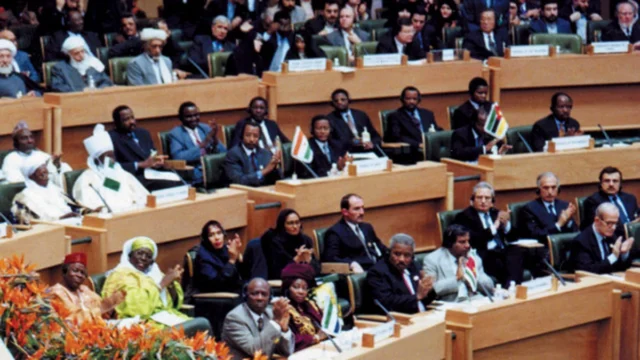
India rejects OIC’s Baghdad resolutions on Jammu and Kashmir as ‘malicious, biased and false’
On 19 October 2026 the Ministry of External Affairs rejected references to India in resolutions adopted at the Organisation of Islamic Cooperation (OIC) Council of Foreign Ministers in Baghdad on 17–18 October. It called them ‘malicious, biased and false’, said Pakistan orchestrated them, and said the OIC has no locus standi on India’s internal matters.
UPSC angle: Prelims: OIC facts, J&K Reorganisation Act, UN Charter Article 2(7). · Mains GS-II: India, OIC and Pakistan.
19 Oct 2026
India to host 61st CIML meeting on legal metrology in New Delhi, 26–28 October
India will host the 61st meeting of the International Committee of Legal Metrology (CIML) for the first time, in New Delhi from 26 to 28 October 2026. The Department of Consumer Affairs is organising it with the International Organization of Legal Metrology (OIML), and more than 100 delegates are expected, PIB said on 19 October.
UPSC angle: Prelims: OIML, CIML, Legal Metrology Act 2009, Union List Entry 50. · Mains GS-III: standards and trade.
19 Oct 2026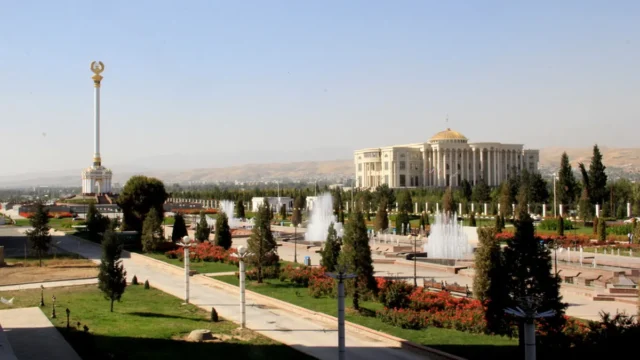
SCO Heads of Government meet in Dushanbe on 19–20 October: Rajnath Singh to represent India
Defence Minister Rajnath Singh will represent India at the 25th meeting of the SCO Council of Heads of Government (CHG) in Dushanbe, Tajikistan, on 19–20 October 2026. This is the SCO’s second-highest body, and it looks after trade, economy, connectivity and the Organisation’s budget. The last CHG met in Moscow on 18 November 2025, where External Affairs Minister S. Jaishankar spoke for India.
UPSC angle: Prelims: SCO members, bodies (CHS, CHG, RATS), founding year, CHG venue. · Mains GS-II: India and regional groupings, Central Asia.
18 Oct 2026
First ASEAN-India Defence Think Tank Forum opens at MP-IDSA
On 14 October 2026 Raksha Mantri Rajnath Singh opened the first ASEAN-India Defence Think Tank Forum at MP-IDSA in New Delhi. The two-day meeting brings India and all 11 ASEAN members together on maritime security, emerging tech and defence-industry ties, under the ASEAN-India Year of Maritime Cooperation.
UPSC angle: Prelims: ASEAN (11 members), MP-IDSA, ADMM-Plus, SAGAR/MAHASAGAR. · Mains GS-II: India–ASEAN defence engagement and Indo-Pacific.
14 Oct 2026Learn the concept
Question text as printed in the official UPSC question paper: https://www.upsc.gov.in/sites/default/files/GENERAL-STUDIES-PAPER-II-QP-CSM-25-010925.pdf The model answer is original Battle IAS work; use it to learn structure, not to memorise.