
UPSC Mains 2025 GS3 Q7: model answer
What is Carbon Capture, Utilization and Storage (CCUS) ? What is the potential role of CCUS in tackling climate change ?
What the question wants
Define CCUS and assess its role, with limits.
How to structure it
Intro: definition. Body: (1) Process; (2) Role in climate action; (3) India; (4) Limits. Conclusion: CCUS is a complement, not a substitute, for renewables and efficiency.
- 1(1) Process
- 2(2) Role in climate action
- 3(3) India
- 4(4) Limits
Model answer
CCUS captures carbon dioxide from large sources such as power plants, steel and cement, or from air, and then uses it or stores it permanently underground.
- 1Capture CO2 at power, steel, cement plants
- 2Compress and transport (pipeline/ship)
- 3Use: urea, methanol, building materials, EOR
- 4Or store deep in saline aquifers / old oil fields
- 5Monitor for leakage
Process: capture (post-combustion, pre-combustion, oxy-fuel) → transport by pipeline or ship → use (urea, methanol, building materials, enhanced oil recovery) or storage in deep saline aquifers and old oil fields. Norway's Sleipner project has stored CO2 since 1996.
Role in climate action
- Cuts emissions from 'hard-to-abate' industries where renewables alone cannot help: cement and steel.
- Allows existing coal plants to run with lower emissions during transition; useful for India where coal gives most power.
- Negative emissions through direct air capture and bioenergy with CCS.
- IPCC pathways for 1.5°C include some carbon removal.
India: NITI Aayog's CCUS policy report (2022); pilot plants by NTPC and Tata Steel; ONGC studies on storage.
Limits: high cost and energy penalty, leakage risk, small global scale today, may delay phase-out of fossil fuels.
CCUS is a complement, not a substitute, for renewables and efficiency.
Keywords, cases and data to drop in
capture-transport-store hard-to-abate enhanced oil recovery Sleipner NITI Aayog 2022
Where most answers lose marks
- Presenting CCUS as a silver bullet.
Fresh examples from current affairs

NBA shares Rs 1.19 crore with 29 State Biodiversity Boards from use of crop genetic resources
On 17 October 2026 the National Biodiversity Authority (NBA) said it had shared ₹1.19 crore with 29 State Biodiversity Boards and one UT Biodiversity Council. The money came from seed companies that used Indian maize, rice, pearl millet and cotton for research and commercial hybrids. As the crops were bought from markets and the original holders could not be traced, the amount was split in proportion to each State’s cultivation area. The release comes two days before the CBD COP 17 opens in Yerevan.
UPSC angle: Prelims: NBA, BD Act 2002, Nagoya Protocol, BMCs, CBD COP 17. · Mains GS-III: benefit sharing and community-led conservation.
18 Oct 2026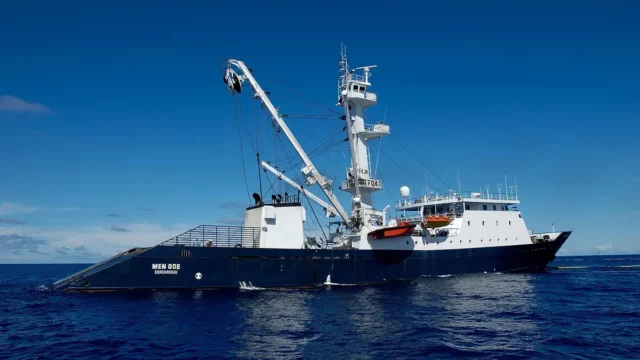
India to accede to the Southern Indian Ocean Fisheries Agreement (SIOFA)
On 14 October 2026 the Centre approved India's accession to the Southern Indian Ocean Fisheries Agreement. India, a Cooperating Non-Contracting Party since 2022, will become a full Contracting Party. Indian vessels can then fish squids, toothfish, alfonsino and other non-migratory stocks in the SIOFA area and join its scientific and compliance bodies.
UPSC angle: Prelims: SIOFA vs IOTC, India's status, species, UNCLOS references. · Mains GS-III: blue economy and fisheries; GS-II: international agreements.
14 Oct 2026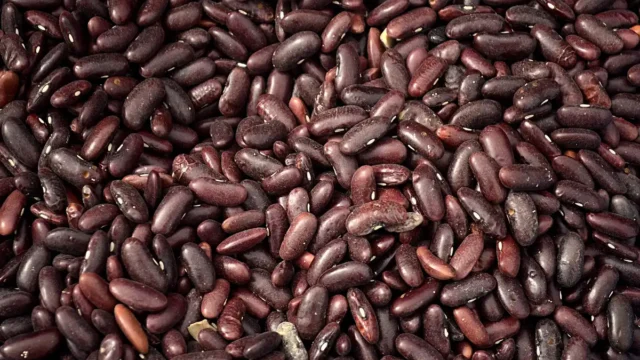
National Biodiversity Authority shares ₹2.02 crore Access and Benefit-Sharing money from seed companies
The National Biodiversity Authority distributed ₹2.02 crore of Access and Benefit-Sharing money, paid by seed companies using crops such as rice, tomato and okra, among 27 State Biodiversity Boards and 3 UT councils by cultivation area. Its total ABS disbursement has now reached ₹202 crore, ahead of CBD COP 17 in Yerevan from 19 October 2026.
UPSC angle: Prelims: ABS, KMGBF targets, COP 17 venue. · Mains GS-III: biodiversity conservation and benefit-sharing.
10 Oct 2026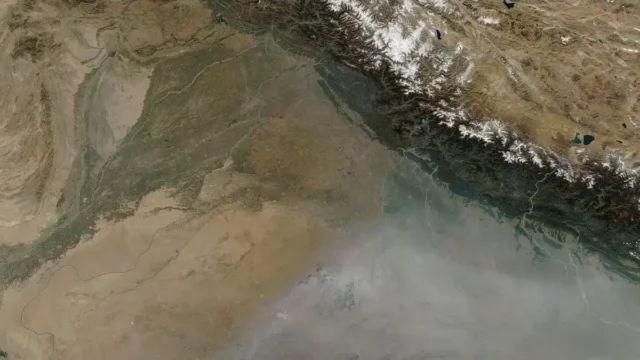
CAQM reviews stubble-burning hotspots in Amritsar and Tarn Taran
A CAQM team visited Amritsar and Tarn Taran, two Punjab hotspots of paddy stubble burning, on 9-10 October 2026 and reviewed crop residue machinery, baler supply chains and control rooms. CAQM flying squads are deployed in 18 Punjab districts from 1 October to 30 November 2026 to check burning during harvest.
UPSC angle: Prelims: CAQM, in-situ/ex-situ. · Mains GS-III: air pollution, crop residue.
10 Oct 2026Learn the concept
Question text as printed in the official UPSC question paper: https://www.upsc.gov.in/sites/default/files/GENERAL-STUDIES-PAPER-III-QP-CSM-25-010925.pdf The model answer is original Battle IAS work; use it to learn structure, not to memorise.