
UPSC Mains 2025 GS4 Q12: model answer
Ashok is Divisional Commissioner of one of the border districts of the North East State. A few years back, Military has taken over the neighbouring country after overthrowing the elected civil government. Civil war situation is prevailing in the country especially in last two years. However, internal situation further deteriorated due to rebel groups taking over control of certain populated areas near own border. Due to intense fight between military and rebel groups, civilian casualties has increased manifold in recent past. In the meantime, in one night Ashok got information from the local police guarding the border check post that there are about 200-250 people mainly women and children trying to cross over to our side of the border. There are also about 10 soldiers with their weapons in military uniform part
(a) What are the options available with Ashok to cope with the situation?
(b) What are the ethical and legal dilemmas being faced by Ashok?
(c) Which of the options, do you think would be more appropriate for Ashok to adopt and why?
(d) In the present situation, what are the extra precautionary measures to be taken by the Border Guarding Police in dealing with soldiers in uniform?
What the question wants
Options for Ashok when refugees and armed soldiers seek entry at night, dilemmas, best choice, and precautions for armed soldiers.
How to structure it
Intro: Ashok must decide quickly. Body: (a) Options; (b) Dilemmas; (c) Best option: Option 3; (d) Precautions for soldiers. Conclusion: Compassion and caution together are the right response.
- 1(a) Options
- 2(b) Dilemmas
- 3(c) Best option: Option 3
- 4(d) Precautions for soldiers
Model answer
Ashok must decide quickly, without instructions from the State, on 200–250 frightened civilians and about ten armed soldiers at the border.
- 1Humanitarian entry: women, children, injured
- 2First aid; serious cases to hospital
- 3Soldiers: disarm, search, hold separately
- 4Record identities and biometrics
- 5Inform Home Secretary, Assam Rifles, MHA
- 6Follow central instructions
(a) Options
- Refuse entry to all and push them back.
- Allow everyone, including armed soldiers, without conditions.
- Give humanitarian entry to women, children and the injured; let soldiers in only after they surrender arms, and hold them separately; inform higher authorities as soon as possible.
(b) Dilemmas
- Humanity vs security: injured people need help; soldiers could be a threat or infiltrators.
- Law: India has not signed the 1951 Refugee Convention, and entry without documents is illegal under the Foreigners Act; but Article 21 protects life of every person, and non-refoulement is part of customary practice.
- Authority: acting without orders vs waiting while people bleed.
- Foreign policy: sheltering soldiers of a military regime may cause diplomatic friction, as with Myanmar in 2021–22.
(c) Best option: Option 3
- Saves lives, honours India's tradition of sheltering people in distress, and keeps security intact.
- Set up a temporary camp near the border; give first aid and shift serious cases to hospital.
- Keep informing the Home Secretary and the nearest Assam Rifles post; follow MHA guidelines once received.
(d) Precautions for soldiers
- Disarm them completely before entry; log and store weapons.
- Search for explosives and communication devices.
- Hold them separately from civilians, under guard, treated humanely.
- Hand them to central agencies and the Assam Rifles for questioning.
Compassion and caution together are the right response: no injured child should be turned away, and no armed man should enter armed.
Keywords, cases and data to drop in
non-refoulement Art. 21 Foreigners Act humanitarian entry disarmament Assam Rifles
Where most answers lose marks
- Allowing armed soldiers in with weapons.
- Pushing everyone back.
Fresh examples from current affairs
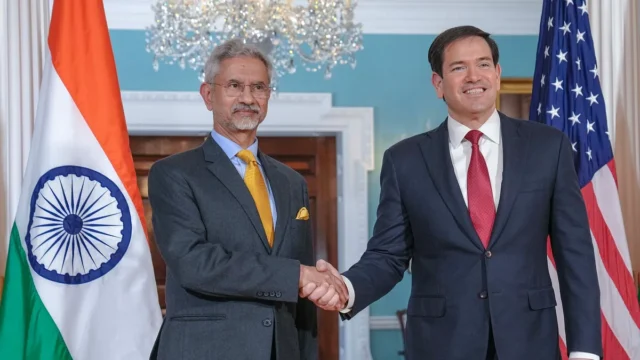
Rubio in Mumbai: India–US trade deal ‘very, very close’; energy and defence on the table
US Secretary of State Marco Rubio began his second India visit of the year in Mumbai on 20 October 2026 and met External Affairs Minister S. Jaishankar on trade, energy, technology and defence. Rubio said the two sides are ‘very, very close’ to a trade deal with ‘a small number of items left’, and praised India’s progress in diversifying energy supplies.
UPSC angle: Prelims: I2U2, Jamnagar, key office holders. · Mains GS-II: India-US partnership, tariffs and strategic autonomy.
20 Oct 2026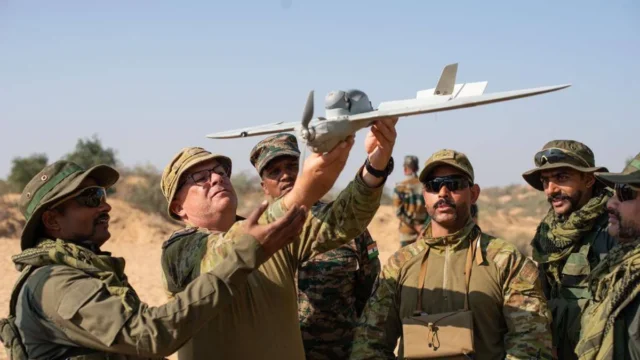
AUSTRAHIND 2026: fifth India–Australia Army exercise begins in Thiruvananthapuram
The fifth edition of the India–Australia joint military exercise AUSTRAHIND began on 19 October 2026 at the Foreign Training Node, Thiruvananthapuram, and runs till 1 November. About 120 soldiers from each army will train for sub-conventional operations in island and coastal terrain under a UN Chapter VII mandate. For the first time, New Zealand has sent observers.
UPSC angle: Prelims: exercise names, venues, partner countries, UN Chapter VII. · Mains GS-III: defence diplomacy in the Indo-Pacific.
20 Oct 2026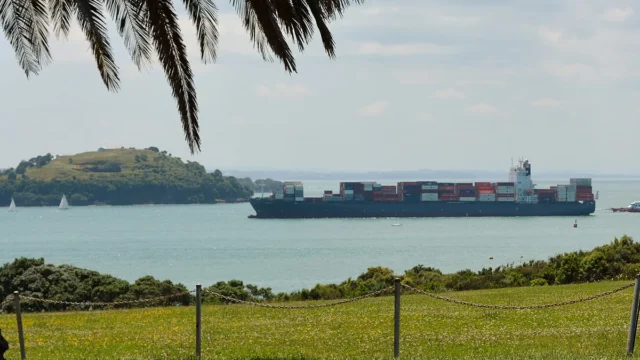
India–New Zealand FTA enters into force: zero duty on all Indian exports from day one
The India–New Zealand Free Trade Agreement came into force on 20 October 2026. From day one, New Zealand charges no customs duty on any Indian export, the first time India has got full duty-free access on all tariff lines at entry into force. New Zealand has also committed to facilitate USD 20 billion of investment into India, while dairy, sugar and edible oils stay protected.
UPSC angle: Prelims: FTA dates, Centres of Excellence, visa quotas, TRQ items. · Mains GS-II/III: FTAs with developed economies and farm safeguards.
20 Oct 2026
India to host 61st CIML meeting on legal metrology in New Delhi, 26–28 October
India will host the 61st meeting of the International Committee of Legal Metrology (CIML) for the first time, in New Delhi from 26 to 28 October 2026. The Department of Consumer Affairs is organising it with the International Organization of Legal Metrology (OIML), and more than 100 delegates are expected, PIB said on 19 October.
UPSC angle: Prelims: OIML, CIML, Legal Metrology Act 2009, Union List Entry 50. · Mains GS-III: standards and trade.
19 Oct 2026Learn the concept
Question text as printed in the official UPSC question paper: https://www.upsc.gov.in/sites/default/files/GENERAL-STUDIES-PAPER-IV-QP-CSM-25-010925.pdf The model answer is original Battle IAS work; use it to learn structure, not to memorise.