
UPSC Mains 2026 GS3 Q16: model answer
What is agentic Artificial Intelligence (AI)? Explain its working. Describe its applications with suitable examples. Discuss the advantages, risks and challenges associated with agentic AI systems.
What the question wants
Definition, working loop, applications with examples, then advantages, risks and challenges. Five parts in 250 words, so be compact.
How to structure it
Intro: from chatbots that answer to agents that act. Body: working loop (a flowchart helps), applications, advantages, risks. Conclusion: governance in India.
- 1Working loop (a flowchart helps)
- 2Applications
- 3Advantages
- 4Risks
Model answer
Agentic AI pursues a goal rather than just answering: it plans steps, uses tools, acts and checks results with limited human help. A chatbot gives train timings; an agent books, pays and updates your calendar.
- 1Goal set by user
- 2Plan steps (LLM)
- 3Act: call tools and APIs
- 4Observe result; update memory
- 5Repeat, with human approval at checkpoints
How it works: goal set → a large language model plans steps → it calls tools (search, databases, payment APIs, code) → observes results, stores memory, revises → loops until done, with human approval at checkpoints.
Applications
- Coding agents that write, test and fix code.
- Banking and customer service resolving complaints end to end.
- Multilingual assistants guiding farmers through scheme forms, building on Bhashini.
- Health triage and follow-up; literature and lab simulation in science.
Advantages: productivity, round-the-clock service, Indian-language reach, help for small firms.
Risks
- Accountability for wrong payments or decisions.
- Security: prompt injection, tool misuse.
- Errors compounding over many steps.
- Privacy under the DPDP Act, 2023.
- Jobs in IT services and BPO.
- Compute costs and dependence on foreign models.
The IndiaAI Mission's shared GPUs and domestic models, plus clear rules on oversight and liability, can let India use agents safely rather than only import them.
Keywords, cases and data to drop in
goal-plan-act-observe loop large language model tool use and APIs memory human-in-the-loop prompt injection DPDP Act 2023 IndiaAI Mission (2024) Bhashini liability
Where most answers lose marks
- Defining generative AI instead of agentic AI.
- Skipping 'working', which needs a step-by-step loop.
- No Indian example or policy.
Fresh examples from current affairs
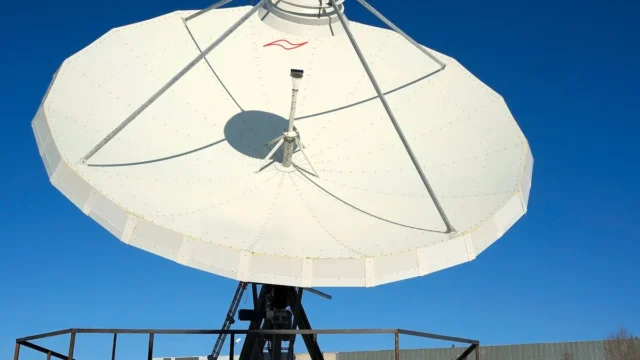
Government says satellite communication licensing is fair; three NGSO-based GMPCS licensees at same stage
On 8 October 2026 the Department of Telecommunications rejected a social media claim that satellite internet licensing is discriminatory. Three licences for Global Mobile Personal Communication by Satellite services using non-geostationary satellites have been issued; all three are going through security assessment, after which each can seek spectrum.
UPSC angle: Prelims: satcom terms. · Mains GS-III: communication infrastructure, security.
8 Oct 2026
National Supercomputing Mission: 40 supercomputers, 68 petaflops
A PIB backgrounder says the National Supercomputing Mission, launched in April 2015, had deployed 40 supercomputers with a combined 68 petaflops by September 2026, including 13 above 1 petaflop. The target is 50 systems above 123 petaflops. India now makes its own Rudra servers, interconnects, cooling and system software.
UPSC angle: Prelims: NSM facts, PARAM. · Mains GS-III: indigenisation of technology.
4 Oct 2026
India’s first 5.56 km free-space quantum key distribution link demonstrated
QNu Labs, with BISAG-N and IIT Gandhinagar, demonstrated India's first free-space quantum key distribution (QKD) link over 5.56 km on the night of 27-28 September 2026. The quantum bit error rate stayed below 5 per cent and secure keys were made at 230-260 bps, then used with BISAG-N's Vedic Kavach post-quantum cryptography platform.
UPSC angle: Prelims: QKD vs post-quantum cryptography; free-space vs fibre.
3 Oct 2026
TRAI launches Digital Connectivity Rating platform for buildings
On 25 September 2026 TRAI launched the Digital Connectivity Rating (DCR) Platform and a mobile app. Property managers apply for a rating, registered rating agencies test the building, and anyone can search rated properties and verify the certificate by QR code before buying or renting.
UPSC angle: Prelims: TRAI's 2024 property-rating regulations; DCRA.
25 Sep 2026Learn the concept
Question text as printed in the official UPSC question paper: https://www.upsc.gov.in/sites/default/files/QP-CSM-26-010926-GENERAL-STUDIES-PAPER-III.pdf The model answer is original Battle IAS work; use it to learn structure, not to memorise.