
UPSC Mains 2026 GS3 Q1: model answer
What do you mean by Digital Rupee? In this context, explain the working and progress of India's Central Bank Digital Currency (CBDC).
What the question wants
Define the e₹ as legal tender issued by RBI, then explain how it works (issuance, distribution, wallets, wholesale vs retail) and how far the pilots have reached.
How to structure it
Intro: e₹ as RBI-issued digital legal tender, enabled by the 2022 amendment to Section 22 of the RBI Act; a direct RBI liability. Body: (1) Working: two-tier model, RBI to banks to wallets, token moves without debiting a bank account; (2) Variants: e₹-W (pilot 1 Nov 2022) and e₹-R (pilot 1 Dec 2022); (3) Design: no interest, so no deposit flight; (4) Progress: more banks and cities, UPI QR interoperability, offline and programmable pilots, non-bank wallets from 2024; (5) Limits: small circulation beside cash and UPI, privacy questions. Conclusion: scale needs a clear use-case such as programmable subsidies and cross-border payments, plus privacy safeguards.
- 1(1) Working: two-tier model, RBI to banks to wallets, token moves without debiting a bank account
- 2(2) Variants: e₹-W (pilot 1 Nov 2022) and e₹-R (pilot 1 Dec 2022)
- 3(3) Design: no interest, so no deposit flight
- 4(4) Progress: more banks and cities, UPI QR interoperability, offline and programmable pilots, non-bank wallets from 2024
- 5(5) Limits: small circulation beside cash and UPI, privacy questions
Model answer
The Digital Rupee (e₹) is RBI's central bank digital currency: a digital rupee note with legal-tender status. The Finance Act, 2022 amended Section 22 of the RBI Act to allow it. Unlike UPI money, it is a direct liability of RBI, not of a bank.
- 1RBI issues e₹ tokens
- 2Banks / non-bank PSOs hold and distribute
- 3Customer wallet on phone
- 4Pay person or merchant (QR)
- 5Token moves; no bank debit at payment
How it works
- Two tiers: RBI issues tokens, banks distribute them to phone wallets, as with notes.
- Token transfer: payment moves the token itself; no account is debited.
- e₹-W (wholesale, pilot from 1 Nov 2022) and e₹-R (retail, from 1 Dec 2022).
- No interest, so deposits do not drain from banks.
Progress: more banks and cities, UPI QR interoperability, trials of offline and programmable payments, non-bank wallets since 2024. Circulation is still small: adoption is the hurdle.
e₹ must do what UPI cannot: offline use, targeted welfare, cheaper cross-border settlement, with privacy rules first.
Keywords, cases and data to drop in
Section 22, RBI Act (Finance Act 2022) legal tender two-tier model e₹-W (Nov 2022) e₹-R (Dec 2022) token-based non-interest bearing programmability offline e₹ UPI QR interoperability
Where most answers lose marks
- Calling e₹ a cryptocurrency or comparing it with Bitcoin as if they are the same thing.
- Describing UPI as CBDC. UPI moves bank money; e₹ is central bank money.
- Leaving out 'progress', which is half the question.
Same theme in Prelims
Which one of the following statements about Unified Payments Interface (UPI) and Central Bank Digital Currency (Digital Rupee) is not correct ?
Answer (d) & explanation
Statement (d) is not correct (d). Under UPI, money moves between bank accounts; the deposit is a liability of the bank. The Digital Rupee (e₹) is like a currency note in digital form, a direct liability of the RBI, not of users or banks. Option (a) is correct: UPI is a payment system, while the e-rupee is sovereign currency. Option (b) is correct: an e-rupee transfer moves value from wallet to wallet with no separate settlement. Option (c) is correct: e-rupee wallet transactions do not appear in bank statements.
Notice the legal base: the RBI Act was amended in 2022 to let the RBI issue a CBDC. Pilots began that year in wholesale (e₹-W) and retail (e₹-R) forms.
a "not correct" question. Look for the statement that puts the RBI's liability on someone else.
Answer as per the official UPSC answer key.
Consider the following statements about the Non-Banking Financial Companies (NBFCs) in India :
- 1. NBFCs cannot accept demand deposits.
- 2. All the NBFCs operating in India have to be registered with the RBI.
- 3. NBFCs form part of the payment and settlement system and can issue cheque drawn on itself.
- 4. Deposit insurance facility of Deposit Insurance and Credit Guarantee Corporation (DICGC) is not available to the depositors of deposit taking NBFCs.
Which of the statements given above is/are correct ?
Answer (a) & explanation
Statements 1 and 4 are correct (a). The RBI lists how an NBFC differs from a bank. Statement 1 is right: NBFCs cannot accept demand deposits. Statement 4 is right: depositors of NBFCs get no DICGC insurance cover. Statement 3 is wrong: NBFCs are not part of the payment and settlement system and cannot issue cheques drawn on themselves. Statement 2 is wrong: not every NBFC registers with the RBI; insurers report to IRDAI, merchant bankers and brokers to SEBI, and chit funds to State governments. So options (b), (c) and (d) fail.
Notice the current rules: since 2021, the RBI regulates NBFCs through a Scale-Based Regulation in four layers: Base, Middle, Upper and Top. DICGC covers bank deposits up to ₹5 lakh.
"All the NBFCs" in statement 2. Many finance companies have another regulator.
Answer as per the official UPSC answer key.
Which one of the following correctly represents the three key sub-indices of the Financial Inclusion Index (FI-Index) of the Reserve Bank of India (RBI) ?
Answer (c) & explanation
The sub-indices are Access, Usage and Quality (c). The RBI launched the FI-Index in August 2021. It covers banking, investments, insurance, postal services and pension, and gives one value between 0 and 100. Its three parameters are Access (35%), Usage (45%) and Quality (20%). Options (a), (b) and (d) list areas or ideas that are not its sub-indices; GDP contribution and affordability are not parameters.
Notice the logic: usage has the most weight, because an account that is never used does not mean real inclusion. Quality includes financial literacy and consumer protection. The index is published every July, and it has risen steadily, helped by Jan Dhan (2014) and UPI.
Answer as per the official UPSC answer key.
Fresh examples from current affairs
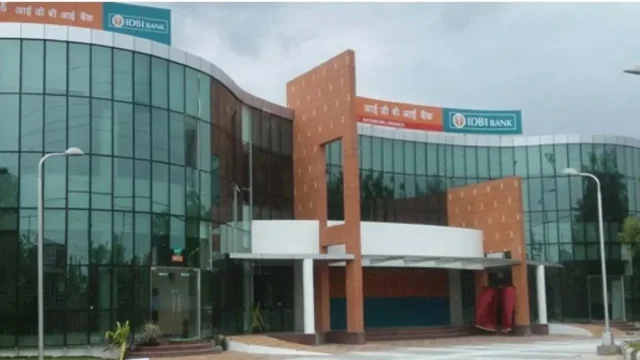
IDBI Bank strategic sale: Fairfax arm wins 60.72% stake for ₹52,878 crore
On 14 October 2026 the Cabinet Committee on Economic Affairs approved 10955230 Canada Inc., a Fairfax Financial Holdings entity, as strategic buyer of 60.72% of IDBI Bank for about Rs. 52,878 crore. The Government sells 30.48% and LIC 30.24%. The winning bid of Rs. 81 a share beat the Rs. 75.99 benchmark.
UPSC angle: Prelims: stake split, residual holdings, PCA dates, valuation methods. · Mains GS-III: disinvestment, bank privatisation, FDI in financial services.
14 Oct 2026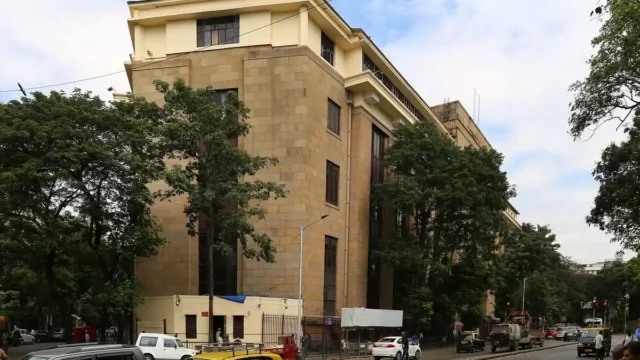
RBI tightens forex derivative rules and opens a dollar window for oil companies
On 10 October 2026 RBI issued two circulars to curb speculation in the rupee: cancelled INR forex derivatives cannot be rebooked, the no-proof hedging limit falls from USD 100 million to USD 5 million, and banks must keep a 20% cash reserve on large dollar-buying hedges. RBI also opened a dollar window for three public sector oil companies.
UPSC angle: Prelims: FERR, USD 5 mn, OMC window, FEMA. · Mains GS-III: exchange rate management, external sector.
10 Oct 2026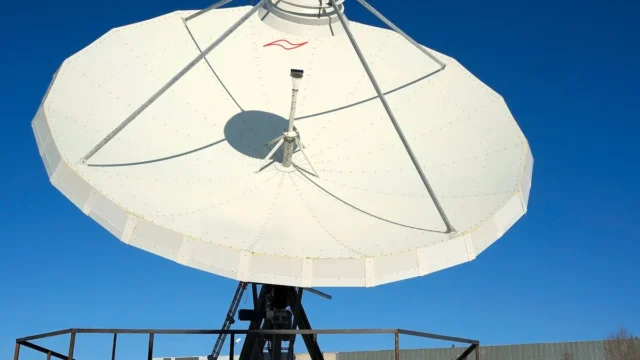
Government says satellite communication licensing is fair; three NGSO-based GMPCS licensees at same stage
On 8 October 2026 the Department of Telecommunications rejected a social media claim that satellite internet licensing is discriminatory. Three licences for Global Mobile Personal Communication by Satellite services using non-geostationary satellites have been issued; all three are going through security assessment, after which each can seek spectrum.
UPSC angle: Prelims: satcom terms. · Mains GS-III: communication infrastructure, security.
8 Oct 2026
National Supercomputing Mission: 40 supercomputers, 68 petaflops
A PIB backgrounder says the National Supercomputing Mission, launched in April 2015, had deployed 40 supercomputers with a combined 68 petaflops by September 2026, including 13 above 1 petaflop. The target is 50 systems above 123 petaflops. India now makes its own Rudra servers, interconnects, cooling and system software.
UPSC angle: Prelims: NSM facts, PARAM. · Mains GS-III: indigenisation of technology.
4 Oct 2026Learn the concept
Question text as printed in the official UPSC question paper: https://www.upsc.gov.in/sites/default/files/QP-CSM-26-010926-GENERAL-STUDIES-PAPER-III.pdf The model answer is original Battle IAS work; use it to learn structure, not to memorise.