
UPSC Mains 2026 GS3 Q8: model answer
Discuss the aim and goals of Kunming-Montreal global biodiversity framework. Mention India's commitments and initiatives to achieve the goals and targets of this framework giving suitable examples.
What the question wants
Aim and the four 2050 goals with key 2030 targets; India's national targets and named initiatives.
How to structure it
Intro: COP15, December 2022. Body: aim, goals, headline targets; India's NBSAP and schemes. Conclusion: finance and implementation gap.
- 1Aim, goals, headline targets
- 2India's NBSAP and schemes
Model answer
The Kunming-Montreal GBF (CBD COP15, Dec 2022) aims to halt and reverse biodiversity loss by 2030.
| Item | Detail |
|---|---|
| Adopted | CBD COP15, December 2022 |
| 2050 goals | A ecosystems, B sustainable use, C benefit sharing, D finance |
| 2030 headline | 30x30 protection; 30% restoration |
| Money | $200 bn/yr mobilised; cut harmful subsidies $500 bn/yr |
| India | Updated NBSAP (2024), 23 national targets |
Goals for 2050: protect ecosystems and stop extinctions; sustainable use; fair benefit-sharing including digital sequence information; finance and capacity.
23 targets for 2030, notably 30x30 protection, 30% restoration, cutting harmful subsidies by $500 bn a year and mobilising $200 bn a year.
India's commitments
- Updated NBSAP with 23 national targets (COP16, 2024).
- Biological Diversity (Amendment) Act, 2023.
- Ramsar expansion, Amrit Dharohar, MISHTI mangroves.
- 26 million ha land restoration by 2030.
- Project Tiger, Project Cheetah, International Big Cat Alliance.
- Mission LiFE.
India wants 30x30 met globally, not per country, to protect farmland and community rights. Finance is where the framework will be tested.
Keywords, cases and data to drop in
CBD COP15, Dec 2022 four goals A-D 23 targets 30x30 (Target 3) $200 bn/yr harmful subsidies $500 bn updated NBSAP 2024 Biological Diversity (Amendment) Act 2023 MISHTI Amrit Dharohar Green Credit Programme
Where most answers lose marks
- Confusing KMGBF with the Aichi Targets (2010) or the Paris Agreement.
- Listing Indian schemes with no link to a framework target.
- Leaving out the finance goal.
Same theme in Prelims
At the United Nations Ocean Conference (UNOC) held in June, 2025 in France, the Food and Agricultural Organization (FAO) of the United Nations demonstrated its leading voice on marine and ocean issues, especially on sustainable fisheries and aquaculture for resilient livelihood and “Blue Transformation”. Which of the following combinations about the “Four Betters” proposed by FAO for “Blue Transformation” is correct ?
Answer (b) & explanation
The Four Betters are production, nutrition, environment and life (b). The "Four Betters" run through FAO's whole strategy (2022–31): better production, better nutrition, a better environment and a better life, leaving no one behind. Blue Transformation applies them to fisheries and aquaculture. Option (a) is wrong: "better ocean" is not one of them. Options (c) and (d) are wrong: coral reefs, estuaries and mangroves are not among the Four Betters.
Notice the link to SDG 14, "Life Below Water". The UN Ocean Conference in Nice, France (2025) pushed for 30% ocean protection, and the High Seas Treaty (BBNJ) came into force in 2026. India's own schemes include the PM Matsya Sampada Yojana.
"better ocean" fits an ocean conference, but the four Betters are FAO's general formula.
Answer as per the official UPSC answer key.
Which one of the following is the first Plan Vivo certified Reducing Emissions from Deforestation and Forest Degradation (REDD+) project in India ?
Answer (c) & explanation
The Khasi Hills Community REDD+ project was India's first (c). REDD+ pays communities for keeping forests standing, through carbon credits. Plan Vivo is a standard for community-led projects. India's first such project is the Khasi Hills Community REDD+ project around Mawphlang, Meghalaya, run by a federation of Khasi village councils (hima). Options (a), (b) and (d), the Uttarakhand, ICFRE-ICIMOD and Sikkim Mamley Kamrang projects, came later or use other routes.
Notice why Mawphlang is famous: its sacred grove, a forest protected by local beliefs. REDD+ stands for Reducing Emissions from Deforestation and forest Degradation, plus conservation and sustainable management. It is recognised under Article 5 of the Paris Agreement.
Answer as per the official UPSC answer key.
With reference to Madhav National Park, which of the following statements is/are correct ?
- 1. It was declared a Tiger Reserve in India in 2025.
- 2. Sakhya Sagar, which is designated as a Ramsar Site, is situated within this National Park.
- 3. Its area is shared between Madhya Pradesh and Rajasthan.
Select the answer using the code given below :
Answer (b) & explanation
Statements 1 and 2 are correct (b). Statement 1 is right: Madhav National Park in Shivpuri district became India's 58th tiger reserve in March 2025. Statement 2 is right: Sakhya Sagar lake inside it was named a Ramsar site in 2022. Statement 3 is wrong: the park lies wholly in Madhya Pradesh, not shared with Rajasthan. So options (a), (c) and (d) fail.
Notice MP's place as the "Tiger State", with the most tigers and nine reserves, including Kanha, Bandhavgarh, Pench and Panna. The NTCA approves tiger reserves under the Wild Life (Protection) Act. Kuno, also in MP, is home to India's reintroduced cheetahs. India has about 75% of the world's wild tigers.
Shivpuri is near the Rajasthan border, which makes "shared" sound believable.
Answer as per the official UPSC answer key.
Fresh examples from current affairs
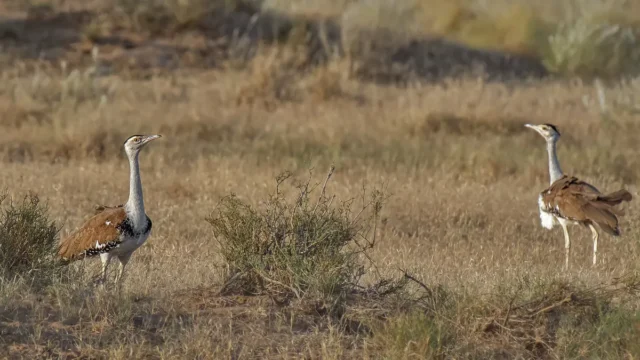
National Red List of birds: 1,211 species under assessment, 107 done in first review
India has begun a national Red List assessment of its 1,211 regularly occurring bird species using the IUCN framework. By 19 October 2026, a preliminary review of 107 species was complete, with the Great Indian Bustard proposed as Critically Endangered and the Indian Roller as Vulnerable. A final assessment is expected towards the end of 2027.
UPSC angle: Prelims: IUCN categories, species and their proposed status, lead institutions. · Mains GS-III: biodiversity conservation and data gaps.
20 Oct 2026
NBA shares Rs 1.19 crore with 29 State Biodiversity Boards from use of crop genetic resources
On 17 October 2026 the National Biodiversity Authority (NBA) said it had shared ₹1.19 crore with 29 State Biodiversity Boards and one UT Biodiversity Council. The money came from seed companies that used Indian maize, rice, pearl millet and cotton for research and commercial hybrids. As the crops were bought from markets and the original holders could not be traced, the amount was split in proportion to each State’s cultivation area. The release comes two days before the CBD COP 17 opens in Yerevan.
UPSC angle: Prelims: NBA, BD Act 2002, Nagoya Protocol, BMCs, CBD COP 17. · Mains GS-III: benefit sharing and community-led conservation.
18 Oct 2026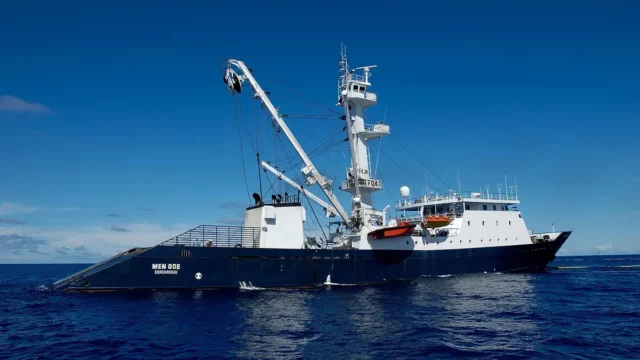
India to accede to the Southern Indian Ocean Fisheries Agreement (SIOFA)
On 14 October 2026 the Centre approved India's accession to the Southern Indian Ocean Fisheries Agreement. India, a Cooperating Non-Contracting Party since 2022, will become a full Contracting Party. Indian vessels can then fish squids, toothfish, alfonsino and other non-migratory stocks in the SIOFA area and join its scientific and compliance bodies.
UPSC angle: Prelims: SIOFA vs IOTC, India's status, species, UNCLOS references. · Mains GS-III: blue economy and fisheries; GS-II: international agreements.
14 Oct 2026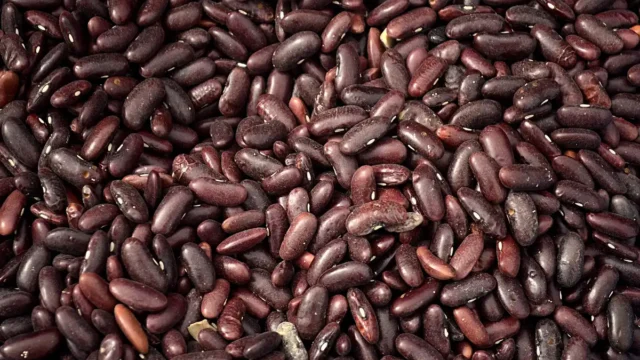
National Biodiversity Authority shares ₹2.02 crore Access and Benefit-Sharing money from seed companies
The National Biodiversity Authority distributed ₹2.02 crore of Access and Benefit-Sharing money, paid by seed companies using crops such as rice, tomato and okra, among 27 State Biodiversity Boards and 3 UT councils by cultivation area. Its total ABS disbursement has now reached ₹202 crore, ahead of CBD COP 17 in Yerevan from 19 October 2026.
UPSC angle: Prelims: ABS, KMGBF targets, COP 17 venue. · Mains GS-III: biodiversity conservation and benefit-sharing.
10 Oct 2026Learn the concept
Question text as printed in the official UPSC question paper: https://www.upsc.gov.in/sites/default/files/QP-CSM-26-010926-GENERAL-STUDIES-PAPER-III.pdf The model answer is original Battle IAS work; use it to learn structure, not to memorise.