
UPSC Mains 2026 GS4 Q11: model answer
Rajapuram is a border district. Jhara and Biru, its two major communities are in continual conflict with each other. The social fabric is fractured and demands mending. Ethnic tensions between the two communities have erupted into violence resulting in a large number of deaths. The stated causes are conflicting land claims, uneven resource allocation and inadequate political representation in government bodies. Separate relief camps had to be created for the two communities. The situation is volatile and appears to be getting out of control. Rajan has been appointed the District Magistrate (DM) of Rajapuram and tasked to quickly get the situation under control. His immediate tasks include restoring administrative authority, reopening the highway and initiating peace talks. On taking over his appointment, Rajan realized that the inter-community rivalry had even seeped into the local administration and police. With functional neutrality being the immediate casualty, it had made both communities distrustful of the government. The neighbouring country could utilize the opportunity to spur insurgent activity and further aggravate the situation. Rajan favoured a controlled approach starting with opening the highway to restore food and medical supplies. He toyed with the idea of requisitioning CRPF units to help restore administrative control.
(a) Discuss the ethical issues that need to be addressed in this case.
(b) What are the options open to Rajan? Which option would ensure protection of his non-partisan image without compromising ethics?
What the question wants
(a) Ethical issues: life and safety, neutrality, trust, justice, use of force, national security. (b) Options and the one that protects impartiality.
How to structure it
Intro: a violent ethnic conflict in a border district where the State's neutrality is itself in doubt. Body: (a) Ethical issues: (1) protection of life and relief; (2) partisan officials and loss of neutrality; (3) trust deficit; (4) justice for real grievances over land and representation; (5) proportionate force; (6) national security risk. (b) Options: (1) heavy force first, its merits and risks; (2) talks without force, its risks; (3) calibrated approach, recommended. Then the sequence: neutral central force to clear the highway and guard camps, rotate partisan staff, equal relief, joint peace committees, fair inquiry, root causes. Conclusion: order restores calm, but only fairness restores trust.
- 1(a) Ethical issues: (1) protection of life and relief
- 2(2) partisan officials and loss of neutrality
- 3(3) trust deficit
- 4(4) justice for real grievances over land and representation
- 5(5) proportionate force
- 6(6) national security risk
- 7(b) Options: (1) heavy force first, its merits and risks
- 8(2) talks without force, its risks
Model answer
(a) Ethical issues
- Protection of life is the first duty; relief camps need food and medicine.
- Loss of neutrality: partisan officials and police destroy the State's moral authority.
- Trust deficit of both communities in the government.
- Justice: genuine grievances over land, resources and representation need fair resolution, not only order.
- Use of force: it must be proportionate, without collective punishment.
- National security: a neighbouring country could exploit the conflict.
(b) Options
- Heavy force first: fast control but may look partisan and deepen alienation.
- Talks first, no force: risky while violence continues and the highway is blocked.
- Calibrated approach: recommended.
Recommended action
- Requisition CRPF, a neutral central force, to open the highway and guard camps; this also signals impartiality.
- Reassign or rotate local officials and police seen as partisan; mixed teams in sensitive posts.
- Equal relief standards in both camps, visibly monitored.
- Peace committees with elders, women and religious leaders of both groups; confidence-building through joint relief work.
- A fair, time-bound inquiry into violence; register cases against offenders of both sides.
- Address root causes: land records survey, transparent resource allocation, recommend political representation measures to the State.
- Coordinate with intelligence agencies on cross-border threats; counter rumours through official channels.
Rajan's non-partisan image is best protected by being visibly fair in every act, not by staying passive. Order, justice and dialogue must move together.
Keywords, cases and data to drop in
neutrality proportionate force confidence-building peace committees root causes
Where most answers lose marks
- Only force or only talks
- Ignoring partisan local staff
Fresh examples from current affairs
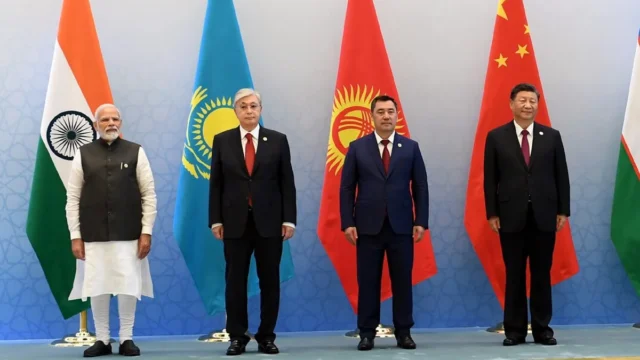
SCO Heads of Government meet in Dushanbe: Rajnath calls for dismantling the terror ecosystem
Defence Minister Rajnath Singh represented India at the 25th meeting of the SCO Council of Heads of Government in Dushanbe, Tajikistan, on 20 October 2026. With Pakistan’s Deputy Prime Minister in the room, he said there can be no justification and no double standards on terrorism. The meeting adopted the SCO budget for 2027 and a 2026–30 action plan for trade and economic cooperation.
UPSC angle: Prelims: SCO bodies and locations, new centres, INSTC. · Mains GS-II: SCO’s value for India; GS-III: terror financing.
21 Oct 2026
Open-weight AI models: why Big Tech gives them away and what it means for India
In October 2026 alone, Reflection AI, Meta, NVIDIA and Mistral released or announced open-weight AI models. The Hindu explained on 20 October why firms spend heavily and then let anyone download the weights: to win developers, set standards and earn from cloud, chips and services. For India, open weights offer a base to build Indian-language AI, but they also bring safety risks.
UPSC angle: Prelims: weights, open-weight vs open-source, IndiaAI, AI4Bharat. · Mains GS-III: AI sovereignty, safety and regulation.
21 Oct 2026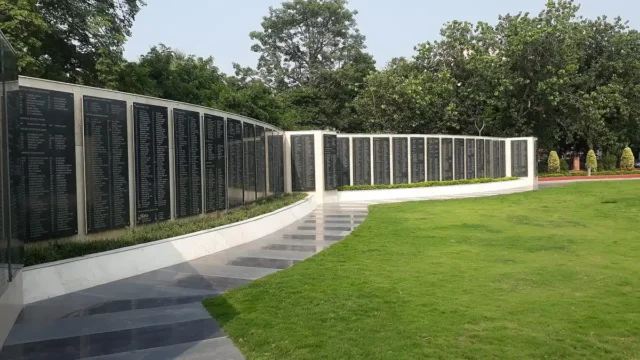
Police Commemoration Day 2026: Shah pays tribute, sets drug-free India target of 2029
On Police Commemoration Day, 21 October 2026, Union Home Minister Amit Shah paid tribute at the National Police Memorial in New Delhi to police personnel who died on duty. He recalled that India was declared free of Naxalism on 31 March 2026, asked all forces to work for a ‘Nasha Mukt Bharat’ by 31 December 2029, and flagged off a nationwide ‘Fight Against Drugs’ motorcycle rally.
UPSC angle: Prelims: Hot Springs, National Police Memorial, State List entries, NDPS Act. · Mains GS-III: police reforms and narcotics.
21 Oct 2026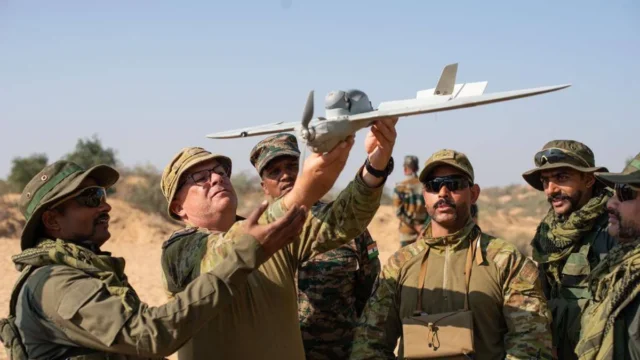
AUSTRAHIND 2026: fifth India–Australia Army exercise begins in Thiruvananthapuram
The fifth edition of the India–Australia joint military exercise AUSTRAHIND began on 19 October 2026 at the Foreign Training Node, Thiruvananthapuram, and runs till 1 November. About 120 soldiers from each army will train for sub-conventional operations in island and coastal terrain under a UN Chapter VII mandate. For the first time, New Zealand has sent observers.
UPSC angle: Prelims: exercise names, venues, partner countries, UN Chapter VII. · Mains GS-III: defence diplomacy in the Indo-Pacific.
20 Oct 2026Learn the concept
Question text as printed in the official UPSC question paper: https://www.upsc.gov.in/sites/default/files/QP-CSM-26-010926-GENERAL-STUDIES-PAPER-IV.pdf The model answer is original Battle IAS work; use it to learn structure, not to memorise.