
Chapter 7 · Topic 7.2 · Prelims + Mains2 of 3
Foreign Invasions: Persians and Alexander: Alexander’s campaign (327–325 BCE)
Key points
- Alexander crossed the Hindu Kush in 327 BCE; Ambhi of Taxila submitted.
- He beat Porus at the Hydaspes (Jhelum) in 326 BCE but his army refused to cross the Beas.
- He left via Gedrosia in 325 BCE and died at Babylon in 323 BCE; Chandragupta later expelled the Greeks.
Prelims box: facts and traps
- Porus: ruled between the Jhelum and the Chenab; 'treat me as a king'.
- Malloi: Alexander badly wounded near Multan.
- About 305 BCE: Seleucus ceded Arachosia, Gedrosia and Paropamisadae and sent Megasthenes.
Alexander’s campaign (327–325 BCE)
Alexander of Macedon defeated the last Persian king, Darius III, and set out to conquer the eastern edge of the Persian empire. In 327 BCE he crossed the Hindu Kush. Ambhi (Omphis), king of Taxila, gave in and helped him, while smaller chiefs fought hard.
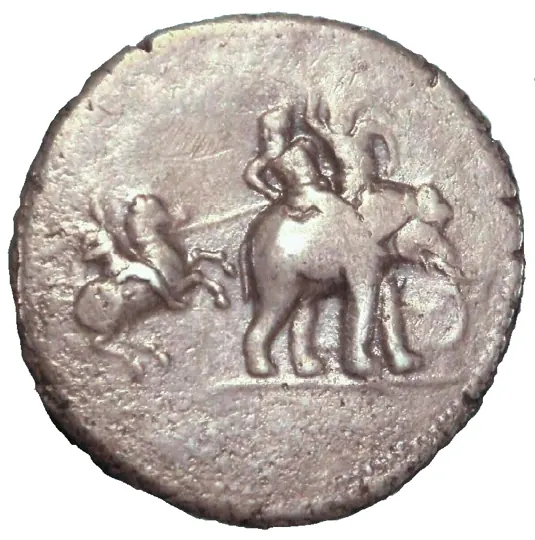
In 326 BCE Alexander met Porus (Puru), king of the land between the Jhelum and the Chenab, in the Battle of the Hydaspes (Jhelum). A river swollen by the monsoon, Indian chariots stuck in mud and frightened elephants helped Alexander win. Greek writers say that when asked how he wished to be treated, Porus replied ‘as a king’. Alexander gave back his kingdom and enlarged it.
Alexander pushed east to the Beas (Hyphasis). There his tired army refused to go further. They had fought for years, the rains were heavy, and they had heard of the huge Nanda army of Magadha. Alexander turned back, sailed down the Jhelum and the Indus, was badly wounded fighting the Malloi (near Multan), and returned west through Gedrosia (Baluchistan) in 325 BCE. He died at Babylon in 323 BCE.
| Event | Date |
|---|---|
| Crosses the Hindu Kush | 327 BCE |
| Taxila submits (Ambhi) | 326 BCE |
| Battle of the Hydaspes against Porus | 326 BCE |
| Army refuses to cross the Beas | 326 BCE |
| Return through Gedrosia | 325 BCE |
| Death at Babylon | 323 BCE |
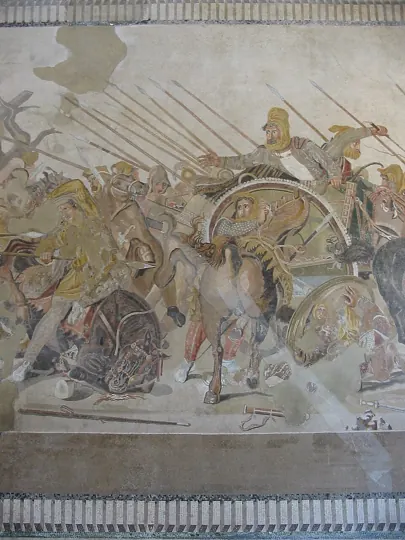
He left governors (satraps) and Greek garrisons (troops posted in forts), but his hold did not last. Within a few years Chandragupta Maurya drove out the Greek garrisons. In about 305 BCE he defeated Seleucus Nikator, Alexander’s successor in the east, who gave up Arachosia, Gedrosia and Paropamisadae and sent the ambassador Megasthenes to Pataliputra.
What UPSC asks
Prelims: Hydaspes, Porus, Beas, Ambhi. Mains: why Alexander turned back.
Mains box: analysis and answer points
- Why he turned back: war-weary troops, heavy rains, fear of the Nanda army, distance from home.
- Likely next angle: Taxila, a UNESCO World Heritage Site.
Practice
Write an answer
In 150 words, explain the significance of Foreign Invasions with one recent example.
Flashcards (6)
When did Alexander cross the Hindu Kush?
327 BCE.
Which king of Taxila submitted to
Alexander? Ambhi (Omphis).
Where did Alexander fight Porus?
At the Hydaspes (Jhelum), 326 BCE.
Where did Alexander's army refuse to go
on? At the Beas (Hyphasis).
Where was Alexander badly wounded?
Fighting the Malloi, near Multan.
Who sent Megasthenes to Pataliputra?
Seleucus Nikator.
Read more: related explainers
In the news
- 20 Oct 2026Sirpur in Chhattisgarh enters UNESCO’s Tentative List of World Heritage sites
- 15 Oct 2026PM inaugurates five Ladakh projects: Nimmu–Padum–Darcha road, Leh terminal, Hanu hydro
- 14 Oct 2026HAL, NCF and ASI sign MoA for Hampi, Taj Mahal and Bekal Fort
- 11 Oct 2026Birth anniversaries: Jayaprakash Narayan and Nanaji Deshmukh
 Next topic · 7.3 →Foreign Invasions: Persians and Alexander: What the invasions left behind
Syllabus: Prelims GS-I · History of India and Indian National Movement.