
Chapter 2 · Topic 2.2 · Prelims + Mains2 of 2
Prehistoric India: Neolithic, Chalcolithic and megalithic
Key points
- Neolithic = farming, polished stone axes (celts), pottery and villages; Mehrgarh from about 7000 BCE.
- Chalcolithic villages used copper with stone: Ahar–Banas, Ganeshwar, Kayatha–Malwa, Jorwe (Inamgaon).
- Megaliths are Iron Age graves marked by big stones, mostly in the Deccan and the south.
Prelims box: facts and traps
- Burzahom (Kashmir): pit dwellings; dogs buried with masters. Not rock-cut shrines (Prelims 2021 trap).
- Chirand (Bihar): many bone tools.
- Southern ash mounds: burnt cattle pens at sites like Utnur and Sanganakallu.
- Prelims 2024: Inamgaon = Chalcolithic, Mangadu (Kerala) = Megalithic.
- Megalith types: stone circles, cists, dolmens, menhirs, urns (Adichanallur).
The New Stone Age (Neolithic): the first farmers
The Neolithic brought the biggest change in human history: farming. People grew crops, kept cattle, sheep and goats, made pottery, polished their stone axes (called celts), wove cloth and lived in villages of mud houses. Settled life gave them a food surplus, meaning more food than they needed right away. With spare food, some people could become potters or traders, and over time some families grew richer than others.
The earliest farming village in the subcontinent is Mehrgarh in Balochistan (now in Pakistan), from about 7000 BCE. People there grew wheat and barley and kept cattle, sheep and goats. In the middle Ganga plain and the Vindhyas, sites such as Lahuradewa and Koldihwa show early rice. Neolithic cultures grew up in several regions, each with its own character.
| Region | Sites | What stands out |
|---|---|---|
| Kashmir | Burzahom, Gufkral | Pit dwellings against the cold; dogs buried with their masters; bone tools |
| Middle Ganga (Bihar) | Chirand | Many bone tools |
| South India | Brahmagiri, Maski, Sanganakallu, Utnur (Karnataka); Paiyampalli (Tamil Nadu) | Cattle herders; ash mounds where cattle pens were burnt |
| North-east | Daojali Hading (Assam) | Cord-marked pottery and shouldered axes, with links to South-East Asia |
Prelims 2021 listed the pair Burzahom Rock-cut shrines (a place and what it is known for). That pair is wrong: Burzahom is a Neolithic village of pit dwellings, homes dug into the ground to keep out the Kashmir cold. The other two pairs, Chandra-ketugarh (Terracotta art) and Ganeshwar (Copper artefacts), are right, so the answer is 2 and 3 (option d). Learn each site with its age and its signature find.
Consider the following pairs : Historical place Well-known for 1. Burzahom Rock-cut shrines 2. Chandra-ketugarh Terracotta art 3. Ganeshwar Copper artefacts Which of the pairs given above is/are correctly matched?
- 1 only
- 1 and 2
- 3 only
- 2 and 3
Show answer
Answer: (d) · UPSC official key
What UPSC asks
Prelims: site and feature pairs (Burzahom, 2021). Mains: why the switch to farming mattered. Next likely: early rice and evidence of taming animals.
Copper-using villages and megalithic burials
The Chalcolithic (‘copper-stone’) cultures used copper alongside stone tools. “Chalco” means copper. Most were villages, outside the Harappan cities, and some lasted long after the Harappans declined. They made painted pottery (black-and-red ware is common), grew crops including rice, wheat and pulses, and kept cattle. Copper came from the Aravallis and other sources.
| Culture | Region | Sites and features |
|---|---|---|
| Ahar–Banas | South-east Rajasthan | Ahar, Gilund; copper working; stone and mud houses |
| Ganeshwar–Jodhpura | North-east Rajasthan | Ganeshwar; copper objects, supplied to the Harappans |
| Kayatha and Malwa | Madhya Pradesh | Kayatha; Navdatoli, Eran; Malwa ware |
| Jorwe | Maharashtra | Inamgaon, Daimabad, Nevasa, Chandoli; Daimabad bronze hoard |
Prelims 2024 gave four sites in a table, and two rows are right: Inamgaon (Maharashtra) as a Chalcolithic site and Mangadu (Kerala) as a Megalithic site, so the answer is 2 and 3 (option b). Inamgaon, near Pune, was a large Jorwe village with a wall around it and a channel to water the fields. Its people buried the dead in urns (large pots) below the floors of their houses.
Consider the following information : Archaeological Site State Description 1. Chandraketugarh Odisha Trading Port town 2. Inamgaon Maharashtra Chalcolithic site 3. Mangadu Kerala Megalithic site 4. Salihundam Andhra Pradesh Rock-cut cave shrines In which of the above rows is the given information correctly matched ?
- 1 and 2
- 2 and 3
- 3 and 4
- 1 and 4
Show answer
Answer: (b) · UPSC official key
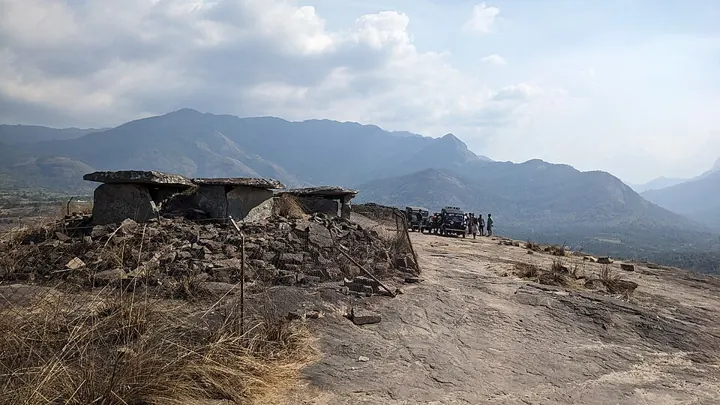
Megaliths are graves or memorials marked by large stones (“mega” means big). Most Indian megaliths belong to the Iron Age, from about 1000 BCE to the early centuries CE, and are concentrated in the Deccan and the south. The main types are easy to picture:
- Stone circles: a ring of boulders around a grave.
- Cists: stone boxes buried in the ground.
- Dolmens: a flat capstone resting on upright slabs, like a stone table.
- Menhirs: single tall standing stones.
- Urn burials: the dead placed in big pots, as at Adichanallur in Tamil Nadu.
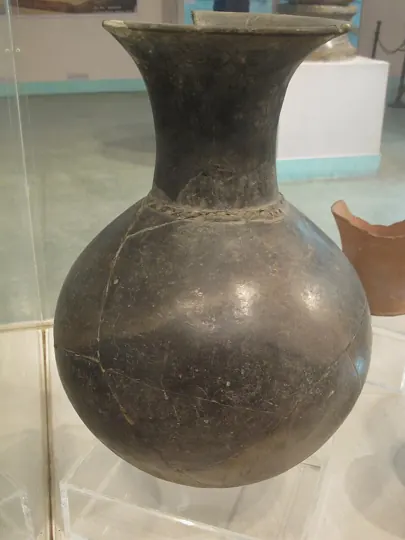
Iron tools, horse equipment and black-and-red ware were buried with the dead, which tells us people believed in some life after death. Brahmagiri, Junapani (near Nagpur), Mangadu and Marayoor (Kerala) are well-known sites.
What UPSC asks
Prelims: site, State and culture tables (2024). Mains: copper-using villages beside and after the Harappans. Next likely: megalithic finds in Kerala and Tamil Nadu.
Mains box: analysis and answer points
- Why farming mattered: food surplus, settled villages, crafts, trade and the first social differences.
- Chalcolithic significance: rural cultures that ran beside the Harappans and carried on after their decline.
- Likely next angle: early rice and domestication evidence.
Practice
Write an answer
In 150 words, explain the significance of Prehistoric India with one recent example.
Flashcards (10)
Earliest farming village in the subcontinent?
Mehrgarh, Balochistan, about 7000 BCE.
What is special about Burzahom?
Pit dwellings and dogs buried with their masters.
Neolithic site in Bihar known for bone tools?
Chirand.
What are ash mounds?
Burnt cattle-pen deposits of the southern Neolithic.
Which culture does Inamgaon belong to?
The Jorwe Chalcolithic culture.
Which Rajasthan site supplied copper to the
Harappans? Ganeshwar.
Where was a Chalcolithic bronze hoard
found? Daimabad, Maharashtra.
What is a dolmen?
A capstone resting on upright slabs.
Mangadu is what kind of site?
Megalithic, in Kerala.
Urn-burial site in Tamil Nadu?
Adichanallur.
In the news
- 20 Oct 2026Sirpur in Chhattisgarh enters UNESCO’s Tentative List of World Heritage sites
- 15 Oct 2026PM inaugurates five Ladakh projects: Nimmu–Padum–Darcha road, Leh terminal, Hanu hydro
- 14 Oct 2026HAL, NCF and ASI sign MoA for Hampi, Taj Mahal and Bekal Fort
- 11 Oct 2026Birth anniversaries: Jayaprakash Narayan and Nanaji Deshmukh
 Next chapter · 3. Indus Valley Civilization →Indus Valley Civilization: Sites and town planning
Syllabus: Prelims GS-I · History of India and Indian National Movement.