
Chapter 14 · Topic 14.1 · Prelims + Mains1 of 3
GI Tags: GI law, farm and craft GIs
Key points
- GI Act 1999; in force 15 September 2003.
- GI Registry: Chennai; validity 10 years, renewable.
- First GI: Darjeeling Tea (2004–05).
- Handicraft is the largest GI category.
Prelims box: facts and traps
- GI Act passed for WTO (TRIPS) duties (Prelims 2018).
- A GI belongs to all producers; a trademark to one firm.
- Basmati: shared by seven states.
- 822 GIs on 31 March 2026.
On this page (3 sections)
GI law and process
A Geographical Indication (GI) marks a product whose quality or reputation comes from where it is made. Think of Darjeeling Tea: only tea from Darjeeling can use that name. It belongs to the producers of that area together. Nobody can own it alone.
| Point | Detail |
|---|---|
| Law | Geographical Indications of Goods (Registration and Protection) Act, 1999; in force from 15 September 2003 |
| Registry | GI Registry, Chennai, under the Controller General of Patents, Designs and Trade Marks (DPIIT, Ministry of Commerce and Industry) |
| Validity | 10 years, renewable for further 10-year terms |
| Who applies | An association of producers, or an organisation or authority representing them |
| Categories | Agricultural, natural, manufactured (handicrafts, textiles, foodstuffs) |
| International | WTO TRIPS Agreement, Articles 22–24; extra protection for wines and spirits (Article 23) |
Prelims 2018: ‘India enacted The Geographical Indications of Goods (Registration and Protection) Act, 1999 in order to comply with the obligations to’ the WTO (answer d), through TRIPS, the WTO agreement on intellectual property.
India enacted The Geographical Indications of Goods (Registration and Protection) Act, 1999 in order to comply with the obligations to
- ILO
- IMF
- UNCTAD
- WTO
Show answer
Answer: (d) · UPSC official key
Numbers: the first GI was Darjeeling Tea (2004–05). The register had 822 entries on 31 March 2026, including about 40 foreign GIs such as Champagne and Scotch Whisky. Uttar Pradesh has the most. A registered GI is different from a trademark. A trademark belongs to one firm, while a GI belongs to every authorised producer in the area.
What UPSC asks: GI Act 1999 for WTO (Prelims 2018). Registry in Chennai. 10-year validity.
Agricultural GIs
| GI | State |
|---|---|
| Darjeeling Tea (first GI) | West Bengal |
| Basmati rice | Shared by seven states of the Indo-Gangetic plain and the Himalayan foothills |
| Kashmir Saffron | Jammu and Kashmir (Pampore) |
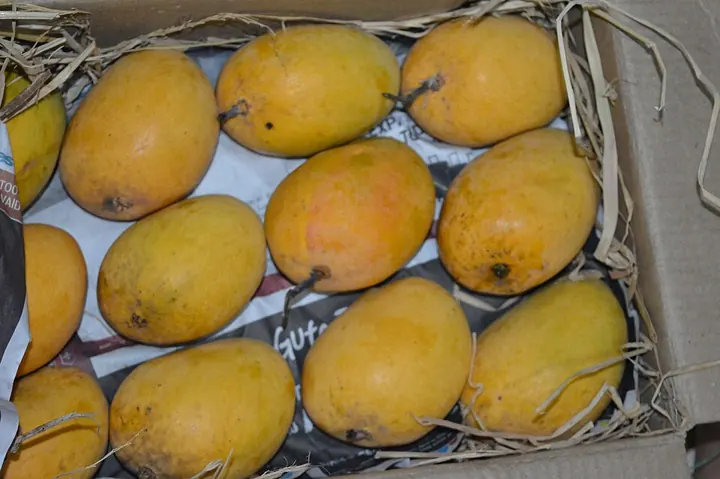
| Alphonso mango | Maharashtra (Konkan) |
| Nagpur Orange | Maharashtra |
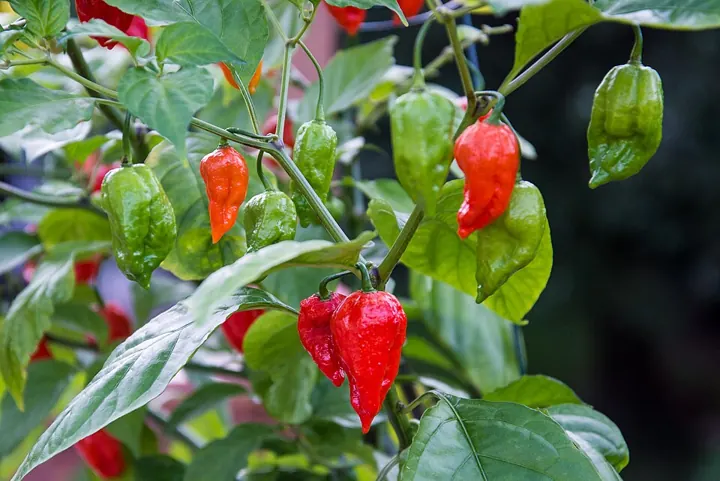
| Naga Mircha (king chilli) | Nagaland |
| Kandhamal Haladi (turmeric) | Odisha |
| Malabar Pepper | Kerala |
| Coorg Arabica Coffee | Karnataka |
| Navara rice | Kerala (medicinal rice) |
Agricultural GIs protect premium prices. The Basmati dispute with Pakistan over the EU GI application shows the trade side of GI law.
What UPSC asks: Darjeeling Tea first. Basmati shared. Kashmir Saffron.
Handicraft GIs
| GI | State |
|---|---|
| Channapatna toys | Karnataka |
| Bidriware | Karnataka |
| Madhubani paintings | Bihar |
| Pattachitra | Odisha |
| Bastar Dhokra | Chhattisgarh |
| Blue Pottery of Jaipur | Rajasthan |
| Thanjavur paintings | Tamil Nadu |
| Nirmal toys and crafts | Telangana |
| Kondapalli toys | Andhra Pradesh |
Handicraft is the largest GI category. In 2025–26 alone, 73 of the 125 new GIs were handicrafts.
What UPSC asks: Largest category. Channapatna, Bidri. Madhubani, Pattachitra.
Mains box: analysis and answer points
- GI and trade: Basmati dispute in the EU.
- GI and livelihoods of artisans and farmers.
Practice
Practice MCQs (8)
Which GI-registered spice is cultivated on the 'Karewa' highlands, with the Pampore area as its best-known centre, and received its GI certification in 2020?
Answer (c) & explanation
Kashmir Saffron is grown on the Karewas, the lacustrine table-lands of the Kashmir Valley, with Pampore as the main centre. Its GI application was filed by the Directorate of Agriculture, Kashmir, in December 2018 and the certification came in July 2020. Its long, thick, deep-red stigmas are traded in forms such as Lachha and Mongra.
'Kandhamal Haladi', registered as a geographical indication in 2019–20, is:
Answer (a) & explanation
Kandhamal Haladi is a turmeric ('haladi' in Odia) from the Kandhamal district of Odisha, cultivated mainly by tribal (largely Kandha) farmers with traditional, mostly organic practices. It is the region's main cash crop and was registered by the GI Registry in 2019–20.
Under the Geographical Indications of Goods (Registration and Protection) Act, 1999, how many of the following kinds of goods can be registered as geographical indications?
1. Agricultural goods
2. Natural goods
3. Handicrafts
4. Foodstuff
Select the correct answer using the code given below.
Answer (d) & explanation
Section 2(1)(e) of the Act defines a GI as an indication for agricultural, natural or manufactured goods. Section 2(1)(f) says 'goods' include any goods of agriculture, nature or manufacture and also handicraft and foodstuff. So all four can be registered — e.g. Darjeeling tea (agricultural), Makrana marble (natural), Dindigul locks (handicraft) and Dharwad pedha (foodstuff).
Consider the following statements:
1. Banaras Tabla and Banaras Shehnai have been registered as geographical indications.
2. Both are recorded in the GI Registry under the handicraft category.
3. Both are registered as geographical indications of Bihar.
Which of the statements given above are correct?
Answer (b) & explanation
In 2023–24 the GI Registry registered a batch of Banaras (Varanasi) products, including Banaras Tabla and Banaras Shehnai, as handicraft GIs of Uttar Pradesh. Varanasi is a centre of instrument-making linked to the Banaras gharana and to shehnai maestro Bismillah Khan. They are not Bihar GIs, so statement 3 is wrong.
Consider the following pairs: GI-registered rice — State
1. Navara — Kerala
2. Kalanamak — Uttar Pradesh
3. Joha — Assam
4. Pokkali — Odisha
Which of the pairs given above are correctly matched?
Answer (a) & explanation
Navara (a medicinal rice) and Pokkali (a saline-tolerant coastal rice) are both GIs of Kerala. Kalanamak, a scented black-husked rice, is a GI of Uttar Pradesh (Siddharthnagar– Gorakhpur belt), and Joha, a short-grain aromatic rice, is a GI of Assam. So pair 4 is wrong.
A GI-registered rice of Kerala is a saline-tolerant variety grown without chemical inputs in the water-logged coastal fields of the Ernakulam–Alappuzha–Thrissur belt, where rice cultivation alternates with prawn farming. It is:
Answer (b) & explanation
Pokkali is grown in the brackish, low-lying coastal fields of central Kerala; its tall plants tolerate salinity and flooding. The fields follow a rotation of one rice crop and a prawn- farming season, needing no fertiliser. Navara is a medicinal rice used in Ayurveda, and Chak- hao is the black rice of Manipur.
Consider the following pairs: Geographical indication — Registered proprietor (applicant)
1. Darjeeling Tea — Tea Board
2. Basmati — Agricultural and Processed Food Products Export Development Authority
3. Kashmir Saffron — Directorate of Agriculture, Kashmir
4. Judima — Tea Board
Which of the pairs given above are correctly matched?
Answer (b) & explanation
GI Registry records name the applicant who becomes the registered proprietor: Tea Board for Darjeeling Tea (application 1), APEDA for Basmati (application 145) and the Directorate of Agriculture, Kashmir for Kashmir Saffron (application 635). Judima (application 643) was filed by a Dimasa producers' body from Dima Hasao, not the Tea Board, so pair 4 is wrong.
Consider the following pairs: GI product — State
1. Naga Mircha — Nagaland
2. Mizo Chilli — Mizoram
3. Dalle Khursani — Sikkim
4. Kachai Lemon — Meghalaya
How many of the pairs given above are correctly matched?
Answer (c) & explanation
Naga Mircha (a very hot chilli) is a GI of Nagaland (2008–09) and Mizo Chilli of Mizoram (2014–15). Dalle Khursani, a round red cherry chilli, is registered for Sikkim (with the Darjeeling hills), 2021–22. Kachai Lemon comes from Kachai village in Ukhrul district of Manipur (2014–15), not Meghalaya.
0 / 0 correct
Write an answer
In 150 words, explain the significance of GI Tags with one recent example.
Flashcards (14)
Why did India enact the GI Act 1999?
To meet WTO (TRIPS) obligations.
GI Act in force from?
15 September 2003.
Where is the GI Registry?
Chennai.
Which ministry oversees GIs?
Commerce and Industry (DPIIT).
GI registration validity?
10 years, renewable.
TRIPS articles on GIs?
Articles 22–24.
India's first GI?
Darjeeling Tea.
Which GI is shared by seven states?
Basmati rice.
Kashmir Saffron is grown mainly at?
Pampore.
Naga Mircha state?
Nagaland.
Kandhamal Haladi is?
Turmeric from Odisha.
Largest GI category?
Handicrafts.
Bidriware GI state?
Karnataka.
Bastar Dhokra state?
Chhattisgarh.
Read more: related explainers
In the news
- 20 Oct 2026Sirpur in Chhattisgarh enters UNESCO’s Tentative List of World Heritage sites
- 15 Oct 2026PM inaugurates five Ladakh projects: Nimmu–Padum–Darcha road, Leh terminal, Hanu hydro
- 14 Oct 2026HAL, NCF and ASI sign MoA for Hampi, Taj Mahal and Bekal Fort
- 3 Oct 2026Centres of Excellence approved for five newer classical languages
 Next topic · 14.2 →GI Tags: Textile GIs
Syllabus: GS-I · Indian culture will cover the salient aspects of Art Forms, literature and Archi…