
Chapter 14 · Topic 14.2 · Prelims + Mains2 of 3
GI Tags: Textile GIs
Key points
- Banaras Brocades and Sarees: Uttar Pradesh, GI 2009.
- Pochampally Ikat: Telangana, an early GI (2004–05).
- Muga Silk: Assam, golden silk, GI 2007.
- Kashmir Pashmina: GI 2008.
Prelims box: facts and traps
- Kanchipuram Silk: Tamil Nadu. Mysore Silk: Karnataka.
- Kota Doria: Rajasthan. Chanderi: Madhya Pradesh.
- Paithani: Maharashtra. Kullu Shawl: Himachal Pradesh.
- Ikat: threads tied and dyed before weaving.
Textile GIs
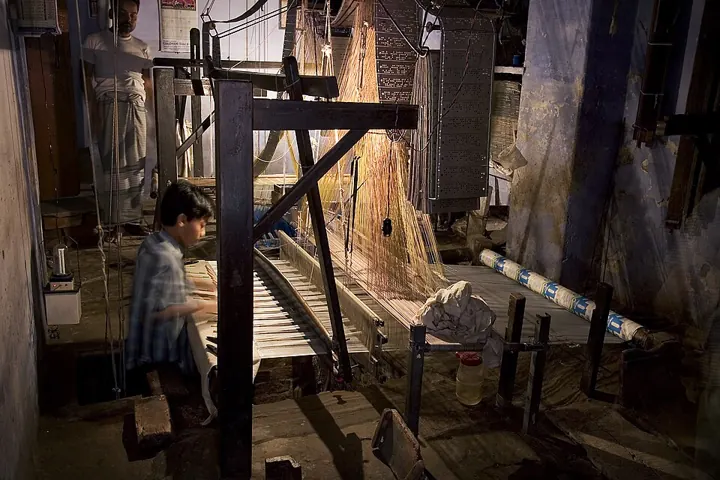
India has hundreds of weaving traditions, and textiles are one of the biggest groups of GI tags after general handicrafts. A GI tag on a sari tells the buyer: this was woven in this place, using this method. It is like a “made in” stamp that also promises a skill. Without it, a cheap machine-made copy could be sold under a famous name, and the real weavers would lose out.
| GI | State |
|---|---|
| Banaras Brocades and Sarees | Uttar Pradesh |
| Kanchipuram Silk | Tamil Nadu |
| Pochampally Ikat (an early GI, 2004–05) | Telangana |
| Mysore Silk | Karnataka (zari of gold thread) |
| Chanderi fabric | Madhya Pradesh |
| Kota Doria | Rajasthan |
| Muga Silk | Assam |
| Paithani sarees | Maharashtra |
| Kullu Shawl | Himachal Pradesh |
| Kashmir Pashmina | Jammu and Kashmir |
| Srikalahasthi Kalamkari | Andhra Pradesh |
Here is what makes some of these fabrics special.
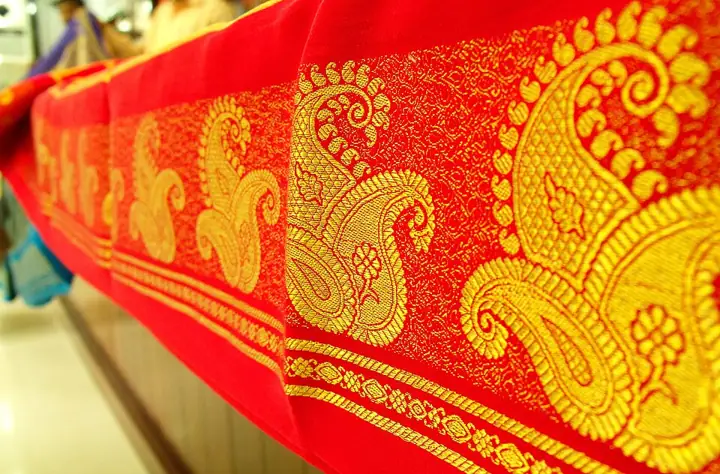
Banaras Brocades and Sarees are woven in Varanasi with gold and silver zari threads in rich patterns. They got their GI in 2009. Brocade means a fabric with raised patterns woven in, as if embroidered.
Kanchipuram Silk saris are heavy mulberry silk with wide contrast borders. The border is often woven separately and then locked into the body, a method called korvai.
Pochampally Ikat, from Telangana, was one of India’s earliest GIs. Ikat is a tie-and-dye method in which the threads are tied and dyed before weaving, so the pattern appears as the cloth is woven. The edges of the design look slightly blurred, which is the easy way to spot it.
Mysore Silk is pure silk with a gold zari border. Muga Silk, a natural golden silk found only in Assam, got its GI in 2007. It is made by silkworms that feed on local trees, and its shine grows with every wash.
Chanderi fabric from Madhya Pradesh is sheer and light, mixing silk and cotton. Kota Doria from Rajasthan has a fine square check pattern called khat. Paithani saris from Maharashtra have a peacock or lotus design on the pallu, the loose end. Kullu Shawls from Himachal Pradesh have bright geometric borders. Kashmir Pashmina, from the soft wool of the Changthangi goat, got its GI in 2008. Srikalahasthi Kalamkari is drawn by hand with a pen and natural dyes.
Exam traps. Watch for state changes. Pochampally is now in Telangana, not Andhra Pradesh, since Telangana was formed in 2014. Srikalahasthi Kalamkari stays in Andhra Pradesh. Muga is Assam, not Meghalaya. Kota Doria is Rajasthan, not Madhya Pradesh. Setters like to swap neighbouring states, so read every pair slowly.
How a GI is used. Once a GI is registered, weavers in the area can sign up as authorised users. Only they can then sell under that name. If someone outside the area uses it, the producers can take legal action under the GI Act, just as a company can sue someone who copies its brand.
Why it matters. Power looms can copy handloom designs at a fraction of the cost. GI tags, the Handloom Mark and the India Handloom Brand help buyers find genuine products. But many weavers do not know how to use these tags, so awareness and enforcement remain weak. In Mains, use textile GIs to discuss rural jobs, women weavers and exports.
What UPSC asks: Banaras Brocades (2009). Pochampally Ikat and Kanchipuram Silk. Mysore Silk and Muga Silk (2007).
Mains box: analysis and answer points
- Handloom vs power loom: protecting genuine weavers.
- GI awareness and enforcement gaps.
- Textiles and rural jobs, especially for women.
Practice
Write an answer
In 150 words, explain the significance of GI Tags with one recent example.
Flashcards (3)
Banaras Brocades state?
Uttar Pradesh.
Kota Doria state?
Rajasthan.
Muga Silk state?
Assam.
Read more: related explainers
In the news
- 20 Oct 2026Sirpur in Chhattisgarh enters UNESCO’s Tentative List of World Heritage sites
- 15 Oct 2026PM inaugurates five Ladakh projects: Nimmu–Padum–Darcha road, Leh terminal, Hanu hydro
- 14 Oct 2026HAL, NCF and ASI sign MoA for Hampi, Taj Mahal and Bekal Fort
- 3 Oct 2026Centres of Excellence approved for five newer classical languages
 Next topic · 14.3 →GI Tags: Food GIs
Syllabus: GS-I · Indian culture will cover the salient aspects of Art Forms, literature and Archi…