
Swadeshi Movement (1905–1911): Partition of Bengal, Methods, Leaders, Impact and UPSC PYQs
UPSC has already asked about this. Read the story with these questions in mind.
- Prelims 2016The ‘Swadeshi’ and ‘Boycott’ were adopted as methods of struggle for the first time during theSolve it below ↓
- Prelims 2014The Partition of Bengal made by Lord Curzon in 1905 lasted untilSolve it below ↓
See all 4 PYQs
- Prelims 2019With reference to Swadeshi Movement, consider the following statements: It contributed to the revival of the indigenous artisan crafts and industries. …Solve it below ↓
- Prelims 2023Consider the following statements :Statement-I : 7th August is declared as the National Handloom Day.Statement-II : It was in 1905 that the Swadeshi Movement…Solve it below ↓
Why the Swadeshi Movement started
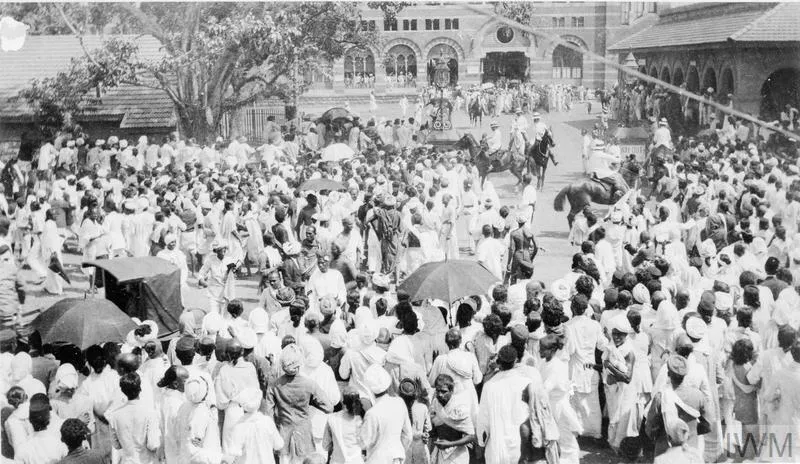
The partition was announced in July 1905 and came into effect on 16 October 1905. The official reason was administrative convenience. Nationalists saw it as “divide and rule”: it split Bengali speakers and separated a Muslim-majority east from a Hindu-majority west. Moderate petitions failed, so the protest moved to economic and political action.
Methods: boycott, swadeshi, national education
- Boycott of British cloth, salt and sugar, with public bonfires of foreign cloth; picketing.
- Swadeshi enterprise: textile mills, match and soap factories, banks and insurance companies; revival of handloom and artisan crafts.
- National education: the National Council of Education (1906), the Bengal National College (Aurobindo Ghosh as principal).
- Samitis such as Ashwini Kumar Dutt’s Swadesh Bandhab Samiti (Barisal); songs (“Amar Sonar Bangla”), Raksha Bandhan as a symbol of unity, and “Vande Mataram”.
It was the first time “swadeshi” and “boycott” were used as methods of mass struggle.
Leaders and the moderate–extremist split
Moderates (Surendranath Banerjea, Gokhale) wanted limited boycott; the Extremists, “Lal-Bal-Pal” (Lajpat Rai, Tilak, Bipin Chandra Pal) and Aurobindo, wanted it extended to all of India and into passive resistance. The disagreement ended in the Surat split (1907).
Why the Swadeshi Movement declined
Heavy repression (deportations, prosecution of the press, Tilak’s six-year sentence in 1908), the Surat split, the lack of an organisation to sustain mass action, limited reach among peasants, and the alienation of many Muslims (the All-India Muslim League was founded at Dacca in 1906). Revolutionary terrorism partly replaced it.
Impact and legacy
The partition was annulled at the Delhi Durbar of December 1911 (George V), and the capital moved from Calcutta to Delhi. The movement left lasting tools: boycott, passive resistance, national education and swadeshi enterprise, which Gandhi later scaled up. 7 August is observed as National Handloom Day in memory of the 1905 launch.
Swadeshi Movement: UPSC angle
For UPSC CSE
Prelims: dates (7 Aug 1905, 16 Oct 1905, 1911), first use of boycott, National Council of Education, Handloom Day. Mains GS-I: significance and limits of Swadeshi; Swadeshi as a precursor to Gandhian mass movements.
Swadeshi Movement UPSC PYQs (Prelims)
Questions UPSC has actually asked, from the official papers. Pick an option to check yourself.
The ‘Swadeshi’ and ‘Boycott’ were adopted as methods of struggle for the first time during the
Swadeshi and boycott were first adopted as methods of struggle in the agitation against the Partition of Bengal. Answer as per the official UPSC key · Battle IAS PYQ bankAnswer (a) & why
The Partition of Bengal made by Lord Curzon in 1905 lasted until
The partition was annulled by King George V at the Delhi Durbar, 1911. Answer as per the official UPSC key · Battle IAS PYQ bankAnswer (b) & why
With reference to Swadeshi Movement, consider the following statements :
– 1. It contributed to the revival of the indigenous artisan crafts and industries.
– 2. The National Council of Education was established as a part of Swadeshi Movement.
Which of the statements given above is/are correct?
Both are correct: it revived artisan crafts and industries and led to the National Council of Education. Answer as per the official UPSC key · Battle IAS PYQ bankAnswer (c) & why
Consider the following statements :
– Statement-I : 7th August is declared as the National Handloom Day.
– Statement-II : It was in 1905 that the Swadeshi Movement was launched on the same day.
Which one of the following is correct in respect of the above statements?
Both statements are correct and II explains I: National Handloom Day marks the 7 August 1905 launch. Answer as per the official UPSC key · Battle IAS PYQ bankAnswer (a) & why
Mains PYQs on this topic
No UPSC Mains question from 2023-2026 is directly on this topic. Older papers (2013-2022) will be added as the Mains bank grows.
Quick quiz
The Partition of Bengal came into effect on
7 August was the boycott resolution.Answer (b)
The Surat split of the Indian National Congress took place in
Moderates vs Extremists.Answer (c)
Who was the first principal of the Bengal National College?
Under the National Council of Education.Answer (b)
FAQs
What is the Swadeshi Movement?
A 1905–1911 mass movement against the Partition of Bengal using boycott of British goods, swadeshi products and national education.
Why did the Swadeshi Movement start?
To oppose Curzon’s 1905 Partition of Bengal, seen as a divide-and-rule measure.
Why did the Swadeshi Movement fail?
Repression, the 1907 Surat split, lack of organisation and limited peasant and Muslim participation; still, the partition was annulled in 1911.
Why is 7 August National Handloom Day?
It marks the launch of the Swadeshi Movement on 7 August 1905.
Who were the leaders of the Swadeshi Movement?
Surendranath Banerjea, Tilak, Lajpat Rai, Bipin Chandra Pal, Aurobindo Ghosh and Ashwini Kumar Dutt, among others.
Spotted an error? Tell us. We correct within 48 hours.
How to use this in Mains
If asked: Assess the significance of the Swadeshi Movement. (GS-I)
Quote: “Moderates (Surendranath Banerjea, Gokhale) wanted limited boycott; the Extremists, “Lal-Bal-Pal” (Lajpat Rai, Tilak, Bipin Chandra Pal) and Aurobindo, wanted it extended to all of India and into passive resistance.”
Use it: Use for the Moderate-Extremist divide.
In the news
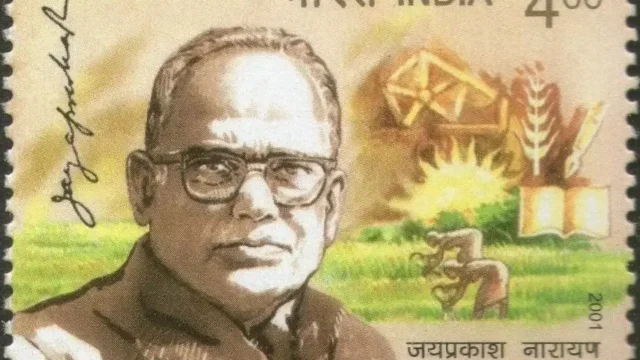
Birth anniversaries: Jayaprakash Narayan and Nanaji Deshmukh
11 October is the birth anniversary of Loknayak Jayaprakash Narayan and Nanaji Deshmukh, both Bharat Ratna awardees. The Prime Minister recalled JP's voice during the Emergency and his concern for good governance, and Nanaji's work in rural development and community participation. Treat this as a personality note for Prelims.
11 Oct 2026
ASI and Denmark museum to search for 1619 Danish shipwreck Oresund off Karaikal
The Archaeological Survey of India's Underwater Archaeology Wing and the National Museum of Denmark (Njord Centre, Copenhagen) signed an MoU to locate and document the Danish ship Oresund, wrecked off Karaikal, Puducherry, in 1619 CE. It is described as the first Danish ship known to have reached India.
15 Jun 2026
Veer Bal Diwas and the Rashtriya Bal Puraskar
The PM announced the day on 9 January 2022 and the first Veer Bal Diwas was held on 26 December 2022 [PMO].
26 Dec 2025
Stamp on Emperor Perumbidugu Mutharaiyar II
Questions on lesser-known regional dynasties are common in Prelims. Stamps and anniversaries often bring them into the news.
14 Dec 2025