
Partition of Bengal (1905): Curzon’s Motives, the Swadeshi Response and the 1911 Annulment (UPSC Notes + PYQs)
UPSC has already asked about this. Read the story with these questions in mind.
Background: Bengal before 1905
At the turn of the twentieth century the Bengal Presidency included Bengal proper, Bihar and Orissa, with a population of about 78 million. It was too large for one Lieutenant-Governor, and the idea of reducing it had been discussed for decades. But Bengal was also the heart of the new Indian middle class: Calcutta had the universities, the press, the bar and the Indian National Congress’s most vocal leaders. Lord Curzon, Viceroy from 1899, distrusted this class. His Calcutta Corporation Act (1899) cut the number of elected members, and the Indian Universities Act (1904) tightened official control over universities. Many Bengalis read these as attacks on educated Indians. When the plan to divide the province was made public, it was seen as the third blow in a series, and the reaction was correspondingly fierce.
Stated and real reasons
Bengal Presidency, with about 7.8 crore people, was hard to administer. But officials like Home Secretary H.H. Risley wrote plainly that “Bengal united is a power; Bengal divided will pull several different ways”. The new province of Eastern Bengal and Assam, with Dacca as capital, had a Muslim majority; western Bengal included Bihar and Orissa, making Bengalis a minority there.
- 1903Partition proposal published
- July 1905Partition announced
- 7 Aug 1905Boycott resolution, Calcutta Town Hall
- 16 Oct 1905Partition takes effect; Rakhi Bandhan
- 1906Muslim League founded at Dacca
- 1907Surat split in Congress
- 1911Annulment at Delhi Durbar
The response
- 16 October 1905 observed as a day of mourning; Rabindranath Tagore led Raksha Bandhan processions and wrote Amar Sonar Bangla.
- Swadeshi: national schools, swadeshi stores, Bengal Chemicals (P.C. Ray); Boycott of foreign cloth and salt.
- Samitis like the Swadesh Bandhab Samiti (Ashwini Kumar Dutt); Anushilan Samiti; revolutionary actions.
- The Congress at Benares (1905) supported it; at Calcutta (1906) Dadabhai Naoroji declared Swaraj as the goal.
Wider effects
The movement spread to Maharashtra (Tilak), Punjab (Lala Lajpat Rai, Ajit Singh) and Madras (V.O. Chidambaram Pillai’s Swadeshi Steam Navigation Company). It widened the gap between Moderates and Extremists, leading to the Surat split (1907). The Muslim League was founded at Dacca in 1906.
- Boycott limited to Bengal
- Boycott of foreign goods only
- Petitions and constitutional methods
- Leaders: Gokhale, Surendranath Banerjea
- Boycott across India
- Boycott of government schools, courts, offices
- Passive resistance, mass mobilisation
- Leaders: Tilak, Pal, Lajpat Rai, Aurobindo
The two provinces compared
| Point | Bengal (west) | Eastern Bengal and Assam |
|---|---|---|
| Capital | Calcutta | Dacca |
| Area included | Western Bengal, Bihar, Orissa | Eastern Bengal districts, Assam |
| Population (approx.) | 54 million | 31 million |
| Majority | Hindu majority; Bengalis a minority to Hindi and Oriya speakers | Muslim majority |
| Political effect | Bengali-speaking leaders outnumbered in their own province | Nawab Salimullah of Dacca and some Muslim landlords welcomed it |
The arithmetic of the new provinces was the heart of the protest. Bengali Hindus would be a minority in western Bengal, and a Muslim-majority province was being created in the east. Officials like Herbert Risley wrote privately that Bengal united was a power and Bengal divided would pull in different directions.
Annulment
King George V announced the annulment at the Delhi Durbar on 12 December 1911; the capital was shifted from Calcutta to Delhi. Bihar and Orissa became a separate province, and Assam became a Chief Commissioner’s province again.
Methods of the Swadeshi movement
The movement went through two phases. The moderate phase (1903-1905) used petitions, public meetings, memoranda and press campaigns led by Surendranath Banerjea, K.K. Mitra and Prithwishchandra Ray. When these failed, the movement took new forms after 7 August 1905. Boycott of foreign cloth, salt and sugar was enforced through public bonfires and social pressure on buyers. Swadeshi enterprise grew: textile mills, soap and match factories, banks and insurance firms, and P.C. Ray’s Bengal Chemicals. National education was organised through the National Council of Education (1906). Samitis such as Ashwini Kumar Dutt’s Swadesh Bandhab Samiti in Barisal trained volunteers, settled disputes and carried the message to villages. Culture also played a role: Rabindranath Tagore wrote ‘Amar Sonar Bangla’, Rakhi Bandhan was celebrated on 16 October 1905 as a sign of unity, and Abanindranath Tagore’s paintings gave the movement a visual language.
Extremists, moderates and the Surat split
The movement deepened a split in the Congress. Moderates such as Gokhale wanted boycott limited to Bengal and to foreign goods. Extremists led by Tilak, Bipin Chandra Pal, Lala Lajpat Rai and Aurobindo Ghosh wanted it extended across India and to every form of cooperation with the government, which they called passive resistance. The Calcutta session of 1906, under Dadabhai Naoroji, adopted swaraj as the goal and passed resolutions on swadeshi, boycott and national education, a compromise. At Surat in 1907 the two sides split openly. The government then struck at the extremists: Tilak was sentenced to six years in Mandalay, Pal and Aurobindo withdrew from politics, and Lajpat Rai had already been deported in 1907. Out of frustration some young people turned to revolutionary terrorism, such as the Muzaffarpur bombing of 1908 by Khudiram Bose and Prafulla Chaki.
Limits and legacy
The movement had clear limits. It did not reach most Muslim peasants of East Bengal, many of whom were tenants of Hindu landlords; some leaders’ use of Hindu religious symbols widened the gap, and communal riots broke out in Comilla and Jamalpur in 1907. The All-India Muslim League was founded at Dacca in December 1906. Peasants in general were drawn in only partly, and boycott was hard to sustain once foreign goods were cheaper. Yet Swadeshi left a lasting mark. It tested almost every method later used by Gandhi, from boycott and constructive work to national schools and volunteer bodies. Sumit Sarkar described it as the first stage of mass politics in modern India. For Mains, frame the partition both as a case of ‘divide and rule’ and as the moment when nationalism moved beyond petitions.
Partition Of Bengal: UPSC angle
For UPSC CSE
Prelims: dates, who, Swadeshi methods, annulment details. Mains GS-I: divide-and-rule; Swadeshi as the first mass movement.
Partition Of Bengal UPSC PYQs (Prelims)
Questions UPSC has actually asked, from the official papers. Pick an option to check yourself.
The Partition of Bengal made by Lord Curzon in 1905 lasted until
At the Delhi Durbar of December 1911, King George V announced that the partition would be annulled and the capital moved from Calcutta to Delhi. Bihar and Orissa became a separate province (1912), and Assam was again a chief commissionership. Answer as per the official UPSC key · Battle IAS PYQ bankAnswer (b) & why
The ‘Swadeshi’ and ‘Boycott’ were adopted as methods of struggle for the first time during the
The boycott resolution of 7 August 1905 at Calcutta Town Hall turned the agitation against Curzon’s partition of Bengal into the Swadeshi movement. Bonfires of foreign cloth, national schools and swadeshi industries all began then, 15 years before Non-Cooperation. Answer as per the official UPSC key · Battle IAS PYQ bankAnswer (a) & why
With reference to Swadeshi Movement, consider the following statements :
– 1. It contributed to the revival of the indigenous artisan crafts and industries.
– 2. The National Council of Education was established as a part of Swadeshi Movement.
Which of the statements given above is/are correct?
The boycott of British goods (from 1905) revived handloom, crafts and Indian enterprise: Bengal Chemicals, swadeshi textile mills and match factories. The National Council of Education (1906) set up Bengal National College, with Aurobindo as principal, to give education under national control. Answer as per the official UPSC key · Battle IAS PYQ bankAnswer (c) & why
Mains PYQs on this topic
No UPSC Mains question from 2023-2026 is directly on this topic. Older papers (2013-2022) will be added as the Mains bank grows.
Quick quiz
The Partition of Bengal came into effect on
Observed as a day of mourning.Answer (b)
The Partition was annulled in
At the Delhi Durbar.Answer (c)
Swaraj was first declared the Congress goal at the session presided by
Calcutta, 1906.Answer (b)
FAQs
Why did Curzon partition Bengal?
Officially for administration; in reality to weaken Bengali nationalism.
What was the capital of Eastern Bengal and Assam?
Dacca.
When was the partition annulled?
At the Delhi Durbar, 12 December 1911.
What movement did the partition start?
The Swadeshi and Boycott movement.
What was the Swadeshi movement?
The movement that began in 1905 against the partition of Bengal. It combined boycott of British goods with promotion of Indian industry, national education and volunteer organisations.
Who was Viceroy when the partition was annulled?
Lord Hardinge II. King George V announced the annulment at the Delhi Durbar in December 1911.
How did the partition affect Hindu-Muslim relations?
The British projected the eastern province as a gain for Muslims, and the Muslim League was founded in Dacca in 1906. The movement’s limited reach among Muslim peasants and the riots of 1907 widened the communal gap.
Spotted an error? Tell us. We correct within 48 hours.
Image: Paper Jewels, Wikimedia Commons, CC BY 4.0
How to use this in Mains
If asked: Assess the Swadeshi response to the Partition of Bengal. (GS-I)
Quote: “16 October 1905 observed as a day of mourning; Rabindranath Tagore led Raksha Bandhan processions and wrote Amar Sonar Bangla.”
Use it: A vivid opener.
In the news
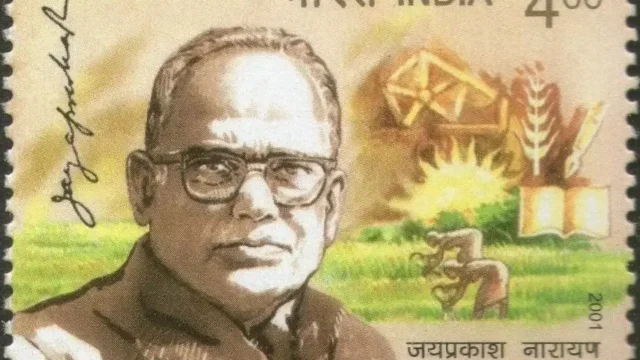
Birth anniversaries: Jayaprakash Narayan and Nanaji Deshmukh
11 October is the birth anniversary of Loknayak Jayaprakash Narayan and Nanaji Deshmukh, both Bharat Ratna awardees. The Prime Minister recalled JP's voice during the Emergency and his concern for good governance, and Nanaji's work in rural development and community participation. Treat this as a personality note for Prelims.
11 Oct 2026
ASI and Denmark museum to search for 1619 Danish shipwreck Oresund off Karaikal
The Archaeological Survey of India's Underwater Archaeology Wing and the National Museum of Denmark (Njord Centre, Copenhagen) signed an MoU to locate and document the Danish ship Oresund, wrecked off Karaikal, Puducherry, in 1619 CE. It is described as the first Danish ship known to have reached India.
15 Jun 2026
Veer Bal Diwas and the Rashtriya Bal Puraskar
The PM announced the day on 9 January 2022 and the first Veer Bal Diwas was held on 26 December 2022 [PMO].
26 Dec 2025
Stamp on Emperor Perumbidugu Mutharaiyar II
Questions on lesser-known regional dynasties are common in Prelims. Stamps and anniversaries often bring them into the news.
14 Dec 2025