
Chapter 4 · Topic 4.2 · Prelims + Mains2 of 3
Biology: Plants, viruses and microbes
Key points
- Xylem carries water up. Phloem carries food both ways.
- Girdling cuts phloem, so roots starve and the tree dies.
- Root hairs lost in transplanting, so seedlings fail.
- Viruses: RNA or DNA, never both. Need living cells to grow.
- Adenovirus: dsDNA, common cold. HIV: retrovirus, reverse transcriptase.
- Probiotics: bacteria and yeast. Aflatoxins: Aspergillus moulds.
Prelims box: facts and traps
| Microbe | Use or harm |
|---|---|
| Lactobacillus | curd, probiotic |
| Bacillus thuringiensis | biopesticide |
| Trichoderma | biopesticide (fungus) |
| Aspergillus flavus | aflatoxin |
- On 30 November 2022 the US FDA approved Rebyota to prevent recurrent C. difficile infection in adults after antibiotic treatment, and in April 2023 it approved Vowst, an oral capsule of purified bacterial spores.
- Trap (Prelims 2014): vegetative propagation does not remove viruses.
On this page (3 sections)
How plants move water and food, and reproduce
Plants have two transport tissues, like two sets of pipes (NCERT Science, Class 10, Chapter 5):
- Xylem moves water and minerals from the soil upwards. Root pressure matters more at night. During the day the transpiration pull, created as water evaporates from leaves, is the main driving force, like sucking water up a straw.
- Phloem moves the products of photosynthesis, such as sucrose, from the leaves to storage organs in roots, fruits and seeds and to growing parts. It moves both upwards and downwards, using energy from ATP (the cell’s energy currency).
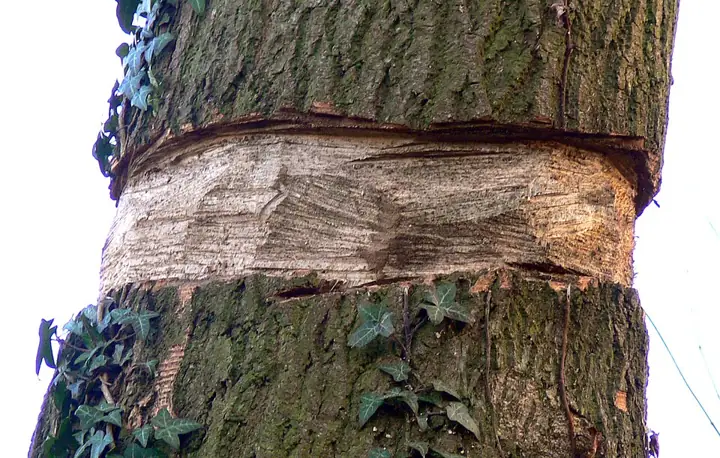
Girdling removes a complete ring of bark, cutting the phloem layer. The tree can then no longer send carbohydrates made in the leaves to the roots. The roots die once the carbohydrates stored in them run out, which may take several years (USDA Forest Service, Tree Girdling Tools). So a ring-barked tree slowly dries up and dies because its roots are starved of energy, not because water stops rising (Prelims 2011: answer (b)).
When the bark of a tree is removed in a circular fashion all around near its base, it gradually dries up and dies because
- Water from soil cannot rise to aerial parts
- Roots are starved of energy
- Tree is infected by soil microbes
- Roots do not receive oxygen for respiration
Show answer
Answer: (b) · UPSC official key
Root hairs are delicate, long cells just behind the root tip. They increase the root’s surface area and its power to absorb water. They usually live one or two days, and when a plant is transplanted they are easily torn off or may dry out in the sun (Oregon State University Extension). Hence many transplanted seedlings do not grow because most of the root hairs are lost during transplantation (Prelims 2013: answer (c)).
Many transplanted seedlings do not grow because
- the new soil does not contain favourable minerals
- most of the root hairs grip the new soil too hard
- most of the root hairs are lost during transplantation
- leaves get damaged during transplantation
Show answer
Answer: (c) · UPSC official key
Plants can also reproduce vegetatively, meaning without seeds. Roots, stems or leaves develop into new plants, as in layering or grafting of sugarcane, roses or grapes. Such plants bear flowers and fruits earlier than those from seeds. Banana, orange, rose and jasmine, which have lost the ability to produce seeds, can still be grown this way. All plants produced are genetically similar enough to the parent plant to have all its characteristics, like photocopies of one page (NCERT Science, Class 10, Chapter 7). So vegetative propagation produces a clonal population and can be practised most of the year. UPSC did not accept that it removes viruses (Prelims 2014: answer (c), 1 and 3 only).
Which of the following statements is/are correct regarding vegetative propagation of plants? 1. Vegetative propagation produces clonal population. 2. Vegetative propagation helps in eliminating the virus. 3. Vegetative propagation can be practiced most of the year. Select the correct answer using the code given below.
- 1 only
- 2 and 3 only
- 1 and 3 only
- 1, 2 and 3
Show answer
Answer: (c) · UPSC official key
Viruses
Viruses are non-cellular. Outside a living cell they are inert, like a seed waiting for soil. Once they infect a cell, they take over the host cell’s machinery to copy themselves. So viruses are obligate parasites, meaning they cannot live without a host. They contain protein and genetic material that could be either RNA or DNA, never both. The protein coat is called the capsid (NCERT Biology, Class 11, Chapter 2).
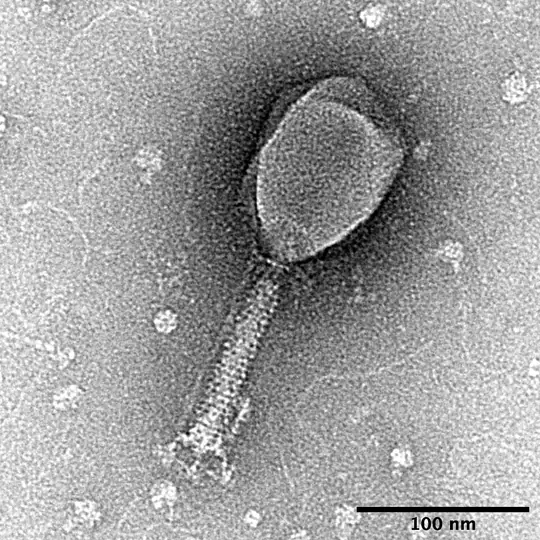
Viruses that infect plants usually have single-stranded RNA. Bacterial viruses, or bacteriophages, are usually double-stranded DNA viruses (NCERT). Because viruses have no machinery of their own to make energy or proteins, they cannot be grown in a synthetic medium. They need living cells. UPSC accepted only that viruses lack enzymes needed to generate energy (Prelims 2013: answer (a), 1 only). For culture in an artificial or synthetic medium, only bacteria and fungi qualify (Prelims 2021: answer (a), 1 and 2 only).
Which of the following statements is/are correct? 1. Viruses lack enzymes necessary for the generation of energy. 2. Viruses can be cultured in any synthetic medium. 3. Viruses are transmitted from one organism to another by biological vectors only. Select the correct answer using the codes given below.
- 1 only
- 2 and 3 only
- 1 and 3 only
- 1, 2 and 3
Show answer
Answer: (a) · UPSC official key
Consider the following : 1. Bacteria 2. Fungi 3. Virus Which of the above can be cultured in artificial/synthetic medium?
- 1 and 2 only
- 2 and 3 only
- 1 and 3 only
- 1, 2 and 3
Show answer
Answer: (a) · UPSC official key
Viruses infect every kind of life. Bacteriophages infect bacteria and tobacco mosaic virus infects plants (NCERT). UPSC’s answer: viruses can infect bacteria, fungi and plants (Prelims 2016: answer (d)). In 2025 UPSC went further. None of these statements is correct: “No virus can survive in ocean waters”, “No virus can infect bacteria” and “No virus can change the cellular transcriptional activity in host cells” (official key: (d) None). Adenovirus early genes, for example, heavily change the host cell’s transcription machinery (ICTV).
Which of the following statements is/are correct? Viruses can infect 1. bacteria 2. fungi 3. plants Select the correct answer using the code given below.
- 1 and 2 only
- 3 only
- 1 and 3 only
- 1, 2 and 3
Show answer
Answer: (d) · UPSC official key
Consider the following statements : I. No virus can survive in ocean waters. II. No virus can infect bacteria. III. No virus can change the cellular transcriptional activity in host cells. How many of the statements given above are correct?
- Only one
- Only two
- All the three
- None
Show answer
Answer: (d) · UPSC official key
Adenoviruses have linear double-stranded DNA genomes (ICTV) and usually cause mild cold or flu-like symptoms (US CDC). HIV, which causes AIDS, is a retrovirus with an RNA genome. Inside the host, its RNA is copied into viral DNA by the enzyme reverse transcriptase, and this DNA is inserted into the host cell’s DNA (NCERT Biology, Class 12, Chapter 7). “Retro” means backwards, because the usual flow is DNA to RNA. So statement 1 of the 2021 question had the strands wrong, and only statement 2 is right: the common cold is sometimes caused by an adenovirus whereas AIDS is caused by a retrovirus (Prelims 2021: answer (b)).
Consider the following statements : 1. Adenoviruses have single-stranded DNA genomes whereas retroviruses have double-stranded DNA genomes. 2. Common cold is sometime caused by an adenovirus whereas AIDS is caused by a retrovirus. Which of the statements given above is/are correct?
- 1 only
- 2 only
- Both 1 and 2
- Neither 1 nor 2
Show answer
Answer: (b) · UPSC official key
Useful and harmful microbes
Probiotics are live microorganisms meant to give health benefits when eaten or applied to the body. The most common are bacteria of the groups Lactobacillus and Bifidobacterium, and yeasts such as Saccharomyces boulardii are also used. Many are the same as or similar to microbes that naturally live in our bodies (NCCIH, US NIH). Lactic acid bacteria turn milk into curd and partly digest milk proteins (NCERT Biology, Class 12, Chapter 8). Home-made dahi is the everyday example. UPSC’s answer: probiotics are made of both bacteria and yeast and help digest milk sugars. The claim that they do not naturally occur in our gut is wrong (Prelims 2022: answer (c), 1 and 3).
Consider the following statements in respect of probiotics : 1. Probiotics are made of both bacteria and yeast. 2. The organisms in probiotics are found in foods we ingest but they do not naturally occur in our gut. 3. Probiotics help in the digestion of milk sugars. Which of the statements given above is/are correct ?
- 1 only
- 2 only
- 1 and 3
- 2 and 3
Show answer
Answer: (c) · UPSC official key
A biofilm is a community of microbes stuck to a surface inside a slimy layer they produce. The slippery coating on a stone in a stream is a biofilm. Biofilm infections on implanted medical devices are a major challenge, and bacteria in biofilms exposed to low doses of antimicrobials can develop resistance (US FDA, National Center for Toxicological Research). Biofilms also form in food processing places, where they shelter germs (USDA National Agricultural Library). All three UPSC statements were correct: they form on implants and food surfaces and can show antibiotic resistance (Prelims 2022: answer (d)).
Consider the following statements : 1. Biofilms can form on medical implants within human tissues. 2. Biofilms can form on food and food processing surfaces. 3. Biofilms can exhibit antibiotic resistance. Which of the statements given above are correct ?
- 1 and 2 only
- 2 and 3 only
- 1 and 3 only
- 1, 2 and 3
Show answer
Answer: (d) · UPSC official key
Aflatoxins are among the most poisonous mycotoxins (toxins made by fungi). They are produced by certain moulds, Aspergillus flavus and Aspergillus parasiticus, which grow in soil, decaying plants, hay and grains. Crops at risk include cereals, oilseeds, spices and tree nuts, such as badly stored groundnuts. Large doses can be life threatening, usually through liver damage, and there is evidence they can cause liver cancer. Most mycotoxins are chemically stable and survive food processing (WHO, Mycotoxins fact sheet, 2 Oct 2023). Hence the answer: moulds (Prelims 2013: answer (c)).
Improper handling and storage of cereal grains and oilseeds result in the production of toxins known as aflatoxins which are not generally destroyed by normal cooking process. Aflatoxins are produced by
- bacteria
- protozoa
- moulds
- viruses
Show answer
Answer: (c) · UPSC official key
Biopesticides are pesticides made from natural materials such as animals, plants, bacteria and certain minerals (US EPA). Examples (NCERT Biology, Class 12, Chapter 8):
- the bacterium Bacillus thuringiensis (Bt), whose toxin kills caterpillars that eat it,
- the fungus Trichoderma, against plant diseases,
- baculoviruses, which attack only certain insects.
So some species of all three kinds in UPSC’s list, bacteria, fungi and flowering plants, are used as biopesticides (Prelims 2012: answer (d), 1, 2 and 3).
Consider the following kinds of organisms : 1. Bacteria 2. Fungi 3. Flowering plants Some species of which of the above kinds of organisms are employed as biopesticides?
- 1 only
- 2 and 3 only
- 1 and 3 only
- 1, 2 and 3
Show answer
Answer: (d) · UPSC official key
What UPSC asks: Prelims: phloem feeds roots, viruses are obligate parasites, probiotics are bacteria plus yeast. Mains: root hairs absorb water, vegetative clones, adenovirus is dsDNA and HIV a retrovirus, viruses infect bacteria, fungi and plants, biofilms resist antibiotics, aflatoxins from Aspergillus.
Mains box: analysis and answer points
- Microbes: uses in food, farming and medicine.
- Antimicrobial resistance: biofilms on implants.
- Food safety: aflatoxins in stored grain.
Practice
Practice MCQs (8)
Faecal microbiota transplantation, for which the United States Food and Drug Administration approved the first product (Rebyota) on 30 November 2022, is used mainly to prevent the recurrence of
Answer (b) & explanation
Clostridioides difficile often takes over the colon when antibiotics wipe out the normal gut flora, causing severe, recurring diarrhoea and colitis. Restoring a healthy microbial community by transferring processed stool from screened donors (faecal microbiota transplantation) breaks the cycle of recurrence far better than more antibiotics. On 30 November 2022 the US FDA approved Rebyota (rectal) to prevent recurrent C. difficile infection in adults after antibiotic treatment, and in April 2023 it approved Vowst, an oral capsule of purified bacterial spores. FMT for other diseases remains experimental.
With reference to biofilms, consider the following statements:
1. A biofilm is a community of microbes attached to a surface and embedded in a slimy matrix of polysaccharides, proteins and DNA that the microbes themselves produce.
2. Dental plaque on the surface of teeth is a familiar example of a biofilm.
3. Bacteria living inside a biofilm are generally killed more easily by antibiotics and phagocytes than the same bacteria floating freely.
Which of the statements given above is/are correct?
Answer (b) & explanation
Statements 1 and 2 are correct. Most bacteria in nature live not as free-floating (planktonic) cells but in biofilms, glued to a surface by a self-made extracellular polymeric substance (EPS) of polysaccharides, proteins, lipids and extracellular DNA. Dental plaque is the classic example; others include the slime in water pipes and infections of catheters, heart valves and the lungs of cystic fibrosis patients. Statement 3 is the reverse of the truth: the matrix slows antibiotic penetration and shields bacteria from phagocytes and antibodies, and slow-growing 'persister' cells inside tolerate drugs, so biofilm infections are notoriously persistent.
With reference to prebiotics, probiotics and synbiotics, consider the following statements:
1. Prebiotics, such as inulin and fructo-oligosaccharides, are food components that humans cannot digest but that are selectively used by beneficial gut microbes.
2. A synbiotic is a product that combines live beneficial microbes with a substrate, such as a prebiotic, that supports them.
3. According to the FAO/WHO definition, probiotics are heat-killed microbial cells that are safe because they can no longer grow in the body.
Which of the statements given above is/are correct?
Answer (c) & explanation
Statements 1 and 2 are correct. Prebiotics are substrates that pass undigested to the colon and are 'selectively utilised by host microorganisms conferring a health benefit' (ISAPP, 2017); inulin from chicory and onions and fructo- or galacto-oligosaccharides are standard examples, and human milk oligosaccharides feed infant Bifidobacterium. A synbiotic combines live microbes with such a substrate. Statement 3 is wrong: the 2001 FAO/WHO definition, still in use, describes probiotics as 'live microorganisms which, when administered in adequate amounts, confer a health benefit on the host'; inactivated microbes and their products are called postbiotics.
With reference to antiviral drugs used against RNA viruses such as SARS-CoV-2, consider the following statements:
1. Remdesivir is a nucleotide analogue that inhibits the virus's RNA-dependent RNA polymerase.
2. Molnupiravir works by causing so many errors in the copied viral RNA that the virus can no longer multiply.
3. Human cells use an RNA-dependent RNA polymerase to make all of their messenger RNA.
Which of the statements given above is/are correct?
Answer (c) & explanation
Statements 1 and 2 are correct. RNA viruses copy their genomes with an RNA- dependent RNA polymerase (RdRp), an enzyme human cells do not need for making their own mRNA, which makes it a good drug target. Remdesivir is converted in cells into a nucleotide analogue that the RdRp builds into new RNA, after which chain synthesis stalls. Molnupiravir is a ribonucleoside analogue that pairs ambiguously, filling copies with mutations until the virus collapses ('lethal mutagenesis' or 'error catastrophe'). Statement 3 is wrong: human cells transcribe mRNA from DNA with the DNA-dependent RNA polymerase II.
Consider the following viruses:
1. Influenza virus
2. Hepatitis B virus
3. Human papillomavirus
4. Rabies virus
How many of the above have an RNA genome?
Answer (b) & explanation
Only two, influenza and rabies, are RNA viruses; both have negative-sense single- stranded RNA genomes (influenza's in eight segments). Hepatitis B virus is a DNA virus with a small, partly double-stranded circular genome, even though it copies itself through an RNA intermediate using reverse transcriptase; human papillomavirus, the cause of cervical cancer, has double-stranded DNA. By contrast, hepatitis A, C and E viruses are RNA viruses, a frequent source of confusion.
With reference to the human gut microbiome, consider the following statements:
1. Gut bacteria ferment dietary fibre into short-chain fatty acids such as butyrate, which is a major source of energy for the cells lining the colon.
2. Bacteria in the large intestine synthesise vitamin K, which contributes to the body's supply.
3. The early gut microbes of babies born by vaginal delivery tend to differ from those of babies born by caesarean section, whose first microbes more closely resemble skin microbes.
Which of the statements given above is/are correct?
Answer (d) & explanation
All three statements are correct. Fibre that escapes digestion is fermented in the colon into short-chain fatty acids (acetate, propionate, butyrate); butyrate is the preferred fuel of colonocytes and helps maintain the gut barrier and calm inflammation, partly by encouraging regulatory T cells. Colonic bacteria make vitamin K (menaquinones), which is why long antibiotic courses can lower vitamin K levels. Studies such as Dominguez-Bello and colleagues (PNAS, 2010) showed that vaginally born infants first acquire microbes resembling their mother's vaginal flora, whereas babies born by caesarean section acquire skin-type microbes; the differences narrow over the first years.
Coronaviruses accumulate mutations more slowly than most other RNA viruses. The main reason is that they
Answer (a) & explanation
Most RNA viruses copy their genomes with an RNA-dependent RNA polymerase that lacks proofreading, so they make many errors and mutate fast (one reason NCERT notes that RNA viruses evolve faster). Coronaviruses, with very large genomes of about 30 kilobases, are an exception: their non-structural protein 14 (nsp14) has an exoribonuclease (ExoN) activity that removes wrongly added nucleotides, so their error rate is lower; without such proofreading, a genome this large would collect too many errors to survive. They are still RNA viruses, and new variants still arise through mutation and recombination.
Consider the following statements about single-stranded RNA viruses:
1. The genome of a positive-sense RNA virus, such as poliovirus, can be used directly as messenger RNA by the host cell's ribosomes.
2. Negative-sense RNA viruses, such as influenza and rabies viruses, must carry their own RNA-dependent RNA polymerase inside the virus particle.
3. Coronaviruses, including SARS-CoV-2, have negative-sense RNA genomes.
Which of the statements given above is/are correct?
Answer (a) & explanation
Statements 1 and 2 are correct. In a positive-sense virus the genome has the same 'sense' as mRNA, so on entry the host ribosomes translate it directly (the naked RNA of poliovirus is itself infectious). A negative-sense genome is the complement of mRNA; since host cells have no enzyme to copy RNA from RNA, these viruses package their own RdRp to make mRNA first. Statement 3 is wrong: coronaviruses have positive-sense single-stranded RNA genomes, among the largest of all RNA viruses (about 30,000 bases); dengue, Zika and hepatitis C viruses are also positive-sense.
0 / 0 correct
Write an answer
In 150 words, explain the significance of Biology with one recent example.
Flashcards (11)
Why does a girdled tree die?
Roots are starved of food (phloem cut).
Why do many transplanted seedlings fail?
Most root hairs are lost.
Does vegetative propagation give clones?
Yes, genetically similar plants.
Can viruses grow in a synthetic medium?
No; they need living cells.
Genome of adenoviruses?
Linear double-stranded DNA.
Virus that causes AIDS is a?
Retrovirus (HIV).
What do bacteriophages infect?
Bacteria.
Are probiotics only bacteria?
No; yeasts such as Saccharomyces boulardii too.
Why are biofilms on implants a problem?
They are hard to treat and can develop antibiotic resistance.
Which organisms make aflatoxins?
Moulds: Aspergillus flavus and A. parasiticus.
Name a bacterial biopesticide.
Bacillus thuringiensis (Bt).
In the news
- 25 Oct 2026DRDO’s indigenous AIP for Kalvari-class submarines reaches the Setting to Work Phase-2 stage
- 24 Oct 2026Panel to review pharma marketing code: UCPMP 2024 and why a voluntary code is not enough
- 24 Oct 2026NVS-03 launch on 30 October: can ISRO’s new satellite bring NavIC back to life?
- 23 Oct 2026Nasha Mukt Bharat Abhiyaan reaches 35 crore people: demand reduction and the 2029 drug-free goal
 Next topic · 4.3 →Biology: Immunity, vaccines and nutrition
Syllabus: GS-III · Science and Technology- developments and their applications and effects in every…