
UPSC Prelims 2024 · GS Paper I: With reference to radioisotope thermoelectric generators (RTGs), consider the following statements :1. RTGs are…
With reference to radioisotope thermoelectric generators (RTGs), consider the following statements :
- 1. RTGs are miniature fission reactors.
- 2. RTGs are used for powering the onboard systems of spacecrafts.
- 3. RTGs can use Plutonium-238, which is a by-product of weapons development.
Which of the statements given above are correct ?
Answer (b) & explanation
Statements 2 and 3 are correct (b). Statement 2 is right: RTGs power the onboard systems of spacecraft, especially deep-space probes such as Voyager and New Horizons, and Mars rovers like Curiosity and Perseverance, where sunlight is too weak or dust blocks solar panels. Statement 3 is right: they use plutonium-238, made in reactors linked to weapons programmes. Statement 1 is wrong: an RTG is not a reactor and has no chain reaction. It turns the heat of natural radioactive decay into electricity through thermocouples.
Notice that India's Chandrayaan-3 lander carried small radioisotope heater units from BARC to test survival through the cold lunar night. Pu-238 has a half-life of about 88 years, giving decades of steady power.
Answer as per the official UPSC answer key.
Same theme in UPSC Mains
Related questions from other years
Consider the following statements with regard to involvement of private entities in India’s space programme :
- 1. The Indian National Space Promotion and Authorisation Centre (IN-SPACe) is an autonomous agency formed to facilitate participation of private entities.
- 2. Agnikul Cosmos launched the world’s first flight using 3D-printed rocket engine.
- 3. Skyroot Aerospace has developed liquid fuel for GSLV.
Which of the statements given above is/are correct ?
Answer (c) & explanation
Statements 1 and 2 are correct (c). Statement 1 is right: IN-SPACe (2020) is the single-window, autonomous body under the Department of Space that authorises private space activity. Statement 2 is right: Agnikul's Agnibaan SOrTeD (May 2024) flew on the world's first single-piece 3D-printed semi-cryogenic engine. Statement 3 is wrong: Skyroot builds its own Vikram rockets; it does not make fuel for ISRO's GSLV. So options (a), (b) and (d) fail.
Notice Skyroot's milestone: Vikram-S (2022) was India's first privately built rocket to reach space. The Indian Space Policy, 2023 opened all space activities to private firms, and 100% FDI is allowed in parts of the sector. NSIL is ISRO's commercial arm.
Answer as per the official UPSC answer key.
Which of the following statements with regard to drone swarms is/are correct ?
- 1. They use Terahertz band of frequency to communicate with the command centre.
- 2. Individual drones in the swarm can communicate with other drones in the swarm.
- 3. GPS Spoofing is a commonly used technique to counter drone swarm attack.
Select the answer using the code given below :
Answer (b) & explanation
Statements 2 and 3 are correct (b). Statement 2 is right: in a swarm, the drones talk to each other and share tasks, so the group keeps working even if some are lost. Statement 3 is right: defenders often jam or spoof GPS to send them off course. Statement 1 is wrong: swarms usually use ordinary radio bands; terahertz links are still experimental and short-range. So options (a), (c) and (d) fail.
Notice other counters: laser weapons, like DRDO's directed-energy systems, anti-drone guns and net systems. India showed a 75-drone swarm at the 2021 Army Day parade. Drone wars in Ukraine and during Operation Sindoor (2025) showed how cheap drones can overwhelm costly defences.
Answer as per the official UPSC answer key.
Which of the following statements with regard to GenomeIndia Project is/are correct ?
- 1. It is a part of the Human Genome Project.
- 2. The project is funded by the Department of Biotechnology (DBT), Government of India.
- 3. Its primary aim is to build a catalogue of genetic diversity of the Indian population.
Select the answer using the code given below :
Answer (b) & explanation
Statements 2 and 3 are correct (b). Statement 2 is right: GenomeIndia (2020) is funded by the Department of Biotechnology. Statement 3 is right: it sequenced 10,000 genomes from many Indian communities to build a catalogue of the country's genetic variation, and the data was released in 2025. Statement 1 is wrong: the international Human Genome Project was a separate effort that ended in 2003. So options (a), (c) and (d) fail.
Notice the uses: finding gene variants behind diseases common in India, such as sickle cell and thalassaemia, and building personalised medicine. The data is stored at the Indian Biological Data Centre in Faridabad. A larger follow-up aims to sequence one million genomes.
Answer as per the official UPSC answer key.
Which of the following statements with regard to the National Quantum Mission (NQM) is/are correct ?
- 1. It aims at developing intermediate-scale quantum computers with 50-1000 physical qubits.
- 2. Its implementation includes setting up of four Thematic Hubs (T-Hubs) in academic and national R&D institutes across India.
Select the answer using the code given below :
Answer (c) & explanation
Both statements are correct (c). Statement 1 is right: the National Quantum Mission (2023, under the DST) aims at quantum computers of 50–1,000 physical qubits within eight years. Statement 2 is right: it has four T-Hubs: computing at IISc Bengaluru, communication at IIT Madras, sensing and metrology at IIT Bombay, and materials and devices at IIT Delhi. So options (a), (b) and (d) fail.
Notice the budget: about ₹6,000 crore from 2023-24 to 2030-31. The mission also aims at secure quantum communication over 2,000 km between cities, and satellite-based quantum links. India joined a handful of nations, like the USA, China and France, with such a dedicated mission.
Answer as per the official UPSC answer key.
In the news since
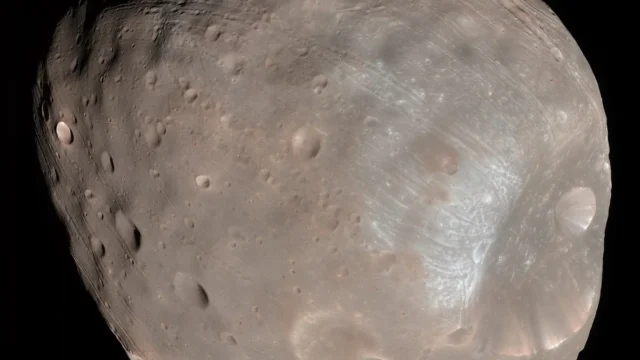
Japan’s MMX mission lifts off for Mars to bring back a sample of Phobos by 2031
The Japan Aerospace Exploration Agency (JAXA) launched its Martian Moons eXploration (MMX) mission on an H3 rocket from the Tanegashima Space Center at about 1:11 am IST on 20 October 2026. It aims to collect at least 10 grams of material from Phobos, the larger moon of Mars, and return it to Earth in 2031. If it succeeds, Japan will be the first country to bring back samples from a Martian moon.
21 Oct 2026
Open-weight AI models: why Big Tech gives them away and what it means for India
In October 2026 alone, Reflection AI, Meta, NVIDIA and Mistral released or announced open-weight AI models. The Hindu explained on 20 October why firms spend heavily and then let anyone download the weights: to win developers, set standards and earn from cloud, chips and services. For India, open weights offer a base to build Indian-language AI, but they also bring safety risks.
21 Oct 2026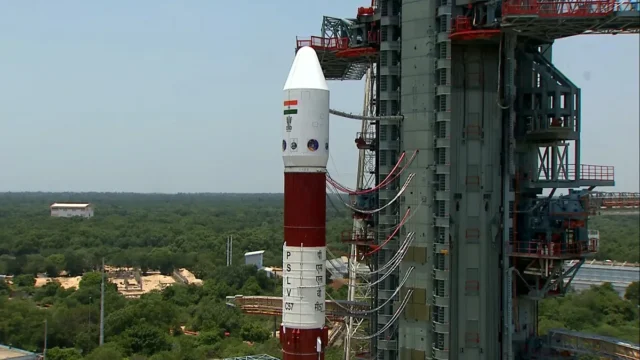
Aditya-L1’s VELC produces Doppler velocity images of the solar corona
Scientists at the Indian Institute of Astrophysics (IIA), Bengaluru, have produced Doppler velocity images of the solar corona using the Visible Emission Line Coronagraph (VELC) on Aditya-L1. The images show whether coronal plasma is moving towards or away from us, and can help track whether a coronal mass ejection (CME) is heading for Earth. The method has been published in the Astrophysical Journal.
20 Oct 2026