
UPSC Prelims 2024 · GS Paper I: According to the Environmental Protection Agency (EPA), which one of the following is the…
According to the Environmental Protection Agency (EPA), which one of the following is the largest source of sulphur dioxide emissions ?
Answer (d) & explanation
Fossil-fuel power plants are the largest source of sulphur dioxide (d). Sulphur dioxide (SO₂) comes mainly from burning sulphur-rich coal and oil. The US EPA names power plants and other industrial facilities that burn fossil fuels as the largest source. Option (a) is wrong: locomotives add only a small share. Option (b) is wrong: ships burning heavy fuel oil add some, but less. Option (c) is wrong: metal smelting from ores is a smaller source.
Notice the effects: SO₂ causes acid rain and breathing problems, and forms fine sulphate particles. India told coal plants to fit flue-gas desulphurisation (FGD) units, but deadlines have been pushed back many times, and in 2025 most plants were exempted. India is a top SO₂ emitter.
Answer as per the official UPSC answer key.
Same theme in UPSC Mains
- MAINS UPSC Mains 2025 · GS Paper I · Q19Achieving sustainable growth with emphasis on environmental protection could come into conflict with poor people’s needs in a country like India - Comment.
- MAINS UPSC Mains 2025 · GS Paper II · Q15What are environmental pressure groups? Discuss their role in raising awareness, influencing policies and advocating for environmental protection in India.
- MAINS UPSC Mains 2024 · GS Paper III · Q8What role do environmental NGOs and activists play in influencing Environmental Impact Assessment (EIA) outcomes for major projects in India? Cite four examples with all important…
Related questions from other years
Which of the following statements in relation to NIRANTAR (National Institute for Research and Application of Natural Resources to Transform, Adapt and Build Resilience), a platform of institutions under the Ministry of Environment, Forest and Climate Change, is/are correct ?
- 1. Ecosystem Survey and Analysis is a vertical under this platform, the lead institute of which is Botanical Survey of India, Kolkata.
- 2. Research and Management of Ecosystem Service is a vertical under this platform, the lead institute of which is Central Zoo Authority, New Delhi.
- 3. Capacity Development Support is a vertical under this platform, the lead institute of which is Indian Institute of Forest Management, Bhopal.
Select the answer using the code given below :
Answer (b) & explanation
Statements 1 and 3 are correct (b). NIRANTAR groups the Environment Ministry's institutes into verticals. Statement 1 is right: Ecosystem Survey and Analysis is led by the Botanical Survey of India, Kolkata, with bodies like the FSI and ZSI. Statement 3 is right: Capacity Development Support is led by the Indian Institute of Forest Management, Bhopal. Statement 2 is wrong: Research and Management of Ecosystem Service is led by ICFRE, Dehradun; the Central Zoo Authority is only a member. So options (a), (c) and (d) fail.
Notice the purpose: pooling institutes avoids duplicate work and links research to climate adaptation and resilience. Other Ministry bodies include the Wildlife Institute of India (Dehradun) and GBPNIHE for the Himalaya.
the Central Zoo Authority does sit in that vertical, but as a member, not the lead.
Answer as per the official UPSC answer key.
Consider the following statements with reference to India’s response to climate change :
- I. India’s Long-Term Low Emission Development Strategy (LT-LEDS) is a crucial tool for achieving net-zero emissions by 2070.
- II. India’s 4th Biennial Update Report (BUR-4) submitted in December, 2024 recorded around 8% decrease in Greenhouse gas emissions in 2020 over 2019.
- III. Climate-resilient development necessarily depends on quick and short-term achievement of emission reduction targets.
Which of the following relationships among the above statements is/are correct ?
- 1. Statement I is empirically supported by statement II.
- 2. Statement III contradicts the approach implicit in statement I.
- 3. Statement I and statement III together establish the premise of long-term sustainability.
Select the answer using the code given below :
Answer (b) & explanation
Relationships 1 and 2 are correct (b). Relationship 1 is right: the LT-LEDS (2022) lays out India's path to net zero by 2070, and BUR-4 reported a fall of about 7.9% in 2020 emissions over 2019, real data in line with that path. Relationship 2 is right: Statement III wants quick, short-term cuts, while the LT-LEDS is a long, gradual plan, so III contradicts I. Relationship 3 is wrong: two contradicting statements cannot together set a premise. So options (a), (c) and (d) fail.
Notice the cause of the 2020 fall: the COVID-19 lockdowns, not a lasting trend. India's updated NDC (2022) targets cutting emissions intensity of GDP by 45% from 2005 levels by 2030. Biennial Transparency Reports now replace BURs.
"together establish" sounds positive, but two statements that clash cannot form one premise.
Answer as per the official UPSC answer key.
With respect to the Western Hoolock Gibbons, which of the following statements is/are correct ?
- 1. A Sanctuary in North-east India is home to this ape species listed as Endangered in the International Union for Conservation of Nature (IUCN) Red List.
- 2. They have specialized brachiation and can easily swing between trees.
- 3. They possess a strong and heavy build like gorillas, yet are remarkably agile tree climbers.
Select the answer using the code given below :
Answer (b) & explanation
Statements 1 and 2 are correct (b). Statement 1 is right: India's only ape, the western hoolock gibbon, is Endangered on the IUCN Red List and gives its name to the Hollongapar Gibbon Sanctuary in Assam. Statement 2 is right: gibbons move by brachiation, swinging arm over arm through the canopy. Statement 3 is wrong: they are "lesser apes", slim and light, about 6–9 kg, nothing like a heavy gorilla. So options (a), (c) and (d) fail.
Notice their habits: they live in pairs with their young and sing loud duets at dawn. They are found south of the Brahmaputra in the North-East. Rail lines cutting through Hollongapar have raised concern, and canopy bridges were proposed to help them cross.
Answer as per the official UPSC answer key.
Which of the following best explain(s) the rationale for protecting mangrove ecosystems in the context of climate resilience ?
- 1. Mangroves reduce tidal energy and store freshwater, making them ideal sites for paddy cultivation in saline estuarine belts.
- 2. Their salt-sensitive roots filter seawater, making mangroves key to converting coastal land into freshwater aquaculture zones.
- 3. By withstanding tidal surges and offering biomass resources, mangroves function both as natural bio-shields and livelihood bases for rural communities.
Select the answer using the code given below :
Answer (d) & explanation
Only statement 3 explains the rationale (d). Statement 3 is right: by withstanding tidal surges and cyclones, mangroves act as natural bio-shields, and they offer biomass, such as fish, crabs, honey and fuel, for coastal villages. Statement 1 is wrong: mangroves do not store fresh water for paddy. Statement 2 is wrong: they are salt-tolerant, not salt-sensitive. Clearing them for farms or aquaculture ponds is exactly what harms them. So options (a), (b) and (c) fail.
Notice the proof: mangroves cut deaths in the 1999 Odisha super-cyclone and the 2004 tsunami. They also store much blue carbon. India's largest mangrove forest is the Sundarbans; the MISHTI scheme (2023) aims to plant more along the coast.
statement 2 says "salt-sensitive". Mangroves live in salt water because they tolerate it.
Answer as per the official UPSC answer key.
In the news since
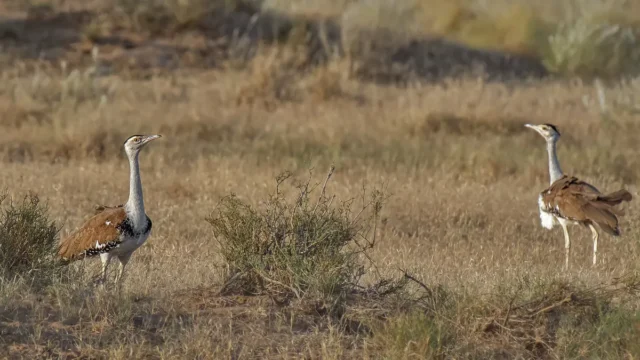
National Red List of birds: 1,211 species under assessment, 107 done in first review
India has begun a national Red List assessment of its 1,211 regularly occurring bird species using the IUCN framework. By 19 October 2026, a preliminary review of 107 species was complete, with the Great Indian Bustard proposed as Critically Endangered and the Indian Roller as Vulnerable. A final assessment is expected towards the end of 2027.
20 Oct 2026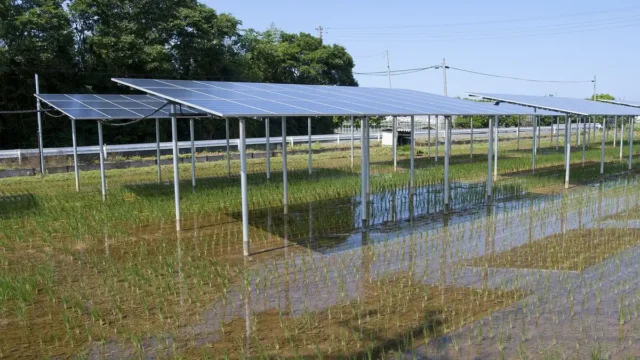
Agrivoltaics: Centre plans a scheme to push solar panels above farms; 5 GW seen in 3–4 years
MNRE Secretary Santosh Kumar Sarangi said on 19 October 2026 that the Centre is planning a central sector scheme to help States adopt agrivoltaics, either standalone or within PM-KUSUM 2.0. He expects capacity to cross 5 GW in three to four years if States notify feed-in tariffs. India hosts the 7th Agrivoltaics World Conference in New Delhi from 21 to 23 October.
20 Oct 2026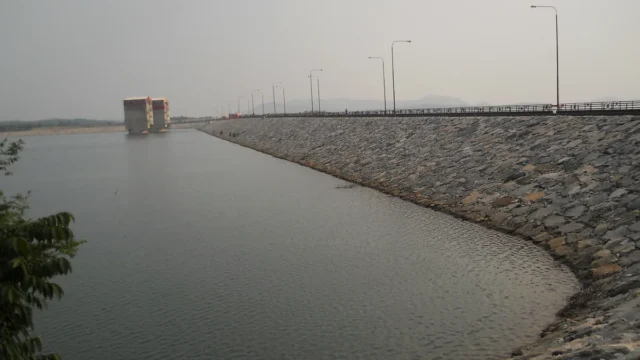
Pumped storage hydropower: India’s roadmap for 100 GW of ‘water batteries’ by 2035-36
A PIB backgrounder of 19 October 2026 explains how pumped storage projects (PSPs) will store solar and wind power for India’s grid. India runs 7.43 GW of pumped storage today, is building 15.87 GW more and has an assessed potential of 345.38 GW. A roadmap aims to add about 100 GW between 2025-26 and 2035-36.
19 Oct 2026