
Revolt of 1857: Causes, Centres and Leaders, Why It Failed, Nature and Consequences (UPSC Notes + PYQs)
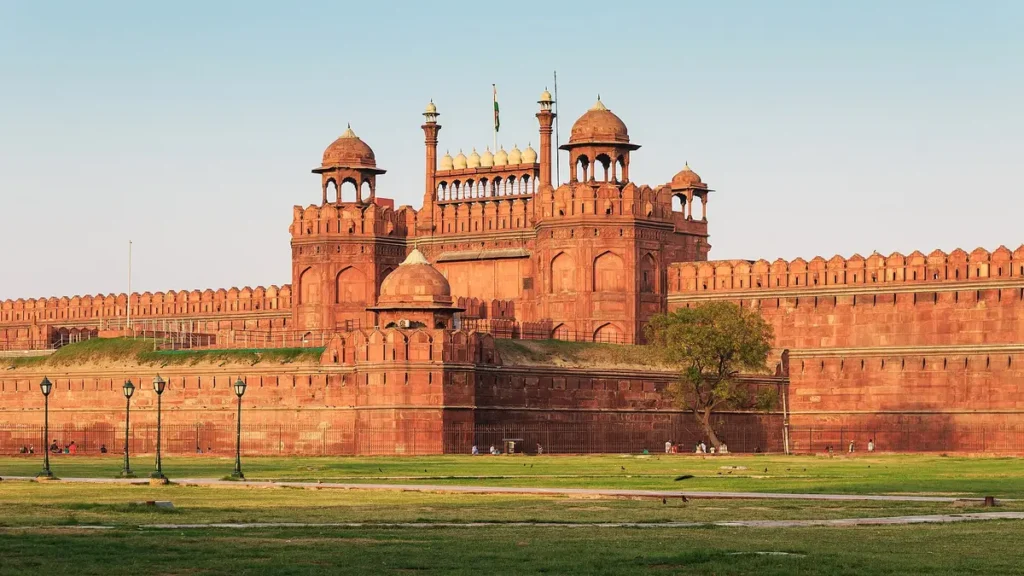
Background: a century of Company rule
By 1857 the East India Company had ruled parts of India for a hundred years, counting from Plassey in 1757. In that century it had moved from trader to sovereign. It annexed territory by war, by subsidiary alliance and, under Lord Dalhousie, by the Doctrine of Lapse, which took Satara, Jhansi, Nagpur and Sambalpur when rulers died without a natural heir. Awadh was annexed in 1856 on the ground of misgovernment, even though its Nawab had been a loyal ally. Land revenue settlements had pushed many old landholding families and peasants into debt and lost them their land. Indian sepoys, many of them from Awadh, watched their own families suffer under the new revenue system while their pay and status in the army fell. The revolt that broke out at Meerut on 10 May 1857 drew on all these grievances at once, which is why it spread so fast across north and central India.
Causes
- Political: annexations under the Doctrine of Lapse (Satara, Jhansi, Nagpur) and the annexation of Awadh (1856) on grounds of misrule.
- Economic: heavy land revenue, ruin of artisans, loss of taluqdars’ estates in Awadh.
- Military: low pay, foreign service under the General Service Enlistment Act (1856), loss of batta.
- Social and religious: fear of conversion, reforms seen as interference.
- Immediate: the Enfield rifle cartridges said to be greased with cow and pig fat; Mangal Pandey’s attack at Barrackpore (29 March 1857).
- 1Annexations and Doctrine of Lapse
- 2Revenue burden and loss of land
- 3Greased cartridges at Meerut (10 May 1857)
- 4Revolt spreads to Delhi, Kanpur, Lucknow, Jhansi
- 5Government of India Act, 1858
Centres, leaders and British commanders
| Centre | Indian leader | British commander |
|---|---|---|
| Delhi | Bahadur Shah Zafar, Bakht Khan | John Nicholson, Hodson |
| Lucknow | Begum Hazrat Mahal | Henry Havelock, James Outram, Colin Campbell |
| Kanpur | Nana Saheb, Tantia Tope | Colin Campbell |
| Jhansi | Rani Lakshmibai | Hugh Rose |
| Bareilly | Khan Bahadur Khan | Colin Campbell |
| Bihar (Jagdishpur) | Kunwar Singh | William Taylor, Vincent Eyre |
| Faizabad | Maulvi Ahmadullah | – |
Why it failed
Limited spread (south, Bengal and Punjab largely quiet), no unified leadership or programme, many rulers and the educated middle class stayed loyal, the British had better arms, telegraph and finance, and the Sikh and Gurkha regiments fought for the Company.
- Began among sepoys
- South, Bengal and Punjab largely quiet
- Many leaders had personal grievances
- Educated classes stayed away
- Peasants and artisans joined
- Hindu-Muslim unity under Bahadur Shah
- Mass support in Awadh
- Remembered as a war of independence
What kind of revolt was it?
British officials called it a “Sepoy Mutiny”. V.D. Savarkar called it the “First War of Independence” (1909). R.C. Majumdar argued it was neither first, nor national, nor a war of independence. S.N. Sen saw a mutiny that became a revolt. Most historians now see a popular uprising with strong regional roots.
How the revolt unfolded
Sepoys at Meerut, angered by the punishment of 85 comrades who refused the new cartridges, freed them, killed British officers and marched to Delhi. There they proclaimed the aged Bahadur Shah Zafar as Emperor of Hindustan, giving the rising a symbol that Hindus and Muslims alike could accept. Within weeks the revolt spread to Kanpur, Lucknow, Bareilly, Jhansi, Arrah and many smaller stations. Civil rebellion followed in the countryside: peasants attacked moneylenders and auction-purchasers of land, and burnt revenue records. The British recaptured Delhi in September 1857 after a long siege, and Lucknow, Kanpur and central India in 1858. Tantia Tope kept up a guerrilla campaign until his capture and execution in April 1859.
| Phase | Period | Key events |
|---|---|---|
| Outbreak | May-June 1857 | Meerut rising; Delhi taken; spread to Kanpur, Lucknow, Bareilly |
| Height | June-September 1857 | Siege of Delhi; Siege of Lucknow Residency; Kanpur massacre |
| Recovery | September 1857-March 1858 | Delhi recaptured; Campbell relieves Lucknow; Lucknow retaken |
| Last resistance | 1858-1859 | Rani Lakshmibai dies near Gwalior (June 1858); Tantia Tope captured (1859) |
Consequences
Crown rule (1858 Act, Queen’s Proclamation); Secretary of State for India; end of the policy of annexation; army reorganised with more European troops and “divide and rule” recruitment; Indian Councils Act, 1861.
Grievances by group
| Group | Main grievance |
|---|---|
| Sepoys | Low pay compared with British soldiers, loss of foreign service allowance, General Service Enlistment Act 1856, greased cartridges |
| Princes and chiefs | Doctrine of Lapse, annexation of Awadh, pensions stopped (Nana Saheb) |
| Taluqdars and zamindars | Summary settlement in Awadh took away estates |
| Peasants | High revenue demand, debt, sale of land to moneylenders |
| Artisans | Collapse of handicrafts under British manufactures and loss of court patronage |
| Religious leaders | Fear of missionary activity and laws such as the Widow Remarriage Act, 1856 |
Historians on the nature of the revolt
The debate over what to call 1857 is a favourite of the Mains paper. British officials like Sir John Seeley called it a purely sepoy mutiny. V.D. Savarkar, in 1909, called it the First War of Independence, a planned national rising. R.C. Majumdar argued it was neither the first, nor national, nor a war of independence, since large parts of India stayed quiet and many leaders fought for personal grievances. S.N. Sen, in the official centenary history, took a middle view: it began as a mutiny but acquired a political character as civilians joined in. Later historians such as Eric Stokes and Rudrangshu Mukherjee stressed peasant and local dimensions, especially in Awadh, where the rising had wide popular support. A balanced answer says the revolt was more than a mutiny and less than a national war, but it was the first large challenge to British rule that united different classes and communities.
Changes after 1858
The Government of India Act, 1858 ended Company rule. Power passed to the Crown, exercised through a Secretary of State for India with a Council of India in London; the Governor-General became also the Viceroy. Queen Victoria’s Proclamation of 1 November 1858 promised to respect the rights and dignity of princes, gave up further annexation, and promised religious toleration and equal access to office. The army was reorganised: the proportion of European troops was raised, artillery was kept in British hands, and recruitment shifted to the so-called martial races of Punjab, Nepal and the north-west, while Awadh and Bihar were drawn on less. Policy turned cautious on social reform and became openly reliant on landlords and princes as loyal allies. The deeper shift was racial distance between rulers and ruled, which later fed the nationalist movement.
Writing a Mains answer on 1857
Start with a one-line definition and the date of the Meerut outbreak. Then cover causes under four heads: political, economic, socio-religious and military, with one example each. Add a short paragraph on spread and leaders, then reasons for failure: limited geographical spread, lack of unity and plan, poor arms, loyalty of most princes and the educated middle class, and British control of the telegraph and sea routes. Close with the debate on its nature and its legacy: the end of Company rule and a tradition of resistance that later nationalists drew on. A neat flow chart of causes leading to the outbreak and then to the 1858 Act earns presentation marks.
1857 in Prelims: common traps
Match leaders with centres carefully: Nana Saheb and Tantia Tope at Kanpur, Begum Hazrat Mahal at Lucknow, Kunwar Singh at Arrah in Bihar, Khan Bahadur Khan at Bareilly, Maulvi Ahmadullah at Faizabad and Rani Lakshmibai at Jhansi. On the British side, Nicholson and Hodson are tied to Delhi, Havelock, Outram and Campbell to Lucknow, and Hugh Rose to Jhansi and Gwalior. Another trap is the Enfield rifle: its cartridges, said to be greased with cow and pig fat, were the immediate trigger, not the deeper cause.
Revolt Of 1857: UPSC angle
For UPSC CSE
Prelims: leader-centre matching, British commanders, immediate causes. Mains GS-I: nature of the revolt; changes in British policy after 1858.
Revolt Of 1857 UPSC PYQs (Prelims)
Questions UPSC has actually asked, from the official papers. Pick an option to check yourself.
No Prelims question in the Battle IAS bank is directly on this topic yet.
Mains PYQs on this topic
No UPSC Mains question from 2023-2026 is directly on this topic. Older papers (2013-2022) will be added as the Mains bank grows.
Quick quiz
The revolt of 1857 began at
On 10 May 1857.Answer (b)
Who led the revolt at Lucknow?
On behalf of her son Birjis Qadr.Answer (b)
Who called 1857 the “First War of Independence”?
In his 1909 book.Answer (b)
FAQs
What was the immediate cause of the revolt of 1857?
The greased cartridges of the Enfield rifle.
Who was the Governor-General during the revolt?
Lord Canning.
What happened to Bahadur Shah Zafar?
He was tried and exiled to Rangoon, where he died in 1862.
What changed after 1857?
The Crown took over from the Company under the Government of India Act, 1858.
Who was the Governor-General during the revolt?
Lord Canning. After the Government of India Act, 1858 he also became the first Viceroy of India.
Why did the south and Punjab remain largely quiet?
Punjab had only recently been annexed and its Sikh chiefs and soldiers sided with the British, while the Madras and Bombay armies had different recruitment and grievances. Many princes, such as those of Hyderabad and Gwalior, also stayed loyal.
What happened to Bahadur Shah Zafar?
He was captured after Delhi fell, tried by a military commission in 1858 and exiled to Rangoon, where he died in 1862.
Spotted an error? Tell us. We correct within 48 hours.
Image: A.Savin, Wikimedia Commons, FAL
How to use this in Mains
If asked: Was the Revolt of 1857 a sepoy mutiny or a war of independence? Discuss. (GS-I)
Quote: “British officials called it a “Sepoy Mutiny”.”
Use it: Use as the British view, then counter it.
In the news
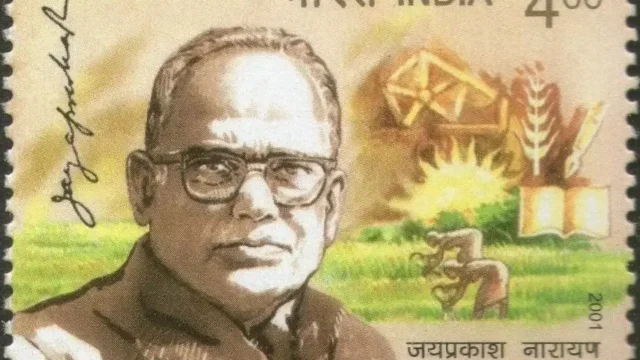
Birth anniversaries: Jayaprakash Narayan and Nanaji Deshmukh
11 October is the birth anniversary of Loknayak Jayaprakash Narayan and Nanaji Deshmukh, both Bharat Ratna awardees. The Prime Minister recalled JP's voice during the Emergency and his concern for good governance, and Nanaji's work in rural development and community participation. Treat this as a personality note for Prelims.
11 Oct 2026
ASI and Denmark museum to search for 1619 Danish shipwreck Oresund off Karaikal
The Archaeological Survey of India's Underwater Archaeology Wing and the National Museum of Denmark (Njord Centre, Copenhagen) signed an MoU to locate and document the Danish ship Oresund, wrecked off Karaikal, Puducherry, in 1619 CE. It is described as the first Danish ship known to have reached India.
15 Jun 2026
Veer Bal Diwas and the Rashtriya Bal Puraskar
The PM announced the day on 9 January 2022 and the first Veer Bal Diwas was held on 26 December 2022 [PMO].
26 Dec 2025
Stamp on Emperor Perumbidugu Mutharaiyar II
Questions on lesser-known regional dynasties are common in Prelims. Stamps and anniversaries often bring them into the news.
14 Dec 2025