
UPSC Mains 2024 GS2 Q19: model answer
‘Terrorism has become a significant threat to global peace and security.’ Evaluate the effectiveness of the United Nations Security Council’s Counter Terrorism Committee (CTC) and its associated bodies in addressing and mitigating this threat at the international level.
What the question wants
Explain the CTC and related bodies, their achievements and failures.
How to structure it
Intro: After the 9/11 attacks. Body: (1) Associated bodies; (2) Effectiveness: achievements; (3) Shortcomings; (4) Reforms. Conclusion: The CTC has built a global legal framework, but politics among great powers limits its bite.
- 1(1) Associated bodies
- 2(2) Effectiveness: achievements
- 3(3) Shortcomings
- 4(4) Reforms
Model answer
After the 9/11 attacks, the Security Council adopted Resolution 1373 (2001), binding on all States, and set up the Counter-Terrorism Committee (CTC) to monitor its implementation.
Associated bodies
- Counter-Terrorism Committee Executive Directorate (CTED, 2004) for country assessments.
- 1267 Sanctions Committee (ISIL/Al-Qaida) for listing terrorists and entities: asset freeze, travel ban, arms embargo.
- 1540 Committee on preventing non-State actors getting weapons of mass destruction.
- UN Office of Counter-Terrorism (2017) and the Global Counter-Terrorism Strategy (2006) of the General Assembly.
Effectiveness: achievements
- Most countries criminalised terror financing and improved border controls.
- CTED assessments helped build capacity in weaker States.
- Sanctions lists made funding harder for groups like Al-Qaida and ISIL; with FATF, financial flows are tracked.
- India chaired the CTC in 2022 and hosted a special meeting in Mumbai and Delhi; the Delhi Declaration addressed drones, social media and new payment technologies.
Shortcomings
- No agreed definition of terrorism; the Comprehensive Convention on International Terrorism, proposed by India in 1996, is still pending.
- Political vetoes: China repeatedly placed 'technical holds' on listing Pakistan-based terrorists, such as Masood Azhar (until 2019) and Sajid Mir (2023).
- Implementation depends on States; some sponsor terror groups.
- Focus on Al-Qaida and ISIL; new threats like online radicalisation and far-right terrorism less covered.
- Consensus decision-making makes the committees slow.
Reforms
- Adopt the CCIT; end anonymous holds in sanctions committees.
- Stronger links with FATF and Interpol; focus on emerging technologies.
The CTC has built a global legal framework, but politics among great powers limits its bite. Terrorism will be checked only when States treat all terrorists alike.
Keywords, cases and data to drop in
Resolution 1373 CTED 1267 Committee technical holds CCIT Delhi Declaration 2022
Where most answers lose marks
- Describing the CTC without evaluating.
Same theme in Prelims
Consider the following statements with respect to the AI Impact Summit, 2026 held in New Delhi :
- 1. The Summit’s intellectual framework was based on three foundational Sutras : People, Planning, and Progress.
- 2. The Preamble of the Summit stresses Democratising AI Resources, which acknowledges the Charter for Democratic Diffusion of AI as a binding framework to support locally relevant innovation and strengthen resilient AI ecosystems while respecting national laws.
- 3. The New Delhi Declaration on AI Impact was structured around seven Chakras (Pillars), which included Access for Social Empowerment, AI for Science, and Secure and Trusted AI.
Which of the statements given above is/are correct ?
Answer (d) & explanation
Only statement 3 is correct (d). Statement 3 is right: the New Delhi Declaration on AI Impact was built around seven chakras (pillars), including access for social empowerment, AI for science and secure and trusted AI. Statement 1 is wrong: the three sutras were People, Planet and Progress, not "Planning". Statement 2 is wrong: the Charter for Democratic Diffusion of AI is voluntary, not binding. So options (a), (b) and (c) fail.
Notice the event: the AI Impact Summit was held at Bharat Mandapam, New Delhi, in February 2026, the first global AI summit in the Global South. It followed the summits at Bletchley Park (2023), Seoul (2024) and Paris (2025). At home, the IndiaAI Mission (2024) funds shared GPU computing.
Statement 1 changes one word, Planet to Planning. Statement 2 changes voluntary to binding.
Answer as per the official UPSC answer key.
Which of the following connectivity projects is/are a part of cooperation between India and the ASEAN member countries ?
- 1. Kaladan Multi-Modal Transit Transport Project
- 2. IMT Trilateral Highway
- 3. Agartala-Akhaura Rail Line
Select the answer using the code given below :
Answer (a) & explanation
Projects 1 and 2 involve ASEAN members (a). Item 1 is right: the Kaladan Multi-Modal project links Kolkata to Sittwe port and on to Mizoram through Myanmar. Item 2 is right: the India–Myanmar–Thailand Trilateral Highway runs from Moreh in Manipur to Mae Sot in Thailand. Myanmar and Thailand are both ASEAN members. Item 3 is wrong: the Agartala–Akhaura rail line links Tripura with Bangladesh, which is not in ASEAN. So options (b), (c) and (d) fail.
Notice the policy: these projects are the backbone of India's Act East Policy (2014), which upgraded the Look East Policy (1991). ASEAN has 11 members since Timor-Leste joined in 2025. Bangladesh links fall under BBIN and BIMSTEC instead.
Answer as per the official UPSC answer key.
Match List I with List II and select the answer using the code given below the Lists :
| List I (Project Supported by India) | List II (Country)
| A. Mangdechhu Hydroelectric Project | 1. Maldives
| B. Restoration of Stor Palace | 2. Afghanistan
| C. District Hospital at Dickoya | 3. Bhutan
| D. Institute of Security and Law Enforcement Studies | 4. Sri Lanka
Code :
Answer (b) & explanation
The correct match is A-3, B-2, C-4, D-1 (b). Mangdechhu (720 MW) is an India-built hydro project in Bhutan (A-3). India restored the Stor Palace in Kabul, Afghanistan (B-2), opened in 2016. The Dickoya hospital is in the hill country of Sri Lanka (C-4), serving the Indian-origin Tamil community. The Institute of Security and Law Enforcement Studies was built for the Maldives police (D-1). Options (a), (c) and (d) mix these up.
Notice the pattern: India's Neighbourhood First policy relies on such development partnership projects. In Afghanistan, India also built the Parliament building and the Salma Dam (Afghan–India Friendship Dam). Bhutan's hydropower, including Chukha and Tala, sells surplus power to India.
Answer as per the official UPSC answer key.
Fresh examples from current affairs
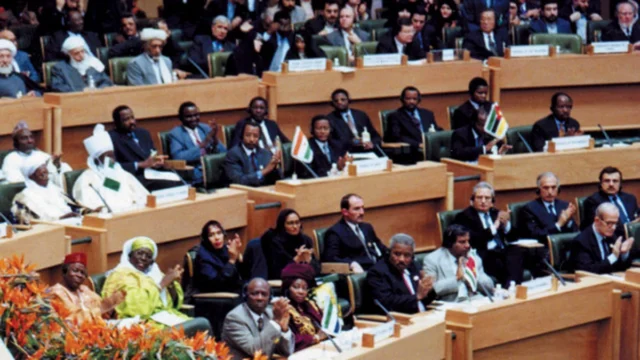
India rejects OIC’s Baghdad resolutions on Jammu and Kashmir as ‘malicious, biased and false’
On 19 October 2026 the Ministry of External Affairs rejected references to India in resolutions adopted at the Organisation of Islamic Cooperation (OIC) Council of Foreign Ministers in Baghdad on 17–18 October. It called them ‘malicious, biased and false’, said Pakistan orchestrated them, and said the OIC has no locus standi on India’s internal matters.
UPSC angle: Prelims: OIC facts, J&K Reorganisation Act, UN Charter Article 2(7). · Mains GS-II: India, OIC and Pakistan.
19 Oct 2026
India to host 61st CIML meeting on legal metrology in New Delhi, 26–28 October
India will host the 61st meeting of the International Committee of Legal Metrology (CIML) for the first time, in New Delhi from 26 to 28 October 2026. The Department of Consumer Affairs is organising it with the International Organization of Legal Metrology (OIML), and more than 100 delegates are expected, PIB said on 19 October.
UPSC angle: Prelims: OIML, CIML, Legal Metrology Act 2009, Union List Entry 50. · Mains GS-III: standards and trade.
19 Oct 2026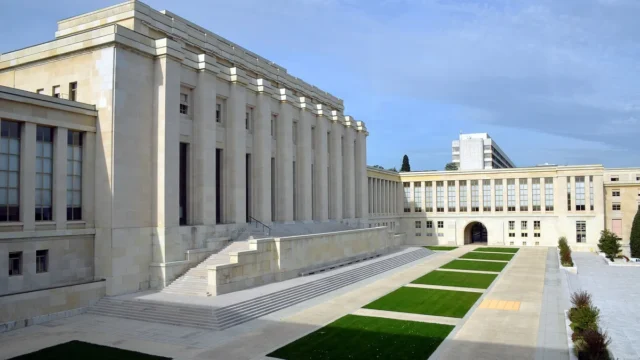
India rejects OHCHR remarks on Delhi events
On 11 October 2026 India rejected remarks by the UN Office of the High Commissioner for Human Rights on events in New Delhi the day before. MEA said peaceful assembly is a constitutional right exercised subject to public order, courts are open to all, and the remarks were interference in internal affairs.
UPSC angle: Prelims: Article 19(1)(b) and 19(3). · Mains GS-II: fundamental rights; India and international human-rights bodies.
11 Oct 2026
India at UN High-Level Meeting on pandemic preparedness: equity and pathogen access-benefit sharing
At the UN High-Level Meeting on Pandemic Prevention, Preparedness and Response in New York on 25 September 2026, India's Health Secretary said the WHO Pandemic Agreement will be credible only with a fair Pathogen Access and Benefit Sharing (PABS) system. India also asked that digital public infrastructure be treated as a global public good.
UPSC angle: Mains: Is the WHO Pandemic Agreement equitable for developing countries?
26 Sep 2026Learn the concept
Question text as printed in the official UPSC question paper: https://www.upsc.gov.in/sites/default/files/QP_CSM_2024_GenStud_II_03102024.pdf The model answer is original Battle IAS work; use it to learn structure, not to memorise.