
UPSC Mains 2024 GS4 Q12: model answer
Dr. Srinivasan is a senior scientist working for a reputed biotechnology company known for its cutting-edge research in pharmaceuticals. Dr. Srinivasan is heading a research team working on a new drug aimed at treating a rapidly spreading variant of a new viral infectious disease. The disease has been rapidly spreading across the world and the cases reported in the country are increasing. There is huge pressure on Dr. Srinivasan’s team to expedite the trials for the drug as there is significant market for it, and the company wants to get the first-mover advantage in the market. During a team meeting, some senior team members suggest some shortcut for expediting the clinical trials for the drug and for getting the requisite approvals. These include manipulating data to exclude some negative outcomes and selectively reporting positive results, foregoing the process of informed consent and using compounds already patented by a rival company, rather than developing one’s own component. Dr. Srinivasan is not comfortable taking such shortcuts, at the same time he realises meeting the targets is impossible without using these means.
(a) What would you do in such a situation?
(b) Examine your options and consequences in the light of the ethical questions involved.
(c) How can data ethics and drug ethics save humanity at large in such a scenario?
What the question wants
A scientist under pressure to fake data, skip consent and use patented compounds.
How to structure it
Intro: urgency of a pandemic vs research integrity. Body: (a) what to do: refuse shortcuts, seek fast-track lawful routes; (b) options and consequences: accept shortcuts, resign, ethical acceleration; (c) how data and drug ethics protect humanity. Conclusion.
- 1(a) what to do: refuse shortcuts, seek fast-track lawful routes
- 2(b) options and consequences: accept shortcuts, resign, ethical acceleration
- 3(c) how data and drug ethics protect humanity
Model answer
A fast-spreading disease creates real urgency, but the suggested shortcuts (data manipulation, no informed consent, using a rival's patent) are illegal and dangerous.
(a) What I would do
- Firmly reject all three shortcuts and record my position in writing.
- Present management with lawful ways to speed up: adaptive trial designs, parallel phases, more trial sites, rolling submissions and emergency use pathways under the New Drugs and Clinical Trials Rules, 2019.
- Explore licensing the rival compound legally, or collaboration.
- If pressure continues, escalate to the ethics committee and board.
(b) Options and consequences
- Accept shortcuts: faster launch, but patients may be harmed by an unsafe drug; legal action, recall and loss of reputation will follow.
- Resign: keeps personal integrity but leaves the project to others who may cut corners.
- Ethical acceleration: may miss the first-mover target, but gives a safe drug and lasting trust. Best option.
Ethical questions: honesty, non-maleficence, respect for autonomy, and respect for others' intellectual property.
(c) How data and drug ethics save humanity
- Honest data reveals side effects early; the thalidomide tragedy shows the cost of ignoring them.
- Informed consent (Nuremberg Code, Helsinki Declaration, ICMR guidelines) protects human dignity.
- Open sharing of trial results speeds global response, as with COVID-19 vaccines.
- Public trust in medicine, essential during pandemics, rests on integrity.
In a crisis, speed matters, but a drug built on false data only spreads another disease: distrust.
Keywords, cases and data to drop in
informed consent data integrity NDCT Rules 2019 Helsinki Declaration non-maleficence
Where most answers lose marks
- Accepting shortcuts because of urgency.
- Ignoring the patent issue.
Fresh examples from current affairs

NMC withdraws MSMER-2023: medical colleges lose the fixed penalty rulebook, annual disclosure stays
The National Medical Commission (NMC) has de-notified the Maintenance of Standards of Medical Education Regulations, 2023 (MSMER-2023) by a notification dated 14 October 2026, published in the Gazette on 16 October. Its fixed penalties, including seat cuts and fines of up to ₹5 lakh for false records, go with it. The Annual Disclosure Report stays.
UPSC angle: Prelims: NMC Act 2019, autonomous boards, Concurrent List Entry 25. · Mains GS-II: regulation of medical education.
19 Oct 2026
NPPA caps trade margins on 137 anti-cancer drugs: prices to fall up to 70% from 9 November
On 17 October 2026 the National Pharmaceutical Pricing Authority (NPPA) capped trade margins on 137 non-scheduled anti-cancer drugs at 30%, using its special public-interest power under Paragraph 19 of the Drugs (Prices Control) Order, 2013. The Government expects the retail price of these medicines to fall by up to 70%, and the new prices apply from 9 November 2026. The list includes costly immunotherapy drugs such as pembrolizumab and durvalumab.
UPSC angle: Prelims: NPPA, DPCO 2013 Para 19, trade margin, scheduled vs non-scheduled drugs. · Mains GS-II: affordable medicines and health equity.
18 Oct 2026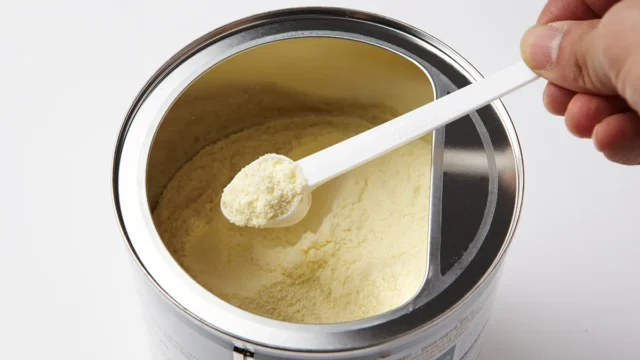
FSSAI draft: no added sucrose or fructose in foods for infants up to six months
On 17 October 2026 FSSAI explained a draft rule that would stop companies from adding sucrose (table sugar) or fructose (fruit sugar) to any product meant for babies up to six months old. The draft amends the Foods for Infant Nutrition Regulations, 2020, was published in the Gazette on 16 October, and is open for public comments for 60 days. The idea is simple: in the first six months a baby needs the right nutrients, not an early taste for sugar.
UPSC angle: Prelims: FSSAI, FSS Act 2006, infant nutrition regulations, IMS Act 1992. · Mains GS-II: child nutrition, preventive health and food regulation.
17 Oct 2026
FSSAI proposes residue limits for acetamiprid and imidacloprid in tea
On 17 October 2026 FSSAI explained draft limits for two insecticides in tea: 20 ppm for acetamiprid and 50 ppm for imidacloprid. The draft, published in the Gazette on 16 October, amends the rules on contaminants, toxins and residues. India’s proposed acetamiprid limit is lower than Japan’s 30 ppm and the USA’s 50 ppm.
UPSC angle: Prelims: MRL, neonicotinoids, Insecticides Act 1968, FSS Act 2006. · Mains GS-III: pesticide regulation and food safety.
17 Oct 2026Learn the concept
Question text as printed in the official UPSC question paper: https://www.upsc.gov.in/sites/default/files/QP_CSM_2024_GenStud_IV_03102024.pdf The model answer is original Battle IAS work; use it to learn structure, not to memorise.