
UPSC Mains 2023 GS2 Q4: model answer
Compare and contrast the British and Indian approaches to Parliamentary sovereignty.
What the question wants
Similarities and differences between the British and Indian ideas of parliamentary sovereignty.
How to structure it
Intro: Dicey's idea of parliamentary sovereignty. Body: (1) Britain: unwritten constitution, no judicial review of Acts, unitary state, any law by simple majority; (2) India: written Constitution supreme, judicial review, federalism, Fundamental Rights, basic structure (Kesavananda 1973), special majority for amendments; (3) Similarities: Westminster model, cabinet responsibility, Parliament makes laws. Conclusion: India blends parliamentary sovereignty with judicial supremacy.
- 1(1) Britain: unwritten constitution, no judicial review of Acts, unitary state, any law by simple majority
- 2(2) India: written Constitution supreme, judicial review, federalism, Fundamental Rights, basic structure (Kesavananda 1973), special majority for amendments
- 3(3) Similarities: Westminster model, cabinet responsibility, Parliament makes laws
Model answer
Dicey described British parliamentary sovereignty as Parliament's right to make or unmake any law, with no body able to override it.
- No single written constitution
- Parliament supreme; no strike-down of Acts
- Unitary state
- Change by ordinary law
- Written Constitution supreme
- Judicial review (Arts. 13, 32, 226)
- Federal division of powers
- Basic structure limits amendments
British approach
- No single written constitution; Parliament is supreme.
- Courts cannot strike down an Act of Parliament (the Human Rights Act, 1998 only allows a 'declaration of incompatibility').
- Unitary state; devolution to Scotland or Wales can be reversed by Parliament.
- Constitutional change by ordinary law.
Indian approach
- The written Constitution is supreme; Parliament is its creation.
- Judicial review under Articles 13, 32 and 226.
- Federal division of powers (Seventh Schedule).
- Amendments need special majorities, sometimes State ratification (Art. 368).
- Basic structure doctrine (Kesavananda Bharati, 1973) limits even amendments.
Common ground: Westminster model, collective responsibility, Parliament as chief law-maker.
India chose a middle path between British parliamentary sovereignty and American judicial supremacy.
Keywords, cases and data to drop in
Dicey judicial review basic structure Art. 368 Kesavananda Bharati
Where most answers lose marks
- Only describing India.
- No similarities.
Fresh examples from current affairs
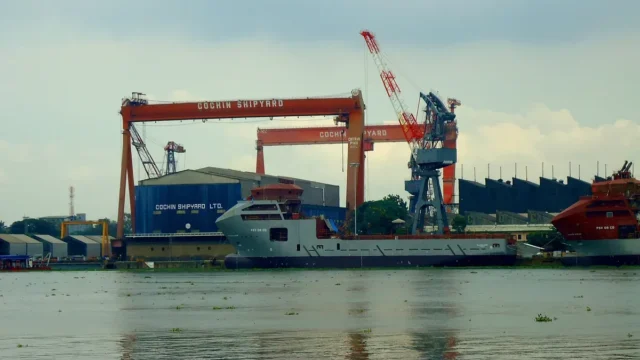
21st Maritime State Development Council: first MSDC under the Indian Ports Act, 2025
The 21st Maritime State Development Council met in Mumbai on 13 October 2026. It was the first MSDC after the Indian Ports Act, 2025 (notified 15 May 2026) made the Council a statutory body. Members adopted Vision 2030 and 2047 targets and set March 2027 deadlines for One Nation One Port Process and Maritime Single Window integration.
UPSC angle: Prelims: Ports Act 2025 date, MSDC, ONOP, Sagar Setu, SbPCP/BCSPS. · Mains GS-III: ports and shipbuilding; GS-II: cooperative federalism.
13 Oct 2026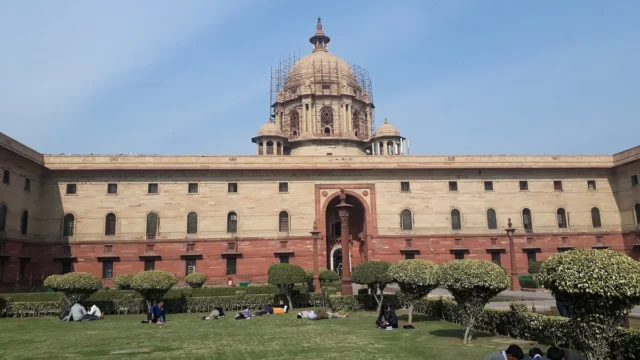
57th GST Council: arrest provisions to go, prosecution threshold raised to ₹5 crore
The 57th GST Council meeting on 8 October 2026 focused on process reform rather than rates. It recommended removing arrest powers under GST, raising the prosecution threshold from ₹1 crore to ₹5 crore, cutting the general penalty from ₹25,000 to ₹10,000, no notices below ₹10,000 tax, wider input tax credit and refunds, and limits on interception of goods in transit.
UPSC angle: Prelims: GST Council structure, Article 279A. · Mains GS-III: indirect tax reform; GS-II: fiscal federalism.
8 Oct 2026
Monsoon Session ends: 19 sittings, 12 Bills passed by both Houses
The Monsoon Session 2026 of Parliament began on 20 July and was adjourned sine die on 13 August 2026. It had 19 sittings over 25 days. Both Houses passed 12 Bills, including amendments on public examinations, national honour, birth and death registration, MSMEs, tribunals and minerals, and the Bill renaming Kerala as Keralam.
UPSC angle: Prelims: sine die vs prorogation.
13 Aug 2026
MEA Parliament replies (13 Aug 2026): IORA chair
India chairs the Indian Ocean Rim Association for 2025-2027 under the theme "Innovation, Openness, Resilience and Adaptability in the Indian Ocean Region", MEA told Rajya Sabha on 13 August 2026. India hosted the Indian Ocean Dialogue in May 2026, a senior officials' meeting in June and will host the Council of Ministers later this year.
UPSC angle: Prelims: IORA chair 2025-27 and theme. · Mains: India in the Indian Ocean.
13 Aug 2026Learn the concept
Question text as printed in the official UPSC question paper: https://www.upsc.gov.in/sites/default/files/QP-CSM-23-GENERAL-STUDIES-PAPER-II-180923.pdf The model answer is original Battle IAS work; use it to learn structure, not to memorise.