
UPSC Mains 2023 GS3 Q16: model answer
What is the main task of India’s third moon mission which could not be achieved in its earlier mission? List the countries that have achieved this task. Introduce the subsystems in the spacecraft launched and explain the role of the ‘Virtual Launch Control Centre’ at the Vikram Sarabhai Space Centre which contributed to the successful launch from Sriharikota.
What the question wants
Chandrayaan-3's soft landing goal, countries that soft-landed, spacecraft modules, and the VLCC.
How to structure it
Intro: Chandrayaan-3 launched 14 July 2023 on LVM3-M4; landed 23 August 2023 near the south pole. Body: (1) Main task: safe soft landing and rover mobility, which Chandrayaan-2's Vikram failed in 2019; (2) Countries: USSR, USA, China, India (first near south pole); (3) Subsystems: Propulsion Module (SHAPE payload), Lander Vikram (ChaSTE, ILSA, RAMBHA-LP, LRA), Rover Pragyan (APXS, LIBS); (4) VLCC at VSSC: remote monitoring and decision support during launch, real-time data. Conclusion: National Space Day on 23 August.
- 1(1) Main task: safe soft landing and rover mobility, which Chandrayaan-2's Vikram failed in 2019
- 2(2) Countries: USSR, USA, China, India (first near south pole)
- 3(3) Subsystems: Propulsion Module (SHAPE payload), Lander Vikram (ChaSTE, ILSA, RAMBHA-LP, LRA), Rover Pragyan (APXS, LIBS)
- 4(4) VLCC at VSSC: remote monitoring and decision support during launch, real-time data
Model answer
Chandrayaan-3 was launched on 14 July 2023 by LVM3-M4 from Satish Dhawan Space Centre, Sriharikota. Its lander touched down near the lunar south pole on 23 August 2023, now marked as National Space Day.
| Module | Role | Payloads |
|---|---|---|
| Propulsion Module | Carried lander to 100 km lunar orbit | SHAPE |
| Lander Vikram | Soft landing near south pole | ChaSTE, ILSA, RAMBHA-LP, LRA |
| Rover Pragyan | Moves and analyses soil | APXS, LIBS |
Main task
A safe soft landing on the Moon and roving on its surface. Chandrayaan-2's lander Vikram crashed in September 2019 during the final descent, though its orbiter still works.
Countries that have soft-landed on the Moon
- The former USSR (Luna 9, 1966).
- The United States (Surveyor 1, 1966; Apollo).
- China (Chang'e 3, 2013; Chang'e 4 on the far side, 2019).
- India (2023), the first near the south pole.
Spacecraft subsystems
- Propulsion Module: carried the lander to a 100 km lunar orbit; carries SHAPE, which studies Earth's spectra to help search for habitable exoplanets.
- Lander (Vikram): stronger legs, more sensors and a bigger landing zone than before. Payloads: ChaSTE (soil temperature), ILSA (moonquakes), RAMBHA-LP (plasma) and NASA's Laser Retroreflector Array.
- Rover (Pragyan): six-wheeled; APXS and LIBS analyse soil, and LIBS confirmed sulphur near the south pole.
Role of the Virtual Launch Control Centre
- Located at the Vikram Sarabhai Space Centre, Thiruvananthapuram, it gives launch vehicle experts real-time access to telemetry and data from the Sriharikota launch pad.
- Specialists who designed the vehicle can monitor systems and support decisions during countdown and flight without being at the launch site.
- This brought faster checks and wider expert input to a flawless launch.
The mission is a base for future missions like Chandrayaan-4.
Keywords, cases and data to drop in
soft landing Vikram lander Pragyan LVM3 VLCC 23 August
Where most answers lose marks
- Missing one of the four parts.
- Wrong list of countries.
Fresh examples from current affairs
Aditya-L1’s VELC produces Doppler velocity images of the solar corona
Scientists at the Indian Institute of Astrophysics (IIA), Bengaluru, have produced Doppler velocity images of the solar corona using the Visible Emission Line Coronagraph (VELC) on Aditya-L1. The images show whether coronal plasma is moving towards or away from us, and can help track whether a coronal mass ejection (CME) is heading for Earth. The method has been published in the Astrophysical Journal.
UPSC angle: Prelims: Aditya-L1, L1 point, VELC, CMEs, Doppler effect. · Mains GS-III: space science and protecting space assets.
20 Oct 2026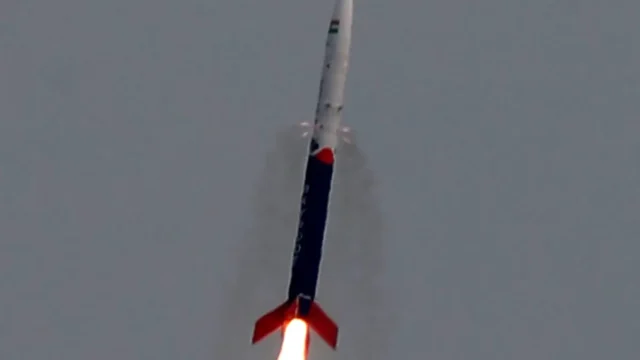
India’s space economy to grow from about $9 billion to $40-45 billion in 7-8 years
On 17 October 2026, Union Minister Dr Jitendra Singh said India’s space economy, worth about USD 9 billion today, should reach USD 40-45 billion in the next seven to eight years. He said the task now is to move from showing what India can do in space to building space companies that can compete and earn worldwide. For that, private firms need steady demand, quick approvals and patient capital. This is the story of space turning from a science mission into an industry.
UPSC angle: Prelims: IN-SPACe, NSIL, Space Policy 2023, FDI caps, Vikram-S. · Mains GS-III: private sector in space, strategic autonomy.
18 Oct 2026
Aditya-L1 achievements reported in Parliament
The Department of Space told Parliament on 23 July 2026 that Aditya-L1 studies solar wind, the corona, near-UV signatures and interplanetary magnetic fields from a halo orbit around Sun-Earth L1. Achievements include the first spectroscopic signatures of a CME's onset phase and detailed analysis of photospheric iron fluorescence across 47 X-class flares in 2024.
UPSC angle: Prelims: L1 point; payloads.
23 Jul 2026
Backgrounder: Vikram-1, India’s first privately developed orbital rocket
PIB profiles Vikram-1 by Skyroot as India's first privately developed orbital rocket (350 kg to LEO). Mission Aagaman's window is 12 July to 4 August 2026. Space Policy 2023 opened the value chain to private players; startups rose from one in 2014 to over 400 in 2026.
UPSC angle: Prelims: IN-SPACe; private rockets.
18 Jul 2026Learn the concept
Question text as printed in the official UPSC question paper: https://www.upsc.gov.in/sites/default/files/QP-CSM-23-GENERAL-STUDIES-PAPER-III-180923.pdf The model answer is original Battle IAS work; use it to learn structure, not to memorise.