
Gaganyaan: India’s Human Spaceflight Programme, HLVM3, Crew Module, Astronaut-Designates, Test Flights and the Bharatiya Antariksh Station (UPSC Notes + PYQs)

UPSC has already asked about this. Read the story with these questions in mind.
Background
Only the Soviet Union/Russia, the USA and China have launched humans on their own rockets. Rakesh Sharma became the first Indian in space in April 1984, flying on the Soviet Soyuz T-11 to the Salyut 7 station. Gaganyaan was announced by the Prime Minister on 15 August 2018. ISRO set up the Human Space Flight Centre in Bengaluru (2019) to lead it. In September 2024 the Cabinet revised the programme to include eight missions and the first module of the space station, raising total funding to about ₹20,193 crore.
Hardware
- HLVM3: the LVM3 rocket made “human-rated” with redundant systems and a crew escape system.
- Orbital module: a crew module (pressurised, with life support, where astronauts sit and which returns to Earth) and a service module (propulsion and power, discarded before re-entry).
- Crew Escape System: solid motors that pull the crew module away if the rocket fails.
- Environmental Control and Life Support System, developed in India.
- Parachutes and splashdown in the sea, with Navy recovery.
- Vyommitra: a half-humanoid robot to fly on an uncrewed flight to test conditions for crew.
- 1Launch on HLVM3 from Sriharikota
- 2Orbit at about 400 km
- 3Experiments for up to three days
- 4Service module jettisoned; crew module re-enters
- 5Parachutes and sea splashdown; Navy recovery
Tests and milestones
- TV-D1 (21 October 2023): test vehicle flight that demonstrated the crew escape system at high speed; the crew module was recovered from the Bay of Bengal.
- Integrated air-drop tests of the parachute system (2025).
- SpaDeX (docking achieved January 2025): India became the fourth country to dock two spacecraft, a skill needed for a space station.
- Ground tests of engines and the service module propulsion system.
Before a crewed flight, ISRO plans uncrewed orbital missions. Check ISRO’s website for the latest schedule, since dates have moved several times.
The astronaut-designates and Axiom-4
Four Indian Air Force test pilots were named in February 2024: Group Captains Prasanth Balakrishnan Nair, Ajit Krishnan, Angad Pratap and Wing Commander (now Group Captain) Shubhanshu Shukla. They trained at the Gagarin Cosmonaut Training Centre in Russia and in India. Shukla flew as pilot on Axiom-4, a commercial mission on a SpaceX Dragon launched on 25 June 2025. He became the first Indian to visit the International Space Station, carried out Indian experiments in microgravity, and returned on 15 July 2025. The experience in training, operations and medicine feeds directly into Gaganyaan.
Why it matters
- Technology push in life support, materials, robotics and medicine.
- Microgravity research in biology and materials.
- Prestige and partnerships; India joins a small club.
- Industry participation (over hundreds of firms supply parts) and space start-ups.
- Inspiration for science education.
Critics ask whether money should go to human flight when robotic missions do more science per rupee; ISRO argues that both build capability and that costs are modest compared with other space powers.
The road ahead
The Government’s space vision sets the Bharatiya Antariksh Station (first module targeted for 2028, full station by 2035) and an Indian on the Moon by 2040. The Indian Space Policy 2023 and IN-SPACe open the sector to private firms, which will supply parts of these missions.
- 1984Rakesh Sharma on Soyuz T-11
- 2018Gaganyaan announced
- 2023TV-D1 crew escape test
- 2024Astronaut-designates named
- 2025SpaDeX docking; Shukla on Axiom-4 to the ISS
- 2035Bharatiya Antariksh Station target
- 2040Indian on the Moon target
Who does what
| Element | Agency or partner |
|---|---|
| Overall programme | ISRO, through the Human Space Flight Centre, Bengaluru (set up 2019) |
| Launch vehicle (LVM3, human-rated as HLVM3) | ISRO |
| Astronaut selection and training | Indian Air Force Institute of Aerospace Medicine; early training in Russia |
| Crew module recovery at sea | Indian Navy and Coast Guard |
| Parachutes and food | DRDO laboratories (ADRDE Agra, DFRL Mysuru) |
| Tracking | ISRO ground stations and data relay satellites |
This spread across agencies is itself a lesson: human spaceflight demands medicine, materials, food science and naval operations, so the programme strengthens national capacity well beyond rockets.
Bharatiya Antariksh Station
Gaganyaan is the first step in a longer plan. In 2023 the Government set targets of an Indian space station, the Bharatiya Antariksh Station, by 2035 and an Indian on the Moon by 2040. The first module of the station is planned for launch around 2028. The SpaDeX mission of December 2024-January 2025, in which two satellites docked in orbit, demonstrated the docking technology a station needs, making India the fourth country to do so after the US, Russia and China.
Escape and safety systems
The crew escape system pulls the crew module away from a failing rocket with fast-acting solid motors and brings it down by parachute. ISRO tested it in the Pad Abort Test of July 2018 and the TV-D1 flight of October 2023. The crew module also carries ten parachutes, deployed in sequence, and is designed to float until the Navy recovers it.
The science of keeping humans alive in orbit
A satellite needs power and a stable temperature; a crew needs much more. The crew module must hold breathable air at sea-level pressure, remove carbon dioxide, control humidity and temperature, supply water and food, and handle waste. Astronauts face microgravity (which weakens bones and muscles and shifts body fluids), radiation from the Sun and cosmic rays, and the forces of launch and re-entry, which can reach several times Earth’s gravity. The capsule’s heat shield must survive temperatures of well over 1,500°C as it slows from about 7.8 km per second. The Defence Research and Development Organisation’s labs, including the Defence Food Research Laboratory (space food) and the Institute of Aerospace Medicine of the Air Force (crew selection and medical tests), support ISRO here.
Safety rules for human flight are stricter than for satellites: every critical system needs a backup, and the rocket must show a very high reliability. That is why the programme moved step by step from pad abort tests (2018) to the TV-D1 flight and air-drop tests, and why uncrewed orbital flights come before crew.
How India compares
| Country | First human in orbit on own rocket | Space station |
|---|---|---|
| Soviet Union | 1961 (Yuri Gagarin) | Salyut and Mir; Russia is an ISS partner |
| USA | 1962 (John Glenn, orbital) | Skylab; leads the ISS |
| China | 2003 (Yang Liwei, Shenzhou 5) | Tiangong, complete in 2022 |
| India | Gaganyaan (planned) | Bharatiya Antariksh Station (target 2035) |
The International Space Station is expected to be retired around 2030, so national and commercial stations will matter more in the 2030s. India’s plan to build its own station fits this shift and gives it a seat in future partnerships, for example with NASA under the Artemis Accords, which India signed in June 2023.
PYQ trend
Prelims 2025 asked which missions (Axiom-4, SpaDeX, Gaganyaan) support microgravity research. Expect questions on HLVM3, crew escape tests and the space station. Mains GS-III uses it in space technology answers.
Gaganyaan: UPSC angle
For UPSC CSE
Prelims: rocket, modules, tests, Vyommitra, astronauts. Mains GS-III: space programme achievements and priorities.
Gaganyaan UPSC PYQs (Prelims)
Questions UPSC has actually asked, from the official papers. Pick an option to check yourself.
Consider the following space missions :
– I. Axiom-4
– II. SpaDeX
– III. Gaganyaan
How many of the space missions given above encourage and support micro-gravity research?
Axiom-4 (2025) took Shubhanshu Shukla to the ISS, where he ran Indian microgravity experiments. Gaganyaan is designed to carry microgravity experiments on its crewed and uncrewed flights. SpaDeX was a docking technology demonstration, so in UPSC’s key it is not counted. Answer as per the official UPSC key · Battle IAS PYQ bankAnswer (b) & why
Mains PYQs on this topic
No UPSC Mains question from 2023-2026 is directly on this topic. Older papers (2013-2022) will be added as the Mains bank grows.
Quick quiz
Gaganyaan will be launched on
A human-rated version of LVM3.Answer (c)
The first Indian to visit the International Space Station was
On Axiom-4 in 2025.Answer (b)
Vyommitra is
It will fly on an uncrewed Gaganyaan test flight.Answer (b)
FAQs
Where is the Human Space Flight Centre?
Bengaluru.
Did Rakesh Sharma fly on an Indian rocket?
No. He flew on the Soviet Soyuz T-11 in 1984.
What was TV-D1?
A 2023 test flight of the crew escape system.
When is the Indian space station planned?
The Bharatiya Antariksh Station is targeted for 2035.
How high will Gaganyaan orbit?
About 400 km above the Earth.
Why are uncrewed flights needed before a crewed one?
They prove that the rocket, life-support system, re-entry heat shield, parachutes and recovery work together in real flight. Every human spaceflight nation has flown uncrewed or animal missions first; India plans to fly Vyommitra to record conditions inside the cabin before risking astronauts.
What is the Artemis Accords?
A set of non-binding principles led by the USA for peaceful, transparent exploration of the Moon, Mars and beyond. India signed in June 2023, which opens doors to cooperation with NASA, including the training that led to Shubhanshu Shukla’s Axiom-4 flight.
Spotted an error? Tell us. We correct within 48 hours.
Image: Indian Space Research Organisation, Wikimedia Commons, GODL-India
How to use this in Mains
If asked: What is the significance of Gaganyaan for India's space ambitions? (GS-III)
Quote: “The Government’s space vision sets the Bharatiya Antariksh Station (first module targeted for 2028, full station by 2035) and an Indian on the Moon by 2040.”
Use it: Use as a forward-looking conclusion.
In the news
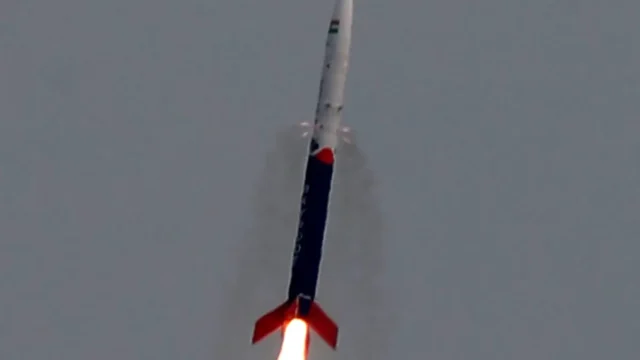
India’s space economy to grow from about $9 billion to $40-45 billion in 7-8 years
On 17 October 2026, Union Minister Dr Jitendra Singh said India’s space economy, worth about USD 9 billion today, should reach USD 40-45 billion in the next seven to eight years. He said the task now is to move from showing what India can do in space to building space companies that can compete and earn worldwide. For that, private firms need steady demand, quick approvals and patient capital. This is the story of space turning from a science mission into an industry.
18 Oct 2026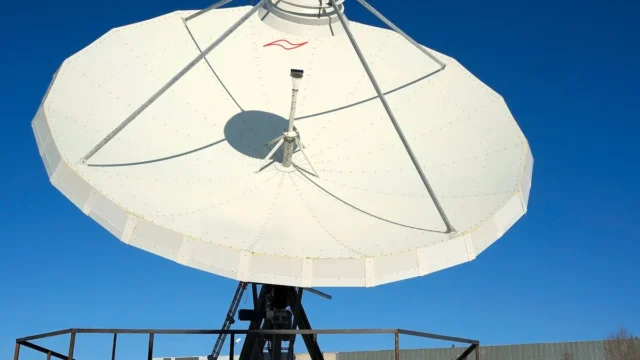
Government says satellite communication licensing is fair; three NGSO-based GMPCS licensees at same stage
On 8 October 2026 the Department of Telecommunications rejected a social media claim that satellite internet licensing is discriminatory. Three licences for Global Mobile Personal Communication by Satellite services using non-geostationary satellites have been issued; all three are going through security assessment, after which each can seek spectrum.
8 Oct 2026
ARIES-led decade-long study of blazar OJ 287, a binary supermassive black hole
A study coordinated by ARIES, Nainital, with 106 scientists from 18 countries, tracked the blazar OJ 287 from 2015 to 2025. OJ 287, about 4 billion light years away, has two supermassive black holes in a 12-year orbit. The study estimated the central black hole at no less than 3.89 billion solar masses.
6 Oct 2026
India–France space cooperation: human spaceflight, TRISHNA and start-ups
On 28 September 2026 a French delegation led by Minister Philippe Baptiste met India's Minister of State for Science and Technology in New Delhi. They discussed the joint TRISHNA satellite, French support for Gaganyaan, and links with India's more than 400 space start-ups, under the India-France Year of Innovation 2026.
28 Sep 2026