
Minimum Support Price (MSP): How It Is Fixed, CACP, A2+FL and C2 Costs, Procurement, PM-AASHA and the Legal Guarantee Debate (UPSC Notes + PYQs)
UPSC has already asked about this. Read the story with these questions in mind.
- Prelims 2020Consider the following statements: In the case of all cereals, pulses and oil-seeds, the procurement at Minimum Support Price (MSP) is unlimited in any…Solve with answer →
- Prelims 2018Consider the following: Areca nut …Solve it below ↓
See all 4 PYQs
Origins
MSP began in the mid-1960s, when India faced food shortages and depended on US wheat under PL-480. To get farmers to adopt the new high-yielding seeds of the Green Revolution, the government needed to assure them that prices would not crash after a good harvest. The Agricultural Prices Commission was set up in 1965 (renamed CACP in 1985), and the Food Corporation of India was set up the same year under the Food Corporations Act, 1964 to buy, store and move grain. MSP has no statutory backing; it is an administrative decision.
Crops covered
- 14 kharif crops: paddy, jowar, bajra, maize, ragi, arhar (tur), moong, urad, groundnut, soybean, sunflower, sesamum, nigerseed, cotton.
- 6 rabi crops: wheat, barley, gram, masur (lentil), rapeseed-mustard, safflower.
- 2 commercial crops: jute and copra.
- MSPs for toria and de-husked coconut are fixed on the basis of mustard and copra.
- Sugarcane has a Fair and Remunerative Price (FRP) fixed under the Sugarcane (Control) Order, 1966; several States, including UP, announce a higher State Advised Price.
How MSP is fixed
The CACP is an attached office of the Ministry of Agriculture. It studies cost of cultivation data, demand and supply, domestic and world prices, inter-crop price parity, terms of trade between farm and non-farm sectors, and the likely effect on consumers. It sends separate kharif and rabi price policy reports. The final decision is taken by the Cabinet Committee on Economic Affairs.
The CACP uses three cost concepts:
- A2: all paid-out costs: seeds, fertiliser, pesticides, hired labour, machinery, irrigation, leased land rent.
- A2+FL: A2 plus the imputed value of unpaid family labour.
- C2: a comprehensive cost that also includes rent on owned land and interest on owned capital.
The National Commission on Farmers (M.S. Swaminathan, 2006) recommended that MSP be at least 50% above the weighted average cost of production. The Union Budget 2018-19 adopted the rule of at least 1.5 times A2+FL; farm unions argue that it should be 1.5 times C2.
- 1CACP collects cost and market data
- 2Kharif or rabi price policy report
- 3States and ministries consulted
- 4CCEA approves MSPs
- 5FCI, NAFED and State agencies procure
- Paid-out costs
- Plus family labour
- Basis of the 1.5x rule since 2018
- Everything in A2+FL
- Plus rent on owned land and interest on own capital
- Basis demanded by farm unions
Procurement: where MSP actually works
An MSP helps only where someone buys at that price. FCI and State agencies procure mainly wheat and paddy, for the public distribution system under the National Food Security Act, 2013. Under decentralised procurement (since 1997-98) States buy and distribute grain themselves. For pulses and oilseeds, PM-AASHA (2018) has three parts: the Price Support Scheme (physical procurement by NAFED and others), the Price Deficiency Payment Scheme (paying the gap between MSP and market price, as Madhya Pradesh tried with Bhavantar) and a pilot of private procurement. Cotton is bought by the Cotton Corporation of India and jute by the Jute Corporation of India.
The Shanta Kumar Committee (2015) on restructuring FCI found that only about 6% of farm households sold to a procurement agency, based on the NSSO’s 2012-13 survey. Procurement is concentrated in Punjab, Haryana, Madhya Pradesh, Telangana, Chhattisgarh and parts of UP, so awareness and benefit vary greatly across States.
The legal guarantee debate
After the three farm laws of 2020 were repealed in late 2021, farmer groups demanded a law guaranteeing MSP. A committee under former agriculture secretary Sanjay Agrawal was set up in July 2022 on MSP, crop diversification and natural farming.
| For a legal MSP | Against |
|---|---|
| Protects farmers from distress sales and price crashes | Huge fiscal cost if the government must buy everything |
| Covers crops and regions procurement misses | Private traders may avoid buying, causing gluts |
| Could help diversify away from wheat-paddy if pulses get assured prices | Can distort cropping patterns and exports; WTO subsidy limits |
Problems with the current system
- Wheat-paddy bias deepens groundwater depletion in Punjab and Haryana and stubble burning.
- Huge grain stocks above buffer norms raise FCI’s costs.
- MSP is often announced after sowing decisions or not enforced in markets.
- Under the WTO Agreement on Agriculture, market price support counts towards the Aggregate Measurement of Support; India has invoked the “peace clause” (Bali, 2013) for rice.
Way forward
Use price deficiency payments for more crops, strengthen e-NAM and FPOs for better market prices, procure more pulses and millets to diversify cropping, build warehouse-based credit, and announce MSPs well before sowing.
MSP and food inflation
MSP affects more than farm incomes. Large hikes in rice and wheat MSP push up cereal prices and food inflation, and very high procurement swells FCI stocks far beyond buffer norms, raising storage costs and waste. Economists such as Ashok Gulati argue for shifting support towards income transfers like PM-KISAN and price deficiency payments, which help farmers without distorting markets as much.
PM-AASHA
The umbrella scheme PM-AASHA (2018) has three parts: the Price Support Scheme for pulses, oilseeds and copra; the Price Deficiency Payment Scheme, which pays the gap between MSP and the market price, tried in Madhya Pradesh as Bhavantar; and a pilot for private procurement. It aims to make MSP real for crops beyond rice and wheat.
PYQ trend
Prelims asked which crops have MSP (2018), FCI’s economic cost (2019), and what counts as public investment in agriculture (2020). Mains GS-III asks MSP with food security, procurement and diversification.
MSP: UPSC angle
For UPSC CSE
Prelims: crops covered, CACP, cost concepts, FCI. Mains GS-III: procurement, food security, diversification, WTO.
MSP UPSC PYQs (Prelims)
Questions UPSC has actually asked, from the official papers. Pick an option to check yourself.
Consider the following :
– 1. Areca nut
– 2. Barley
– 3. Coffee
– 4. Finger millet
– 5. Groundnut
– 6. Sesamum
– 7. Turmeric
The Cabinet Committee on Economic Affairs has announced the Minimum Support Price for which of the above ?
The CCEA announces MSP for 22 crops on CACP advice (plus FRP for sugarcane): 14 kharif crops including ragi (finger millet), groundnut and sesamum, 6 rabi crops including barley, and jute and copra. Plantation and spice crops like areca nut, coffee and turmeric have no MSP. Answer as per the official UPSC key · Battle IAS PYQ bankAnswer (b) & why
The economic cost of food grains to the Food Corporation of India is Minimum Support Price and bonus (if any) paid to the farmers plus
FCI’s economic cost has three parts: the price paid to farmers (MSP plus any bonus), procurement incidentals (mandi charges, bags, handling, State taxes), and distribution cost (freight, storage, interest and losses until the grain reaches the ration shop). Godown charges are only one part of distribution cost. Answer as per the official UPSC key · Battle IAS PYQ bankAnswer (c) & why
Which of the following factors/policies were affecting the price of rice in India in the recent past ?
– 1. Minimum Support Price
– 2. Government's trading
– 3. Government's stockpiling
– 4. Consumer subsidies
Select the correct answer using the code given below :
The government shapes the rice market at every step. MSP sets a floor for farmers. FCI’s procurement and stockpiling take grain off the market, while open-market sales and export curbs (trading) add or hold supply. PDS subsidies lower what consumers pay. All four affect the price. Answer as per the official UPSC key · Battle IAS PYQ bankAnswer (d) & why
Mains PYQs on this topic
No UPSC Mains question from 2023-2026 is directly on this topic. Older papers (2013-2022) will be added as the Mains bank grows.
Quick quiz
Which body gives final approval to MSPs?
The Cabinet Committee on Economic Affairs approves MSPs.Answer (c)
The cost concept that includes rent on owned land is
C2 is the comprehensive cost.Answer (c)
For sugarcane, the Union government fixes the
Fair and Remunerative Price.Answer (b)
FAQs
Is MSP a legal right?
No. It is an administrative policy; there is no law obliging anyone to buy at MSP.
How many crops have MSP?
22 crops, besides FRP for sugarcane.
What is the difference between MSP and FRP?
MSP is for 22 crops; FRP is the minimum price sugar mills must pay for cane.
What is price deficiency payment?
Paying farmers the gap between MSP and the market price instead of buying the crop.
Why do pulses get less benefit?
Procurement of pulses is limited, so market prices often stay below MSP.
Spotted an error? Tell us. We correct within 48 hours.
How to use this in Mains
If asked: Should MSP be given a legal guarantee? Examine. (GS-III)
Quote: “Wheat-paddy bias deepens groundwater depletion in Punjab and Haryana and stubble burning.”
Use it: A strong counter-view on the ecological cost of MSP bias.
In the news
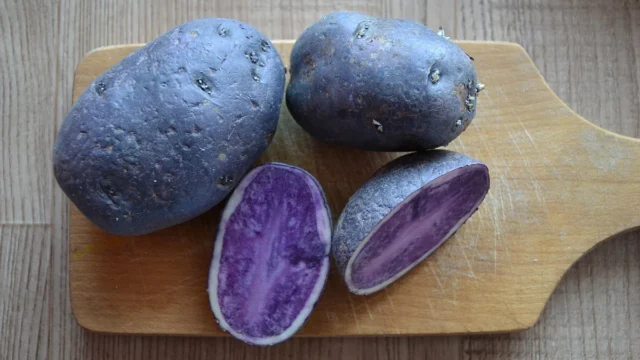
Kufri Jamunia: ICAR-CPRI’s purple potato to fight hidden hunger
A PIB backgrounder of 18 October 2026 puts the spotlight on Kufri Jamunia, a purple-fleshed potato bred by ICAR’s Central Potato Research Institute and released in 2024. It has nearly twice the Vitamin C of a common potato and several times more zinc and iron, along with antioxidants called anthocyanins. The idea is clever: instead of asking people to change what they eat, make the food they already eat more nutritious. That is biofortification.
18 Oct 2026
Oil companies bar sugar-based ethanol for 2026-27; maize incentive cut to ₹2.79 a litre
The oil marketing companies have kept sugar out of India’s ethanol programme for the coming year. The tender issued on 16 October 2026 seeks about 11 billion litres of ethanol for the 2026-27 supply year, but asks for none made from sugarcane juice, sugar syrup or B-heavy molasses, because the Government wants sugar diversion for ethanol cut to zero. Grain must now carry the load, and even the maize incentive has been cut. Read this as a live example of the food-versus-fuel trade-off.
18 Oct 2026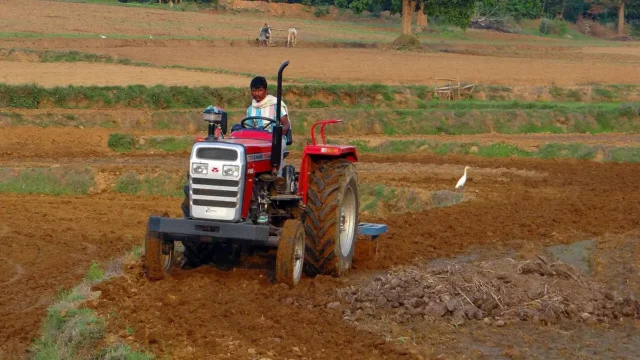
Khet Bachao Abhiyan: Centre reviews 22 October to 30 November farm campaign with States
On 17 October 2026 Union Agriculture Minister Shivraj Singh Chouhan reviewed preparations for the Khet Bachao Abhiyan with agriculture ministers of 11 States and UTs. The campaign runs from 22 October to 30 November 2026. About 4,150 teams of Krishi Vigyan Kendra and ATMA staff, with over 12,000 scientists and officials, plan around 1.5 lakh meetings with farmers on soil health, crop residue, balanced fertiliser use and key schemes.
17 Oct 2026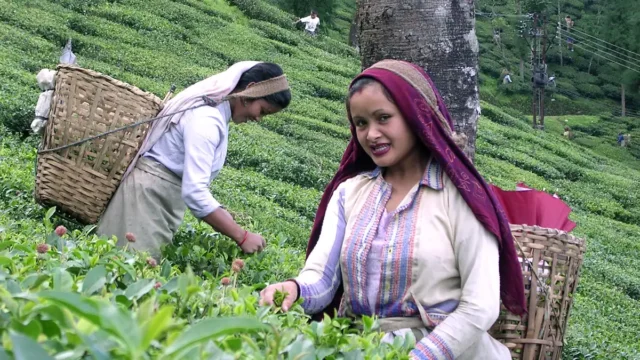
FSSAI proposes residue limits for acetamiprid and imidacloprid in tea
On 17 October 2026 FSSAI explained draft limits for two insecticides in tea: 20 ppm for acetamiprid and 50 ppm for imidacloprid. The draft, published in the Gazette on 16 October, amends the rules on contaminants, toxins and residues. India’s proposed acetamiprid limit is lower than Japan’s 30 ppm and the USA’s 50 ppm.
17 Oct 2026