
Inflation for UPSC: Meaning, Types, CPI vs WPI, Causes, Effects and How India Controls It (Notes + PYQs)
UPSC has already asked about this. Read the story with these questions in mind.
- Prelims 2020Consider the following statements: The weightage of food in Consumer Price Index (CPI) is higher than that in Wholesale Price Index (WPI). …Solve it below ↓
- Mains 2024 · GS3What are the causes of persistent high food inflation in India? Comment on the effectiveness of the monetary policy of the RBI to control…See model answer →
See all 5 PYQs
- Prelims 2021With reference to Indian economy, demand-pull inflation can be caused/increased by which of the following?Solve it below ↓
- Prelims 2013Which one of the following is likely to be the most inflationary in its effect?Solve it below ↓
- Prelims 2015Which of the following brings out the 'Consumer Price Index Number for Industrial Workers'?Solve it below ↓
Background: why prices matter
Inflation is a sustained rise in the general level of prices, which means each rupee buys less over time. A moderate, stable rate is a sign of a growing economy, but high or volatile inflation hurts the poor most, because they spend most of their income on food and fuel and have little savings or bargaining power. It erodes the real value of wages, pensions and deposits, distorts investment decisions and can weaken the currency. India has seen several bouts of high inflation: after the oil shocks of the 1970s, in the early 1990s, and between 2009 and 2013, when consumer inflation stayed near double digits. That last episode led to the adoption of a flexible inflation targeting framework in 2016. Understanding inflation means knowing its causes, how it is measured, who wins and loses, and what policy can do.
Types by cause and speed
- Demand-pull: high government spending, credit growth, rising incomes.
- Cost-push: oil prices, wages, supply shocks (monsoon failure).
- Built-in: wage-price spiral driven by expectations.
- Creeping (below 3%), walking, galloping, hyperinflation (Zimbabwe 2008, Venezuela).
- Stagflation: high inflation with low growth and high unemployment.
- Deflation: falling prices; disinflation: falling rate of inflation.
- Fixed income earners and pensioners
- Savers and lenders
- Poor households spending most on food
- Exporters if the currency appreciates in real terms
- Borrowers, including the government
- Holders of real assets like land and gold
- Firms whose prices rise faster than costs
- Government through higher nominal tax revenue
CPI vs WPI
| Point | CPI (Combined) | WPI |
|---|---|---|
| Released by | NSO, MoSPI | Office of the Economic Adviser, DPIIT |
| Prices | Retail | Wholesale (first point of bulk sale) |
| Services | Included | Not included |
| Food weight | High (food and beverages around 46% in the 2012 series) | Lower |
| Base year | 2024 (new series released February 2026; earlier 2012) | 2011-12 |
| Use | RBI target | Industry costs, GDP deflators |
CPI-IW (industrial workers), CPI-AL and CPI-RL (agricultural and rural labourers) are released by the Labour Bureau and used for wage and DA revisions.
Headline vs core
Headline includes everything. Core excludes volatile food and fuel and shows underlying demand pressure.
- 1Poor monsoon or supply disruption
- 2Vegetable and pulse prices jump
- 3Headline CPI rises
- 4Households expect higher inflation
- 5Wages and other prices adjust upward
Who gains, who loses
Losers: fixed-income earners, pensioners, savers, the poor (food has a higher share of their spending). Gainers: borrowers, some producers with pricing power. Moderate inflation can encourage investment; high inflation hurts exports and confidence.
Demand-pull vs cost-push
| Point | Demand-pull | Cost-push |
|---|---|---|
| Cause | Too much money chasing too few goods | Rising cost of inputs |
| Triggers | Higher government spending, easy credit, rising incomes | Oil prices, wages, poor monsoon, supply disruptions |
| Output | Usually rising | Can fall (stagflation) |
| Best tool | Monetary tightening and fiscal restraint | Supply-side measures |
| Indian example | Post-2008 stimulus period | Vegetable price spikes after unseasonal rain |
Controlling inflation
- Monetary: raising the repo rate, CRR; open market operations.
- Fiscal: lower deficits, lower indirect taxes on essentials.
- Supply-side: buffer stocks, imports, export curbs, better storage and supply chains (Operation Greens for tomato-onion-potato).
Why food inflation persists in India
Food makes up a large share of the CPI basket, so food prices drive headline inflation. Several structural factors keep them high and volatile. Much of farming still depends on the monsoon, so a weak or erratic season hits output of pulses, vegetables and oilseeds. Perishables like tomato, onion and potato suffer from poor cold storage and long supply chains with many middlemen. Rising incomes are shifting demand to protein-rich foods such as milk, eggs, meat and pulses faster than supply grows. Minimum support prices raise the floor for cereals. Global prices of edible oils and fertilisers feed in through imports. Heat waves and other extreme weather add new shocks. These causes lie on the supply side, which is why interest rate changes have limited direct effect on them.
Can monetary policy control food inflation?
Monetary policy works mainly through demand: higher interest rates reduce borrowing and spending. It cannot produce more onions after a crop failure. But it still matters. If food inflation persists, it raises households’ expectations of future inflation, and these feed into wages and the prices of other goods, so-called second-round effects. By keeping a credible commitment to the target, the RBI anchors those expectations. The best results come from combining monetary policy with supply measures: buffer stocks, timely imports and export curbs, better storage and food processing, crop diversification, market reforms that cut intermediaries, and climate-resilient farming. In an answer, argue that monetary policy is necessary but not sufficient against food inflation.
Related terms for Prelims
| Term | Meaning |
|---|---|
| Deflation | Falling general price level |
| Disinflation | Falling rate of inflation, prices still rising |
| Stagflation | High inflation with stagnant output and high unemployment |
| Reflation | Policy to raise prices back after deflation |
| Skewflation | Price rise concentrated in a few items |
| Hyperinflation | Extremely rapid price rise, such as Zimbabwe in 2008 |
| Base effect | Low or high prices a year ago distort the current annual rate |
Mains answer approach
Begin by defining inflation and the CPI-based target. Separate demand and supply causes with Indian examples. For food inflation, list structural causes and argue for a joint fiscal, monetary and supply-side response. Mention the Phillips curve idea of a short-run trade-off between inflation and unemployment when discussing policy choices.
Inflation: UPSC angle
For UPSC CSE
Prelims: CPI vs WPI, who releases, demand-pull causes, most inflationary actions. Mains GS-III: food inflation, inflation targeting record.
Inflation UPSC PYQs (Prelims)
Questions UPSC has actually asked, from the official papers. Pick an option to check yourself.
Consider the following statements :
– 1. The weightage of food in Consumer Price Index (CPI) is higher than that in Wholesale Price Index (WPI).
– 2. The WPI does not capture changes in the prices of services, which CPI does.
– 3. Reserve Bank of India has now adopted WPI as its key measure of inflation and to decide on changing the key policy rates.
Which of the statements given above is/are correct ?
Food has a weight of about 46% in CPI (Combined) but only about 24% in WPI. The WPI covers goods only, while the CPI includes services such as education, health and transport. Since 2014 (Urjit Patel Committee) the RBI has used CPI (Combined), not WPI, as its key inflation measure. Answer as per the official UPSC key · Battle IAS PYQ bankAnswer (a) & why
With reference to Indian economy, demand-pull inflation can be caused/increased by which of the following?
– 1. Expansionary policies
– 2. Fiscal stimulus
– 3. Inflation-indexing wages
– 4. Higher purchasing power
– 5. Rising interest rates
Select the correct answer using the code given below.
Demand-pull inflation comes from too much spending chasing too few goods. Expansionary policies, a fiscal stimulus and higher purchasing power all raise demand. Indexing wages raises firms’ costs, which is cost-push inflation. Rising interest rates reduce demand, so they curb inflation. Answer as per the official UPSC key · Battle IAS PYQ bankAnswer (a) & why
Which one of the following is likely to be the most inflationary in its effect?
Creating new money (deficit financing by printing money) adds fresh money to the economy without any matching output, so it is the most inflationary. Borrowing only moves existing money from the public or banks to the government. Answer as per the official UPSC key · Battle IAS PYQ bankAnswer (d) & why
Which of the following brings out the 'Consumer Price Index Number for Industrial Workers'?
CPI-IW (with CPI for Agricultural and Rural Labourers) is compiled by the Labour Bureau, Shimla, under the Labour Ministry. It is used to fix dearness allowance for government employees. The headline CPI (Rural, Urban, Combined) used for inflation targeting is compiled by the NSO under MoSPI. Answer as per the official UPSC key · Battle IAS PYQ bankAnswer (c) & why
Mains PYQs on this topic
Questions from the official UPSC Mains papers (2023-2026 in the Battle IAS Mains bank), newest first. Each links to a model answer.
- UPSC Mains 2024 · GS Paper III · Q2 · 10 marks
What are the causes of persistent high food inflation in India? Comment on the effectiveness of the monetary policy of the RBI to control this type of inflation.
Quick quiz
India’s inflation target under the RBI Act is
On CPI (Combined).Answer (b)
Which index includes services?
WPI covers only goods.Answer (b)
Stagflation means
Seen after the 1970s oil shocks.Answer (b)
FAQs
Who publishes CPI in India?
The National Statistics Office (MoSPI) for CPI Combined; the Labour Bureau for CPI-IW, CPI-AL and CPI-RL.
What is core inflation?
Inflation excluding volatile food and fuel items.
Why does the RBI target CPI and not WPI?
CPI reflects the prices consumers actually pay, including services.
Is some inflation good?
Moderate, stable inflation is considered healthy for growth.
What is the base effect?
When last year’s price level was unusually low or high, the annual inflation rate this year looks higher or lower than the actual momentum of prices.
What is disinflation?
A fall in the rate of inflation. Prices are still rising, but more slowly.
Why can’t the RBI control vegetable prices directly?
They depend on weather, harvests and supply chains. Interest rates affect demand, not supply of perishables.
Spotted an error? Tell us. We correct within 48 hours.
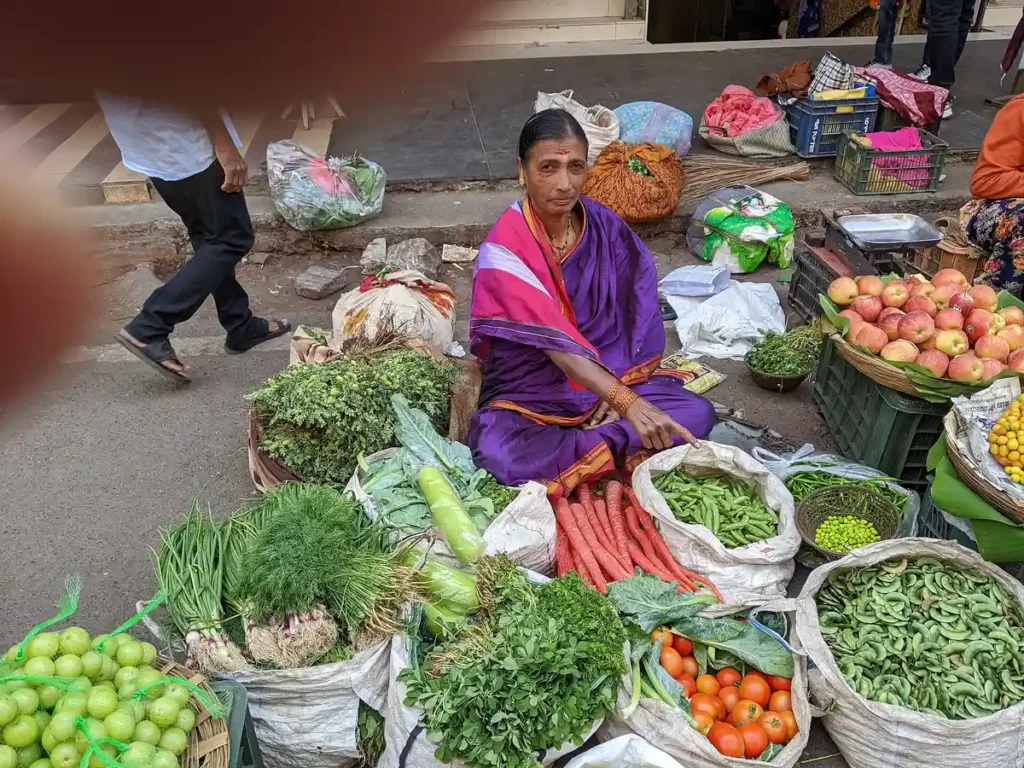
Image: Jonathansammy, Wikimedia Commons, CC BY-SA 4.0
How to use this in Mains
If asked: UPSC Mains 2024, GS-III: What are the causes of persistent high food inflation in India? Comment on the effectiveness of the monetary policy of the RBI to control this type of inflation.
Quote: “Food makes up a large share of the CPI basket, so food prices drive headline inflation.”
Use it: Key link between food prices and CPI inflation.
In the news
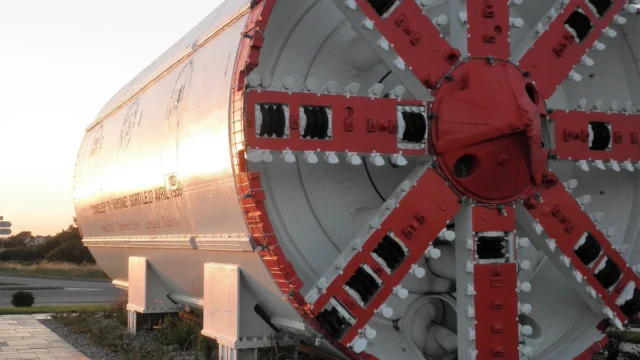
China to impose export controls on tunnel boring machines from 18 November: what it means for India
On 19 October 2026 China’s Commerce Ministry announced export controls on tunnel boring machines (TBMs) and related items from 18 November, calling them clearly dual-use. India imports TBMs for metro, rail and border tunnels and has faced customs delays on Chinese machines since 2024. China also announced controls on some drones.
19 Oct 2026
Pumped storage hydropower: India’s roadmap for 100 GW of ‘water batteries’ by 2035-36
A PIB backgrounder of 19 October 2026 explains how pumped storage projects (PSPs) will store solar and wind power for India’s grid. India runs 7.43 GW of pumped storage today, is building 15.87 GW more and has an assessed potential of 345.38 GW. A roadmap aims to add about 100 GW between 2025-26 and 2035-36.
19 Oct 2026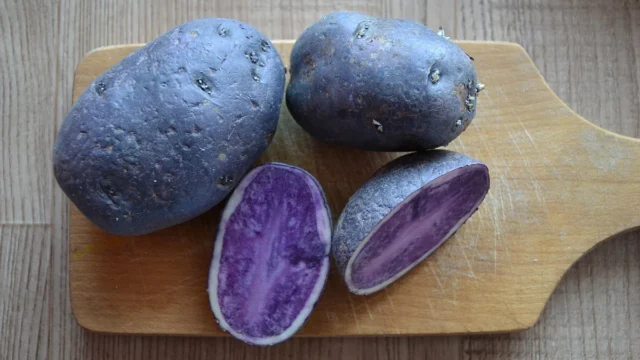
Kufri Jamunia: ICAR-CPRI’s purple potato to fight hidden hunger
A PIB backgrounder of 18 October 2026 puts the spotlight on Kufri Jamunia, a purple-fleshed potato bred by ICAR’s Central Potato Research Institute and released in 2024. It has nearly twice the Vitamin C of a common potato and several times more zinc and iron, along with antioxidants called anthocyanins. The idea is clever: instead of asking people to change what they eat, make the food they already eat more nutritious. That is biofortification.
18 Oct 2026
Oil companies bar sugar-based ethanol for 2026-27; maize incentive cut to ₹2.79 a litre
The oil marketing companies have kept sugar out of India’s ethanol programme for the coming year. The tender issued on 16 October 2026 seeks about 11 billion litres of ethanol for the 2026-27 supply year, but asks for none made from sugarcane juice, sugar syrup or B-heavy molasses, because the Government wants sugar diversion for ethanol cut to zero. Grain must now carry the load, and even the maize incentive has been cut. Read this as a live example of the food-versus-fuel trade-off.
18 Oct 2026