
UPSC Mains 2017 GS Paper 3 Q15: model answer
How do subsidies affect the cropping pattern, crop diversity, and economy of farmers? What is the significance of crop insurance, minimum support price, and food processing for small and marginal farmers?
What the question wants
Explain how subsidies shape cropping pattern, crop diversity and farm economics, and the importance of crop insurance, MSP and food processing for small and marginal farmers.
How to structure it
Two parts.
- Subsidies and cropping pattern
- Subsidies and crop diversity
- Subsidies and farm economics
- Crop insurance
- MSP
- Food processing
- Conclusion
How to think it through
Input subsidies (power, water, urea) and output support (MSP with procurement) favour rice, wheat and sugarcane; diversity falls; farm economics improve in the short run but costs rise as soils and aquifers decline. For small farmers: insurance protects from shocks, MSP gives a floor price, processing gives value addition.
Model answer
In Punjab, free power, cheap urea and assured procurement make paddy the safest crop, even though it needs 3,000–5,000 litres of water per kilo of rice. Subsidies have quietly drawn India's cropping map.
How subsidies affect cropping pattern
- Input subsidies (power, canal water, urea) lower the cost of water- and nitrogen-hungry crops.
- Output support: MSP with procurement for rice and wheat, the state-advised price for sugarcane.
- Result: paddy in semi-arid Punjab and Haryana, sugarcane in drought-prone Marathwada.
Effect on crop diversity
- Pulses, oilseeds and millets lose area; India imports edible oil and pulses.
- Traditional varieties disappear; monoculture invites pests.
Effect on farm economics
- Short-term: lower costs and assured income.
- Long-term: falling water tables raise pumping costs; soil fatigue needs more fertiliser; returns stagnate.
- Unequal: larger farmers gain more.
- Fiscal: money spent on input subsidies is not spent on irrigation or research.
Significance for small and marginal farmers
Crop insurance
- Protects against one bad season wiping out savings; PMFBY premiums are only 1.5–5%.
- Keeps them creditworthy, so the next season's loan is not lost.
MSP
- Acts as a floor and a signal, but only about a quarter of farmers benefit directly, according to the NSS Situation Assessment Survey.
- Its reach to pulses and oilseeds through PM-AASHA can aid diversification, if procurement is real and timely.
Food processing
- Adds value to small surpluses; reduces distress sales in gluts.
- Creates jobs for family members, especially women.
- FPO-linked units help small farmers bargain.
- Processed produce can be stored and sold when prices recover.
Conclusion
Shift subsidies from crop-specific inputs to crop-neutral income support, and use insurance, MSP and processing to make diversification safe.
Subsidies decide what a farmer grows; supports decide whether he survives a bad year.
Draw: A two-part diagram: subsidies → crop choice; supports → farm resilience.
Keywords, cases and data to drop in
input subsidy, output support, MSP and procurement bias, crop diversity, PMFBY, PM-AASHA, FPOs, crop-neutral support, NSS SAS, food processing.
Where most answers lose marks
- Answering one part only. The second part on insurance, MSP and processing for small farmers is equally weighted.
Related Mains PYQs
- Discuss the different types of subsidies and supports provided by the Government of India to agricultural sector. Examine the related issues pertaining… UPSC 2026 · GS-III
- Elucidate the importance of buffer stocks for stabilizing agricultural prices in India. What are the challenges associated with the storage of buffer… UPSC 2024 · GS-III
- What are the direct and indirect subsidies provided to farm sector in India? Discuss the issues raised by the World Trade Organization… UPSC 2023 · GS-III
- What are the major challenges of Public Distribution System (PDS) in India? How can it be made effective and transparent? UPSC 2022 · GS-III
Fresh examples from current affairs
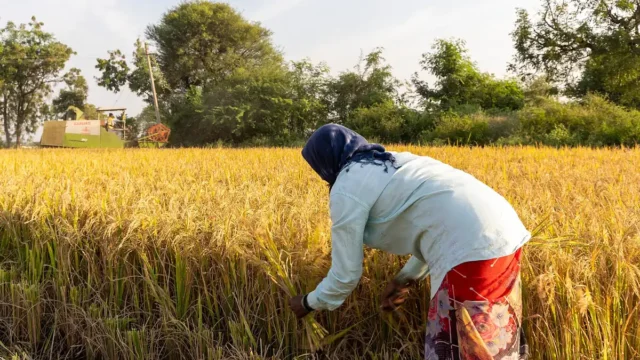
11 crore Farmer IDs created five months early under the Digital Agriculture Mission and Agri Stack
The Centre is building a digital register of farmers, so that each farmer has one verified identity for all schemes. Under the Digital Agriculture Mission, 11 crore Farmer IDs were created by the night of 23 October, five months before the March 2027 deadline. With this ID, farmers need not submit the same papers again and again for loans, crop insurance or relief. For you, this links Agri Stack, the Kisan Credit Card, PMFBY and land-record reform.
UPSC angle: Prelims: Digital Agriculture Mission, Agri Stack, KCC, PMFBY, DILRMP. · Mains GS-III: technology in agriculture; DBT.
25 Oct 2026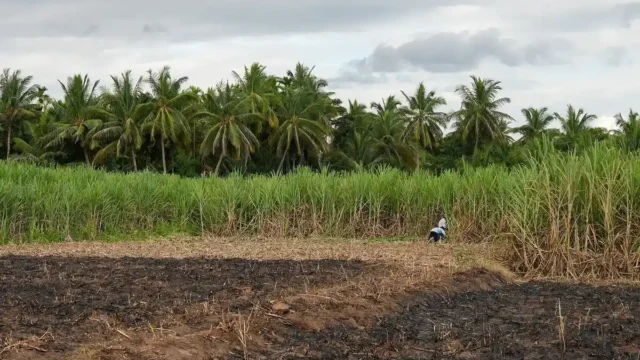
Ramesh Chand committee to examine sugarcane farmers’ and sugar sector issues
On 14 October 2026 the Centre set up a committee under Prof. Ramesh Chand, former NITI Aayog Member, on issues raised by sugarcane farmers. It will examine returns to cane growers, the ex-mill Minimum Selling Price of sugar, how sugar recovery is tested, weighment at mills, and deductions on mechanically harvested cane.
UPSC angle: Prelims: chair, terms of reference, ex-mill MSP of sugar. · Mains GS-III: cane pricing, sugar sector economics, farm incomes.
14 Oct 2026
Cotton Corporation of India showcases procurement reforms: digital slot booking, traceability, Kasturi Cotton
The Textiles Ministry, through the Cotton Corporation of India, held a reform showcase in Hyderabad on 6 October 2026 under Reform Utsav 2026. It covered the Kapas Kisan digital platform for registration, slot booking and Aadhaar-enabled payments, traceability and the Kasturi Cotton Bharat brand, and the High-Density Planting System to lift yields.
UPSC angle: Prelims: CCI, Kasturi. · Mains GS-III: MSP procurement, textiles.
4 Oct 2026
Rabi MSP 2027-28: safflower gets the biggest hike, wheat ₹2,610
On 30 September 2026 the CCEA approved Minimum Support Prices for Rabi crops for marketing season 2027-28. Wheat MSP is ₹2,610 a quintal, up ₹25. Safflower got the largest increase, ₹675, followed by rapeseed and mustard at ₹413. Expected margins over cost range from 50 per cent for safflower to 106 per cent for wheat.
UPSC angle: Prelims: which crops are Rabi mandated crops; cost concept used. · Mains: Is MSP-led diversification towards pulses/oilseeds working?
30 Sep 2026Learn the concept
Question text as printed in the official UPSC Civil Services (Main) question paper. The model answer is original Battle IAS work; use it to learn structure, not to memorise.
Want every PYQ in one place? See the Battle IAS PYQ Book.