
Shanghai Cooperation Organisation (SCO): Origin, Members, Structure, RATS, India’s Membership and Presidency, and the Limits of the Grouping (UPSC Notes + PYQs)
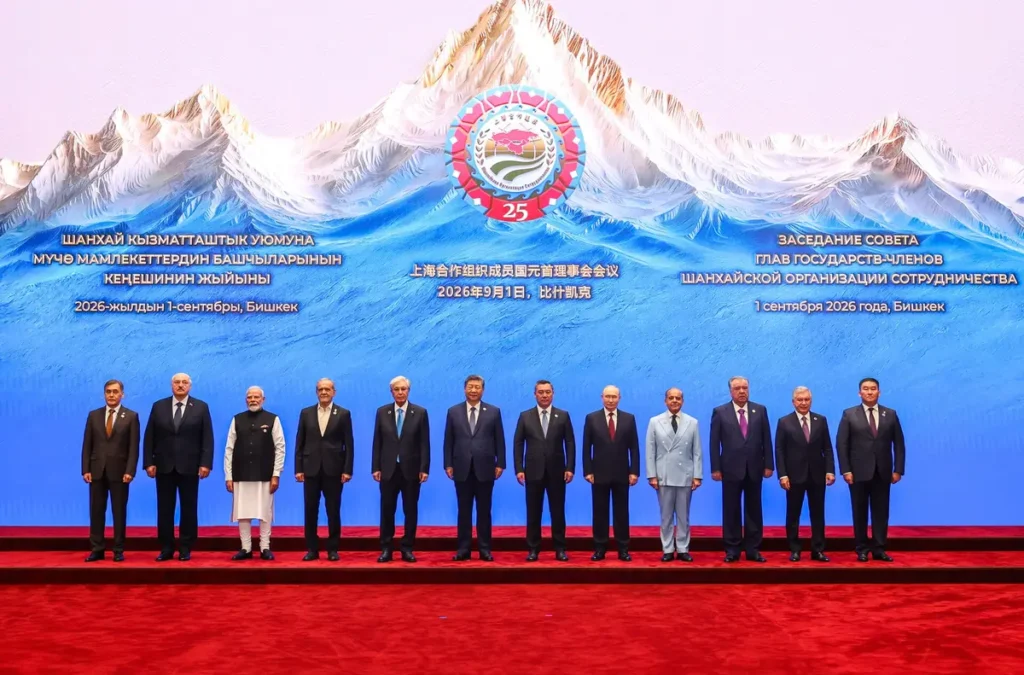
UPSC has already asked about this. Read the story with these questions in mind.
- Prelims 2025India is one of the founding members of the International North-South Transport Corridor (INSTC), a multimodal transportation corridor, which will connectSolve it below ↓
- Mains 2023 · GS2‘Virus of Conflict is affecting the functioning of the SCO’ In the light of the above statement point out the role of India in…See model answer →
From Shanghai Five to SCO
After the Soviet Union broke up, China had long, disputed borders with Russia and three new Central Asian States. In 1996 China, Russia, Kazakhstan, Kyrgyzstan and Tajikistan, the Shanghai Five, signed an agreement on military confidence-building in border areas. In 2001 Uzbekistan joined and the group became the SCO. Its Charter was signed in 2002. Its founding text names “three evils” it would fight together: terrorism, separatism and extremism.
- 1996Shanghai Five agreement
- 2001SCO founded, 15 June
- 2002Charter signed
- 2017India and Pakistan join
- 2023Iran joins; India presides
- 2024Belarus joins
Members and structure
| Category | Countries |
|---|---|
| Founding six (2001) | China, Russia, Kazakhstan, Kyrgyzstan, Tajikistan, Uzbekistan |
| Joined 2017 | India, Pakistan |
| Joined 2023 | Iran |
| Joined 2024 | Belarus |
| Observers | Afghanistan, Mongolia |
A long list of dialogue partners includes Turkey, Saudi Arabia, Egypt and Sri Lanka. The Heads of State Council is the top body and meets yearly; the Heads of Government Council handles economy and budget. The official languages are Russian and Chinese, and decisions need consensus.
What the SCO does
- Security: the Regional Anti-Terrorist Structure shares intelligence and lists of wanted terrorists. Joint “Peace Mission” exercises are held.
- Economy: trade facilitation, transport links and energy, though progress is slow; there is no free trade area.
- Culture: each year a member city is named the cultural and tourism capital; Varanasi held the title for 2022-23.
India in the SCO
India was an observer from 2005 and became a full member at the Astana summit of 2017, together with Pakistan. Membership gives India a seat at the main table in Central Asia, a region rich in energy and uranium but cut off from India by Pakistan and Afghanistan. It also offers counter-terror cooperation through RATS and a forum to meet Russia and China together.
India held the presidency in 2022-23 under the theme SECURE (security, economy and trade, connectivity, unity, respect for sovereignty and territorial integrity, environment) and hosted a virtual summit in July 2023, where Iran joined. India has stayed firm on two points: it does not endorse China’s Belt and Road Initiative, since the China-Pakistan Economic Corridor passes through Indian territory in Pakistan-occupied Kashmir, and it insists that cross-border terrorism be named. In June 2025 India refused to sign a defence ministers’ statement that left out the Pahalgam attack.
- Access to Central Asia
- RATS counter-terror cooperation
- Forum with Russia and China
- Strategic autonomy
- China and Pakistan inside
- BRI and CPEC pressure
- Little economic delivery
- Consensus blocks action
Limits and criticism
- Rivalry between members: India and China, India and Pakistan, and quieter Russia-China competition in Central Asia.
- Seen in the West as an anti-Western club, which India, a Quad member, must balance.
- Little economic output; RATS has rarely acted against groups that target India.
- Consensus lets any one member block action.
Why India stays
The SCO lets India practise strategic autonomy: it can sit with Russia and China while working with the US in the Quad. India should use it for Central Asian connectivity through Chabahar and the International North-South Transport Corridor, for energy and for counter-terror cooperation, while refusing texts that hurt its sovereignty.
Central Asia: what India wants
Central Asia matters to India for four reasons. First, energy and minerals: Kazakhstan is the world’s largest producer of uranium and has supplied Indian reactors since 2009, and the region holds oil, gas and rare minerals. Second, security: instability in Afghanistan, drug trafficking and radical groups can spill into Kashmir. Third, connectivity: India has no direct land route because Pakistan blocks transit, so it uses Iran’s Chabahar port, where India Ports Global runs the Shahid Beheshti terminal under a ten-year contract signed in 2024, and the International North-South Transport Corridor through Iran to Russia. Fourth, history and goodwill: Indian films, Sufi traditions and medical education are popular in the region. India also runs a separate India-Central Asia Summit, first held virtually in January 2022, and an India-Central Asia Dialogue at foreign minister level. The SCO adds a multilateral layer to these bilateral efforts.
SCO compared with other groupings
| Feature | SCO | BRICS | Quad |
|---|---|---|---|
| Founded | 2001 | 2009 (BRIC summit) | 2007; revived 2017 |
| Focus | Eurasian security, terrorism | Economy, global governance reform | Free and open Indo-Pacific |
| India’s partners inside | Russia, Central Asia, Iran | Brazil, South Africa, Russia | US, Japan, Australia |
| China a member? | Yes | Yes | No |
| Secretariat | Beijing | None (NDB in Shanghai) | None |
India is the only country in all three. This is the clearest picture of its multi-alignment: it works with the West on maritime security and technology, with the Global South on reform of global bodies, and with Eurasian powers on continental security and connectivity. Critics call this fence-sitting; supporters say it lets India keep options open in a world where no single bloc meets all its needs. In SCO meetings this balance is tested whenever a joint text praises the BRI or criticises Western sanctions, and India has repeatedly chosen to dissociate from such paragraphs rather than leave the grouping.
The Pakistan factor and terrorism
Having Pakistan in the same room is the SCO’s biggest test for India. SCO documents condemn terrorism “in all its forms and manifestations”, and RATS keeps a shared list of wanted persons, but groups that attack India from Pakistani soil have never been named in an SCO text at Pakistan’s and China’s insistence. India uses the forum to press its case directly. At the 2023 foreign ministers’ meeting in Goa, India’s External Affairs Minister called Pakistan a promoter of terrorism in front of its foreign minister. After the Pahalgam attack of April 2025, India refused to sign the Qingdao defence ministers’ statement because it mentioned an attack in Balochistan but left out Pahalgam; the leaders’ declaration at Tianjin later that year did condemn Pahalgam, which India counted as a gain. The episode shows both the limits of the SCO and why India stays: walking out would leave the field to Pakistan and China, while staying in lets India shape the text and keep terrorism on the agenda.
India’s presidency in practice
During its 2022-23 chair, India added new pillars of cooperation: startups and innovation, traditional medicine, digital inclusion, youth empowerment and shared Buddhist heritage. It hosted the foreign and defence ministers’ meetings in Goa and New Delhi, and set up a special working group on startups. Varanasi was named the first SCO tourism and cultural capital for 2022-23. India chose a virtual format for the July 2023 summit, which some read as a way to avoid hosting Pakistan and China in person at a time of tension.
PYQ trend
Mains GS-II 2023 asked about the “virus of conflict” in the SCO and India’s role. Prelims tests membership and groupings.
SCO: UPSC angle
For UPSC CSE
Prelims: members, bodies, locations. Mains GS-II: India’s interests in Eurasia, strategic autonomy, terrorism.
SCO UPSC PYQs (Prelims)
Questions UPSC has actually asked, from the official papers. Pick an option to check yourself.
India is one of the founding members of the International North-South Transport Corridor (INSTC), a multimodal transportation corridor, which will connect
The INSTC was agreed in 2000 by India, Iran and Russia. Goods go by sea from Mumbai to Bandar Abbas or Chabahar in Iran, then by road and rail through Iran, the Caspian region and Central Asia to Russia and on to Europe. It cuts time and cost compared with the Suez route. Azerbaijan is one route inside the corridor, not its whole. Answer as per the official UPSC key · Battle IAS PYQ bankAnswer (a) & why
Mains PYQs on this topic
Questions from the official UPSC Mains papers (2023-2026 in the Battle IAS Mains bank), newest first. Each links to a model answer.
- UPSC Mains 2023 · GS Paper II · Q9 · 10 marks
‘Virus of Conflict is affecting the functioning of the SCO’ In the light of the above statement point out the role of India in mitigating the problems.
Quick quiz
The headquarters of SCO’s Regional Anti-Terrorist Structure is in
RATS is in Tashkent, Uzbekistan.Answer (b)
Which country joined the SCO in 2024?
Belarus became the tenth member at Astana in 2024.Answer (b)
Which of these was NOT part of the Shanghai Five?
Uzbekistan joined in 2001 when the SCO was formed.Answer (c)
FAQs
How many members does the SCO have?
Ten: China, Russia, Kazakhstan, Kyrgyzstan, Tajikistan, Uzbekistan, India, Pakistan, Iran and Belarus.
When did India join the SCO?
At the Astana summit in June 2017, along with Pakistan.
What is RATS?
The Regional Anti-Terrorist Structure, a permanent SCO body in Tashkent for counter-terror cooperation.
Why does India not endorse the BRI at the SCO?
Because the China-Pakistan Economic Corridor passes through Pakistan-occupied Kashmir, which India sees as violating its sovereignty.
Is the SCO a military alliance?
No. It has no mutual defence clause, though it holds joint counter-terror exercises.
Spotted an error? Tell us. We correct within 48 hours.
Image: Prime Minister's Office, Wikimedia Commons, GODL-India
How to use this in Mains
If asked: UPSC Mains 2023, GS-II: ‘Virus of Conflict is affecting the functioning of the SCO’ In the light of the above statement point out the role of India in mitigating the problems.
Quote: “Rivalry between members: India and China, India and Pakistan, and quieter Russia-China competition in Central Asia.”
Use it: Use it to name the 'virus of conflict' precisely before giving India's role.
In the news
India to host 61st CIML meeting on legal metrology in New Delhi, 26–28 October
India will host the 61st meeting of the International Committee of Legal Metrology (CIML) for the first time, in New Delhi from 26 to 28 October 2026. The Department of Consumer Affairs is organising it with the International Organization of Legal Metrology (OIML), and more than 100 delegates are expected, PIB said on 19 October.
19 Oct 2026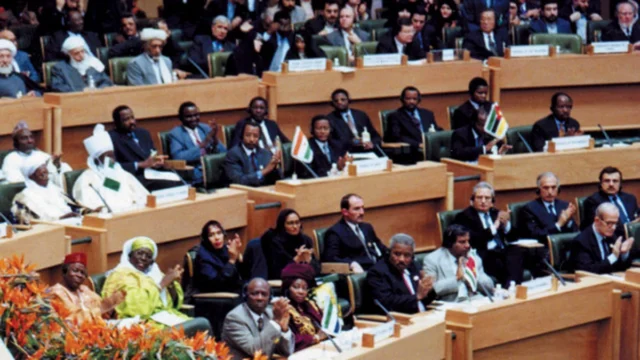
India rejects OIC’s Baghdad resolutions on Jammu and Kashmir as ‘malicious, biased and false’
On 19 October 2026 the Ministry of External Affairs rejected references to India in resolutions adopted at the Organisation of Islamic Cooperation (OIC) Council of Foreign Ministers in Baghdad on 17–18 October. It called them ‘malicious, biased and false’, said Pakistan orchestrated them, and said the OIC has no locus standi on India’s internal matters.
19 Oct 2026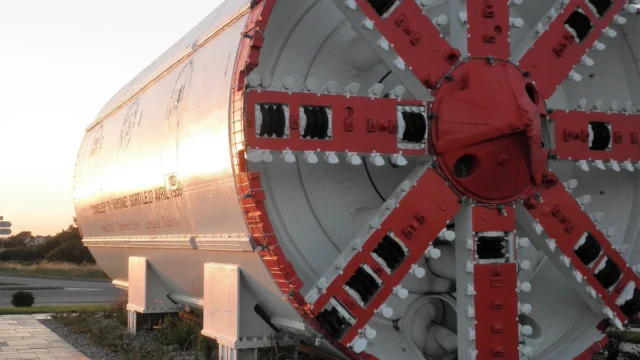
China to impose export controls on tunnel boring machines from 18 November: what it means for India
On 19 October 2026 China’s Commerce Ministry announced export controls on tunnel boring machines (TBMs) and related items from 18 November, calling them clearly dual-use. India imports TBMs for metro, rail and border tunnels and has faced customs delays on Chinese machines since 2024. China also announced controls on some drones.
19 Oct 2026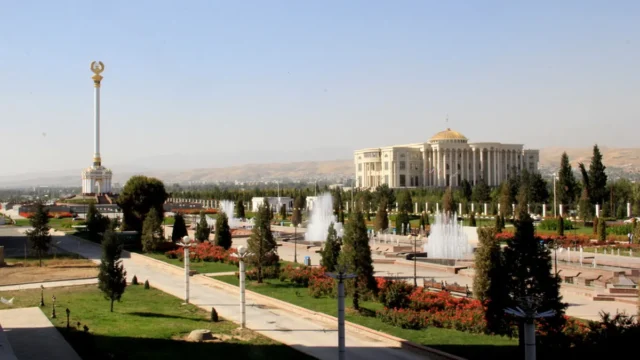
SCO Heads of Government meet in Dushanbe on 19–20 October: Rajnath Singh to represent India
Defence Minister Rajnath Singh will represent India at the 25th meeting of the SCO Council of Heads of Government (CHG) in Dushanbe, Tajikistan, on 19–20 October 2026. This is the SCO’s second-highest body, and it looks after trade, economy, connectivity and the Organisation’s budget. The last CHG met in Moscow on 18 November 2025, where External Affairs Minister S. Jaishankar spoke for India.
18 Oct 2026