
India-China Relations: Panchsheel to Galwan, the Boundary Dispute and LAC, Border Agreements, Trade Deficit, Water, Tibet and the 2024 Thaw (UPSC Notes + PYQs)
UPSC has already asked about this. Read the story with these questions in mind.
From friendship to war
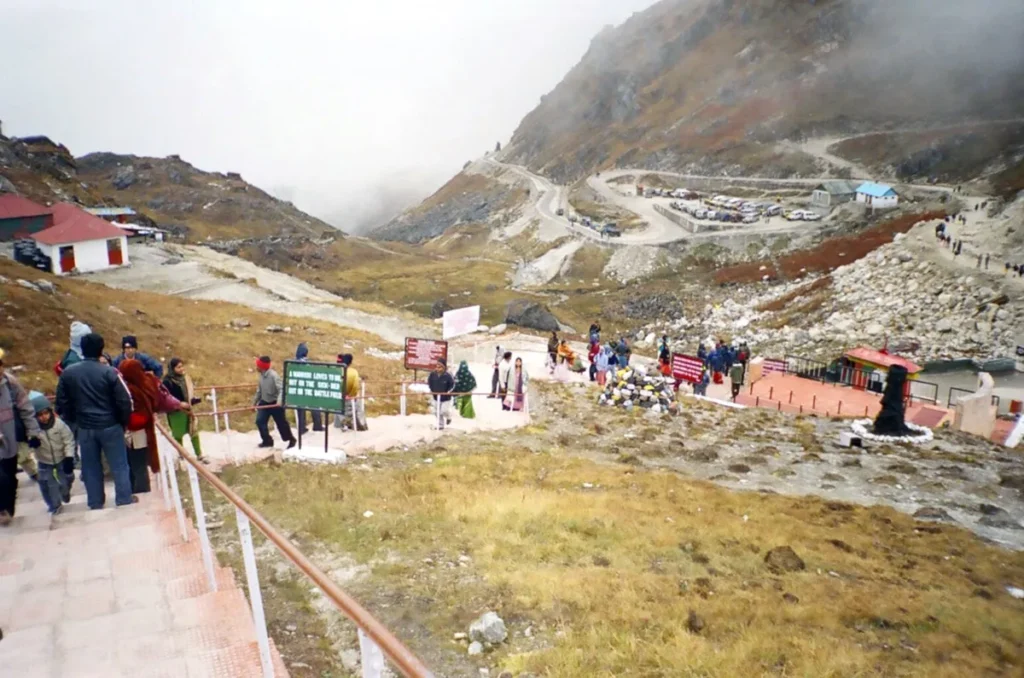
India was among the first non-communist countries to recognise the People’s Republic. In 1954 the two signed an agreement on trade with Tibet whose preamble set out Panchsheel, the five principles of peaceful coexistence: mutual respect for territorial integrity and sovereignty, non-aggression, non-interference, equality and mutual benefit, and peaceful coexistence. The slogan “Hindi-Chini bhai bhai” did not survive the Tibet question and the border. After the Dalai Lama fled to India in 1959, tensions rose, and in October-November 1962 China attacked in Ladakh and the North-East Frontier Agency, then declared a ceasefire and pulled back in the east. Ambassadors were exchanged again only in 1976, and Rajiv Gandhi’s visit in 1988 reopened high-level dialogue.
- 1950Diplomatic ties, 1 April
- 1954Panchsheel agreement
- 1962War
- 1988Rajiv Gandhi visits
- 1993Peace and tranquillity agreement
- 2017Doklam stand-off
- 2020Galwan clash, 15 June
- 2024Depsang-Demchok patrolling deal
The boundary dispute
| Sector | Area | Dispute |
|---|---|---|
| Western | Ladakh | China holds Aksai Chin (about 38,000 sq km), which India claims; Pakistan ceded the Shaksgam valley to China in 1963 |
| Middle | Himachal Pradesh, Uttarakhand | Smallest and least disputed |
| Eastern | Sikkim, Arunachal Pradesh | India follows the McMahon Line (Simla, 1914); China rejects it and claims Arunachal as “South Tibet” |
There is no agreed boundary, only a Line of Actual Control (LAC) whose position each side sees differently. These “differing perceptions” cause most face-offs, because patrols of both sides walk into land each thinks is its own.
Agreements to keep the peace
From 1993 the two sides built a framework to manage the border while the dispute remained open:
- 1993: Agreement on Maintenance of Peace and Tranquillity along the LAC.
- 1996: Confidence-building measures in the military field, including no firing near the LAC.
- 2003: Special Representatives appointed to seek a political settlement.
- 2005: Political parameters and guiding principles for a settlement.
- 2013: Border Defence Cooperation Agreement.
For decades these held: no shot was fired in anger between 1975 and 2020.
- 11993: peace and tranquillity on the LAC
- 21996: military confidence-building
- 32003: Special Representatives
- 42005: guiding principles
- 52013: Border Defence Cooperation
Doklam, Galwan and the long stand-off
In 2017 Chinese road building on the Doklam plateau, claimed by Bhutan, led to a 73-day face-off with Indian troops. Informal summits at Wuhan (2018) and Mamallapuram (2019) followed. In April-May 2020 China massed troops at several points in eastern Ladakh. On 15 June 2020, in the Galwan valley, 20 Indian soldiers died in hand-to-hand fighting, the first deaths on the LAC in 45 years. Many rounds of corps commander talks brought disengagement at Galwan, Pangong Tso, Gogra and Hot Springs, with buffer zones. In October 2024 an agreement on patrolling at Depsang and Demchok was announced, and Prime Minister Modi and President Xi met at Kazan. In 2025, the 75th year of ties, the Kailash Mansarovar Yatra and direct flights resumed, and Modi went to Tianjin for the SCO summit. Troops, however, remain deployed in large numbers on both sides.
Trade and economic dependence
China is one of India’s two largest trading partners, but the trade is lopsided. In 2024-25 India imported over USD 110 billion of goods from China and exported about USD 14 billion, leaving a deficit near USD 100 billion. India depends on China for electronics parts, solar cells, active pharmaceutical ingredients, batteries and rare-earth magnets. After Galwan, India banned many Chinese apps, required Government approval for investment from bordering countries (Press Note 3, 2020), and launched PLI schemes to build its own supply chains. China’s curbs on rare-earth magnet exports in 2025 showed how this dependence can be used as pressure.
- Large two-way trade
- BRICS, SCO, G20 partners
- Climate negotiations as developing countries
- Resumed flights and pilgrimages
- Unsettled LAC and troop build-up
- USD 100 billion trade deficit
- China-Pakistan axis and CPEC
- Brahmaputra dam, NSG and UNSC blocks
Water, Tibet and other irritants
- Brahmaputra: China is building a giant hydropower project on the Yarlung Tsangpo in Medog, near Arunachal, begun in 2025. India fears effects on flow and lacks a water treaty; only flood-season data-sharing memoranda exist.
- Tibet and the Dalai Lama: India hosts the Tibetan government-in-exile at Dharamshala; succession of the Dalai Lama is a coming flashpoint.
- Pakistan: China’s arms supplies, the China-Pakistan Economic Corridor through Pakistan-occupied Kashmir, and shielding of terrorists at the UN.
- Neighbourhood: Chinese ports and loans in Sri Lanka, the Maldives, Nepal and Bangladesh.
- Global forums: China blocks India’s entry to the Nuclear Suppliers Group and a permanent UNSC seat.
- Stapled visas for residents of Arunachal and renaming of places there.
India’s response
India has built roads, bridges, tunnels and airstrips along the LAC under the Vibrant Villages Programme and Border Roads Organisation, raised mountain strike capacity and bought surveillance drones. It works with the US, Japan and Australia in the Quad and with ASEAN on maritime security, while keeping talks open with Beijing. The principle India repeats is that peace on the border is the basis for normal ties elsewhere; China has preferred to separate the two.
Way forward
Manage competition without conflict: restore trust on the LAC through de-escalation and clear patrolling rules; reduce critical import dependence while welcoming Chinese investment that builds Indian manufacturing; seek a data-sharing and dialogue framework on the Brahmaputra; keep the Special Representatives process alive; and build deterrence with partners. Two large neighbours cannot wish each other away, but they can keep rivalry from turning into war.
PYQ trend
Mains GS-II and GS-III ask about the border, the BRI, supply chains and India’s place in the US-China contest. Prelims tests geography and the BRI.
India China Relations: UPSC angle
For UPSC CSE
Mains GS-II: bilateral ties, neighbourhood, BRI. GS-III: border management and security. Prelims: geography of the border and groupings.
India China Relations UPSC PYQs (Prelims)
Questions UPSC has actually asked, from the official papers. Pick an option to check yourself.
The longest border between any two countries in the world is between :
The Canada–USA border, including the Alaska–Canada section, is about 8,890 km long, the longest in the world. Kazakhstan–Russia (about 7,600 km) is the longest continuous land border. Chile–Argentina is about 5,300 km. Answer as per the official UPSC key · Battle IAS PYQ bankAnswer (a) & why
‘Belt and Road Initiative’ is sometimes mentioned in the news in the context of the affairs of
The Belt and Road Initiative (2013), China’s infrastructure plan under Xi Jinping, combines the overland Silk Road Economic Belt and the Maritime Silk Road. India opposes it because its flagship CPEC runs through Pakistan-occupied Kashmir. Answer as per the official UPSC key · Battle IAS PYQ bankAnswer (d) & why
The Brahmaputra, Irrawady and Mekong rivers originate in Tibet and flow through narrow and parallel mountain ranges in their upper reaches. Of these rivers, Brahmaputra makes a “U” turn in its course to flow into India. This “U” turn is due to
At the eastern end of the Himalaya, near Namcha Barwa, the mountain chain bends sharply south in a hairpin called the eastern syntaxis. The Tsangpo follows this bend, cutting a deep gorge, and turns back as the Siang/Brahmaputra into India. Answer as per the official UPSC key · Battle IAS PYQ bankAnswer (b) & why
Mains PYQs on this topic
Questions from the official UPSC Mains papers (2023-2026 in the Battle IAS Mains bank), newest first. Each links to a model answer.
- UPSC Mains 2026 · GS Paper II · Q20 · 15 marks
“China's Belt and Road Initiative (BRI) has transformed South Asia from a regional space into a theatre of great power competition.” Analyse the strategic implications of the BRI for India's security and regional influence in South Asia.
- UPSC Mains 2026 · GS Paper III · Q10 · 10 marks
Ladakh is strategically located between China and Pakistan. As a measure to win hearts and minds of locals, discuss the Border Area Development Programmes (BADP) by the Central Government and civic actions by the Army. Also discuss demand of promulgation of provision of the Sixth Schedule of constitution for Ladakh.
- UPSC Mains 2024 · GS Paper II · Q9 · 10 marks
‘The West is fostering India as an alternative to reduce dependence on China’s supply chain and as a strategic ally to counter China’s political and economic dominance.’ Explain this statement with examples.
- UPSC Mains 2024 · GS Paper III · Q19 · 15 marks
India has a long and troubled border with China and Pakistan fraught with contentious issues. Examine the conflicting issues and security challenges along the border. Also give out the development being undertaken in these areas under the Border Area Development Programme (BADP) and Border Infrastructure and Management (BIM) Scheme.
Quick quiz
The McMahon Line was drawn at the
It came out of the 1914 Simla Convention between British India, Tibet and China.Answer (a)
The Doklam stand-off of 2017 took place on territory claimed by
Doklam is claimed by Bhutan and China.Answer (b)
Aksai Chin lies in which sector of the India-China boundary?
The western (Ladakh) sector.Answer (c)
FAQs
What is the LAC?
The Line of Actual Control, the de facto line separating Indian and Chinese-held areas; there is no agreed boundary.
What is Panchsheel?
Five principles of peaceful coexistence written into the 1954 India-China agreement on Tibet.
What happened at Galwan?
On 15 June 2020, 20 Indian soldiers and an undisclosed number of Chinese soldiers died in a clash in the Galwan valley, Ladakh.
Why does India oppose the BRI?
Its flagship CPEC passes through Pakistan-occupied Kashmir, which India sees as a violation of its sovereignty.
Why is the trade deficit with China a concern?
It shows deep dependence on Chinese parts and inputs in electronics, pharmaceuticals and clean energy, which can be used as leverage.
What was agreed in October 2024?
Restoration of patrolling and grazing at Depsang and Demchok, the last friction points from the 2020 stand-off.
Spotted an error? Tell us. We correct within 48 hours.
Image: https://commons.wikimedia.org/wiki/File:Nathu_La-Stairs.JPG
How to use this in Mains
If asked: UPSC Mains 2026, GS-II: “China's Belt and Road Initiative (BRI) has transformed South Asia from a regional space into a theatre of great power competition.” Analyse the strategic implications of the BRI for India's security and regional influence in South Asia.
Quote: “India has built roads, bridges, tunnels and airstrips along the LAC under the Vibrant Villages Programme and Border Roads Organisation, raised mountain strike capacity and bought surveillance drones.”
Use it: Use it as India's response to BRI and border pressure in the body.
In the news
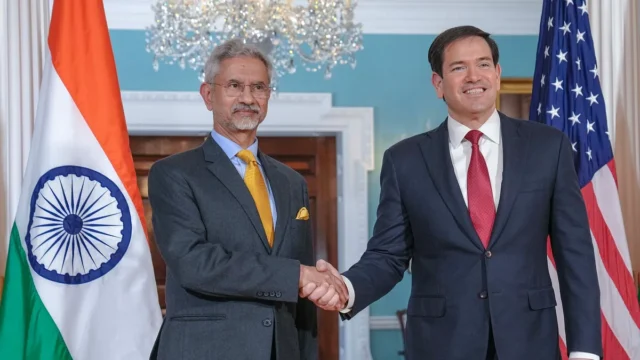
Rubio in Mumbai: India–US trade deal ‘very, very close’; energy and defence on the table
US Secretary of State Marco Rubio began his second India visit of the year in Mumbai on 20 October 2026 and met External Affairs Minister S. Jaishankar on trade, energy, technology and defence. Rubio said the two sides are ‘very, very close’ to a trade deal with ‘a small number of items left’, and praised India’s progress in diversifying energy supplies.
20 Oct 2026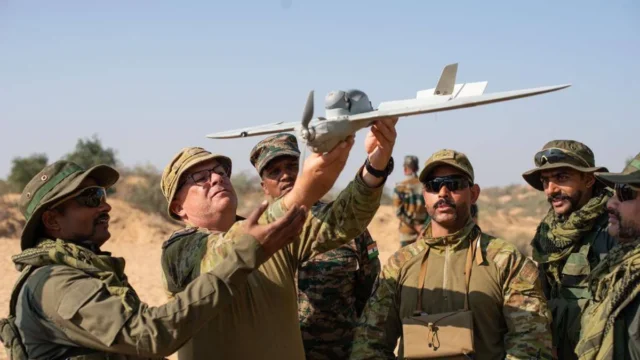
AUSTRAHIND 2026: fifth India–Australia Army exercise begins in Thiruvananthapuram
The fifth edition of the India–Australia joint military exercise AUSTRAHIND began on 19 October 2026 at the Foreign Training Node, Thiruvananthapuram, and runs till 1 November. About 120 soldiers from each army will train for sub-conventional operations in island and coastal terrain under a UN Chapter VII mandate. For the first time, New Zealand has sent observers.
20 Oct 2026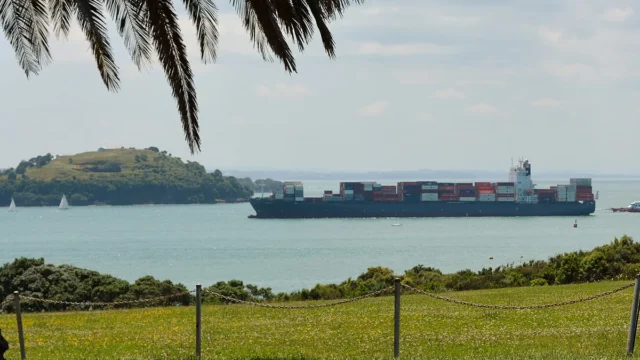
India–New Zealand FTA enters into force: zero duty on all Indian exports from day one
The India–New Zealand Free Trade Agreement came into force on 20 October 2026. From day one, New Zealand charges no customs duty on any Indian export, the first time India has got full duty-free access on all tariff lines at entry into force. New Zealand has also committed to facilitate USD 20 billion of investment into India, while dairy, sugar and edible oils stay protected.
20 Oct 2026
India to host 61st CIML meeting on legal metrology in New Delhi, 26–28 October
India will host the 61st meeting of the International Committee of Legal Metrology (CIML) for the first time, in New Delhi from 26 to 28 October 2026. The Department of Consumer Affairs is organising it with the International Organization of Legal Metrology (OIML), and more than 100 delegates are expected, PIB said on 19 October.
19 Oct 2026