
UP women in SHGs cross 1.2 crore: THR units, dairy companies and BC Sakhis explained
Next story · 18 OctUP farm fires halve: 134 stubble-burning cases till 15 October against 271 last year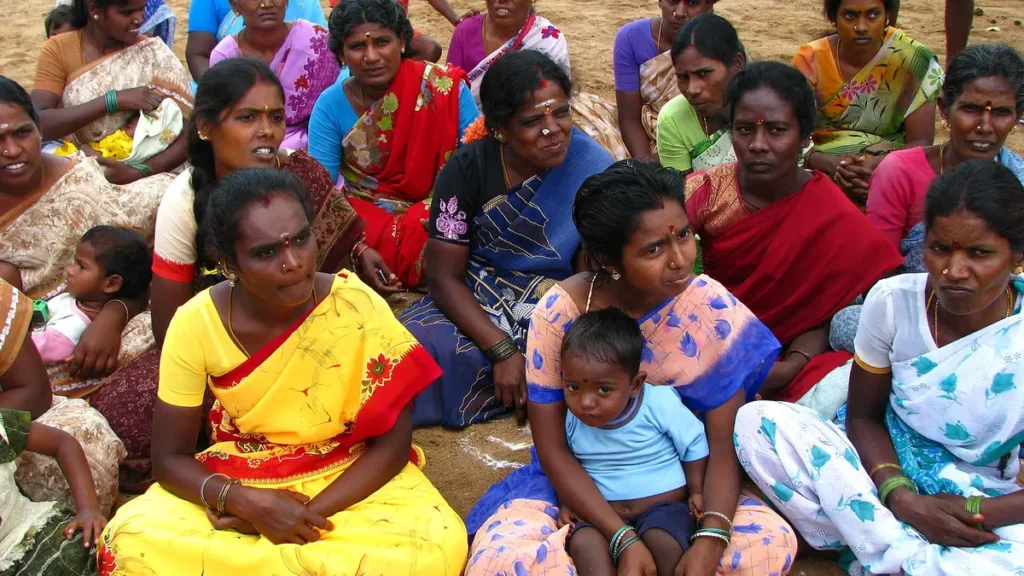
On 18 October 2026 Chief Minister Yogi Adityanath said more than 1.20 crore women in Uttar Pradesh are now in self-help groups. Over four lakh women in 31 districts are linked to dairy producer companies, SHG women make take-home ration for anganwadis, and BC Sakhis bring banking to village panchayats. For UPPCS, this is a ready case study of how the State uses SHGs for nutrition, dairy and financial inclusion, and of the questions that remain.
- SHG women
- 1.20 crore+
- Dairy companies
- 4 lakh+ women
- THR units
- 204
- BC Sakhis active
- 39,890
UP’s women-led livelihoods: what happened?
In many UP villages the most trusted bank is now a woman with a small device who sits at the panchayat bhawan, and the packets of nutrition at the anganwadi are made by women of the same block. These are not separate schemes so much as one idea: give women’s groups a real economic job.
- 18 Oct 2026: on Maha Ashtami, the CM said more than 1.20 crore women in UP are linked to self-help groups and initiatives such as Lakhpati Didi (India Today).
- He said over four lakh women across 31 districts are associated with dairy producer companies: Balinee, Samarthya, Kashi, Baba Gorakhnath and Srijani.
- Production and distribution of take-home ration (THR) for children has been handed to SHG women, and BC Sakhis provide banking services at the gram panchayat level.
- On 17 Oct 2026 he also cited a rise in women’s labour force participation; PLFS-based figures quoted by the State show 14% in 2017–18 rising to 36% in 2023–24 (ET Now/PTI).
What are the building blocks?
- SHGs: groups of 10 to 20 women who save and lend together. In UP they are promoted by the UP State Rural Livelihood Mission (UPSRLM) under DAY-NRLM.
- THR units: two pilot plants at Bighapur (Unnao) and Malwa (Fatehpur) in 2020–21 grew into 204 automated units, each making about 5 tonnes a day for anganwadis (GAIN/WFP case study).
- BC Sakhi: ‘One Gram Panchayat, One BC Sakhi’, launched in May 2020 with a target of 58,000. Each gets ₹4,000 a month for six months, then earns a commission of about 0.20–0.32% on transactions (UPSRLM).
- Lakhpati Didi: the national goal of SHG members earning at least ₹1 lakh a year for their household.
How do the three models compare?
| Model | What women do | Scale (latest) |
|---|---|---|
| THR units | Make fortified take-home ration for anganwadis | 204 units; 4,000+ women; about 77,600 anganwadi centres |
| Dairy producer companies | Sell milk through women-owned companies | 4 lakh+ women in 31 districts (CM, 18 Oct) |
| BC Sakhi | Doorstep banking at the panchayat | 50,125 certified; 39,890 active (UPSRLM dashboard) |
Which constitutional and legal provisions apply?
- Article 15(3): the State may make special provisions for women.
- Article 39(a) (DPSP): men and women equally have the right to an adequate means of livelihood.
- Article 47 and the National Food Security Act, 2013: nutrition support for children and mothers, which THR delivers through anganwadis.
- Eleventh Schedule (Article 243G): poverty alleviation and women and child development are among panchayat subjects, which links SHGs and BC Sakhis to local government.
How does a THR unit work?
From SHG to anganwadi
- Cluster-level federation of SHGs runs the unit
- Raw grain bought locally; machines make fortified THR
- Packets go to anganwadis in the block
- ICDS pays per beneficiary as per cost norms
- Women members earn wages; target about ₹8,000 a month
Which numbers should you remember?
| Number | What it means |
|---|---|
| 1.20 crore+ | Women in SHGs in UP (CM, 18 Oct 2026) |
| 204 | SHG-run THR production units |
| 58,000 | BC Sakhi target, one per gram panchayat |
| 36% | UP female labour force participation, 2023–24 (from 14% in 2017–18) |
The THR units run at an operating loss of about ₹3–10 lakh per unit per month, met through viability gap funding from the Women and Child Development department; ₹262 crore has been reimbursed so far (GAIN/WFP case study).
Why does this matter for UPPCS?
| Angle | What to note |
|---|---|
| Society | Women’s work moves from unpaid to paid and visible. |
| Nutrition | Local THR production for ICDS, with SHG accountability. |
| Economy | Dairy companies and banking agents create rural incomes. |
| Governance | UPSRLM, ICDS and banks working through one SHG network. |
What are the challenges?
- Membership is not income. The number of women in SHGs says little about how many earn regularly.
- Only about 39,890 BC Sakhis are active against a target of 58,000, and commissions on small rural transactions are thin.
- THR units depend on government payments and gap funding; delays can hurt both women’s wages and supply to anganwadis.
- Much of the rise in women’s labour force participation in India is in self-employment, including unpaid family work, so quality of work needs attention.
What should be done next?
- Track income, not just membership: publish how many SHG members cross the Lakhpati Didi mark.
- Make BC Sakhi work pay, with better commissions and more services such as insurance and pensions.
- Release ICDS payments to THR units on time, and build their own markets beyond government orders.
- Link dairy companies to chilling, feed and veterinary services so that milk income stays steady.
What can Prelims ask on UP’s SHG models?
- UPSRLM implements DAY-NRLM in Uttar Pradesh.
- BC Sakhi: launched May 2020; target 58,000; ₹4,000 a month for six months.
- THR pilots: Bighapur (Unnao) and Malwa (Fatehpur); now 204 units.
- Women’s dairy companies named by the CM: Balinee, Samarthya, Kashi, Baba Gorakhnath, Srijani.
- Lakhpati Didi: household income of at least ₹1 lakh a year.
- UP female LFPR: 14% (2017–18) to 36% (2023–24), PLFS-based.
How to write about women’s livelihoods in Mains
Practice question (UPPCS, 12 marks, 200 words): “Self-help groups have become the backbone of rural women’s empowerment in Uttar Pradesh.” Examine.
- Intro: 1.20 crore+ women in SHGs; female LFPR up from 14% to 36%.
- Body: three models: THR units, dairy companies, BC Sakhis, with numbers.
- Link: nutrition, financial inclusion, rural income.
- Gaps: membership vs income, BC Sakhi shortfall, dependence on state payments.
- Conclusion: from groups to enterprises, measured by income.
Image: McKay Savage, Wikimedia Commons, CC BY 2.0
Read all of October 2026 in the monthly UP current affairs compilation →
How to use this in Mains
If asked: Assess the role of self-help groups in women’s economic empowerment in Uttar Pradesh. (UPPCS GS-VI)
Quote: “More than 1.20 crore women in Uttar Pradesh were associated with self-help groups.”
Use it: Open with this scale line, then show depth with one example each from THR units, dairy companies and BC Sakhis.
If asked: How can community institutions improve last-mile delivery of nutrition schemes? (GS-II)
Quote: “The government subsequently entrusted the production and distribution of take-home rations to women associated with self-help groups, aiming to improve transparency while creating livelihood opportunities for them.”
Use it: Use it as your UP example of a community-run supply chain, then add the 204-unit figure and the payment-delay risk for balance.
Exam angle
GS-VI: UP schemes for women; UPSRLM, BC Sakhi, THR, dairy producer companies.
Practice MCQs
Original practice questions (not PYQs).
With reference to the BC Sakhi programme in Uttar Pradesh, consider the following statements:
1. It aims to place one BC Sakhi in every gram panchayat.
2. BC Sakhis receive a fixed monthly salary of Rs 4,000 throughout their service.
Which of the statements given above is/are correct?
Answer (a) & explanation
The Rs 4,000 a month is support for only six months; after that BC Sakhis earn a transaction commission (UPSRLM).
Uttar Pradesh’s first SHG-run take-home ration (THR) pilot units were set up in
Answer (b) & explanation
Pilot units: Bighapur block (Unnao) and Malwa block (Fatehpur), 2020–21 (GAIN/WFP case study).
Which of the following was named by the UP Chief Minister in October 2026 as a women’s dairy producer company in the State?
Answer (b) & explanation
Balinee, along with Samarthya, Kashi, Baba Gorakhnath and Srijani (India Today, 18 Oct 2026).
Questions students ask about this
How many women in UP are in self-help groups?
More than 1.20 crore, according to the Chief Minister on 18 October 2026.
What is a BC Sakhi?
An SHG woman trained and certified as a banking correspondent who offers banking services in her gram panchayat.
Who makes take-home ration in UP now?
SHG women, through 204 THR units run by their federations.
Has women’s labour force participation risen in UP?
Yes. PLFS-based figures cited by the State show a rise from 14% in 2017–18 to 36% in 2023–24.
Keep studying
Go deeper
facts from cited sources only; cross-checked; faculty review pending